
Middletown's #1 Tree Expert Company
FREE Inspection & Estimate | Certified Arborists | Trimming, Pruning, Removal, More!
Sponsored
The Worst Week of the Year to Pick Up a Pruning Saw

Every April, as soon as the forsythia fades and the first warm weekends roll in, the phone starts ringing. Homeowners across Middletown, Lincroft, Chapel Hill, and down through the Bayshore are out in the yard cleaning up from a long winter. A low limb that annoyed them all February is finally getting cut back. A storm-cracked branch on the big oak near the driveway is coming off this weekend. The intention is right. The timing could not be worse.
If you own an oak in Middletown Township, late April through about mid-July is the single most dangerous window of the year to prune it. Not because of the tree’s physiology, exactly, and not because you will hurt the tree’s growth. The reason is a microscopic fungus called Bretziella fagacearum and a handful of opportunistic beetles that are just now waking up in the leaf litter. Together they cause oak wilt, one of the most aggressive tree diseases documented in the eastern United States, and one that has already been confirmed in parts of New Jersey.
This article is a quick field guide to why the no-prune window exists, how oak wilt actually spreads, what it looks like, and what a Monmouth County homeowner should do instead this month. It is a short read. Your oaks will thank you.
What Oak Wilt Is, and Why Middletown Is a Prime Target
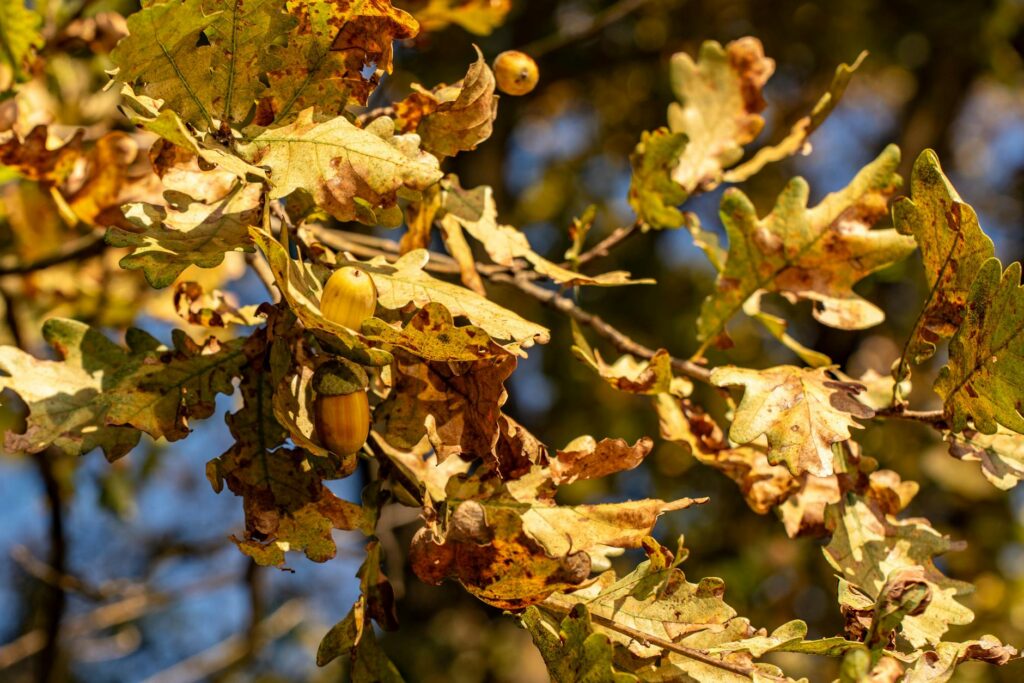
Oak wilt is a vascular disease. The fungus travels through the xylem, the tree’s plumbing, and the tree responds by trying to shut down infected vessels to wall off the invader. Unfortunately, that defensive response is what kills the tree. A healthy red oak can go from full canopy to complete death in as little as four to six weeks once a serious infection takes hold.
Two things make Middletown Township especially vulnerable. First, our tree canopy leans heavily on oak. Drive through Hartshorne Woods, Poricy Park, Thompson Park, or any older neighborhood off Navesink River Road, and you are looking at a mix of white oak (Quercus alba), northern red oak (Quercus rubra), black oak (Quercus velutina), and scarlet oak (Quercus coccinea). These species are the backbone of our coastal-plain woodland. Second, the red oak group dies fastest. White oaks can linger and sometimes recover. A red oak almost never does.
The USDA Forest Service has tracked oak wilt moving steadily eastward for decades, and the New Jersey Department of Environmental Protection has confirmed cases in the state. The risk here is not hypothetical.
Why April Through July Is the No-Prune Window
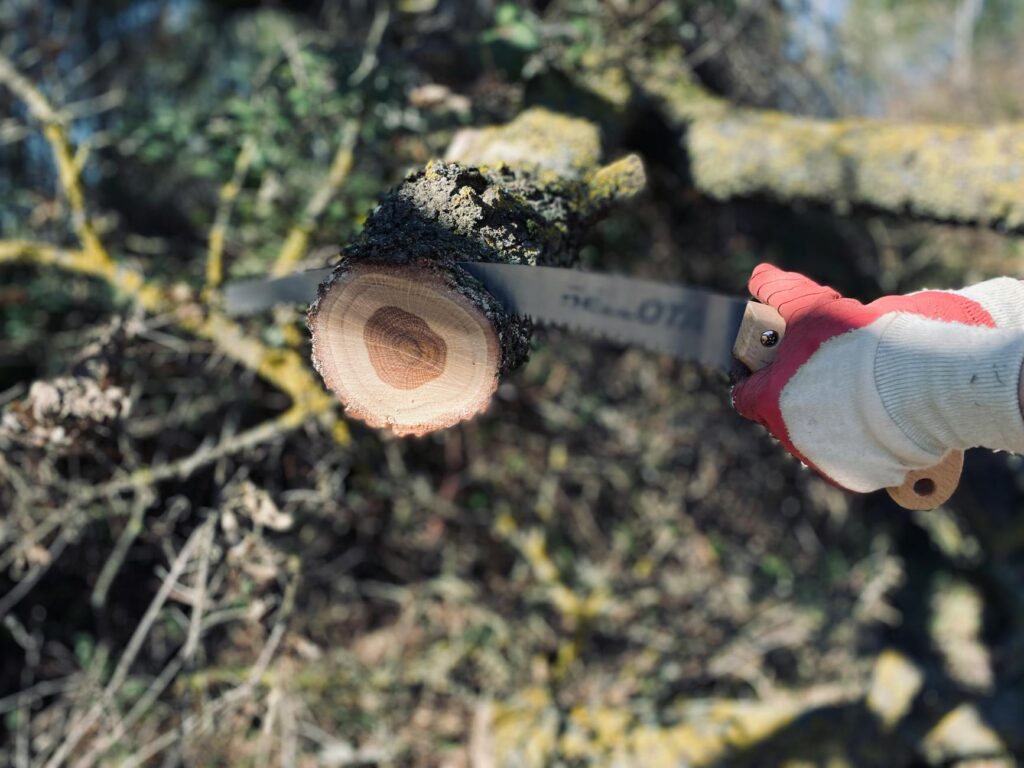
Here is the mechanism. When you cut a live oak branch during the growing season, the wound oozes sap and gives off volatile compounds that smell, to the right insect, like an open buffet. Within minutes, small sap-feeding beetles (picnic beetles, Nitidulidae) can arrive. Some of those beetles were just feeding on a fungal mat on a dead or dying oak nearby. They arrive carrying fungal spores on their bodies. They walk across your fresh pruning cut. The tree is now infected.
Outside the growing season, the beetles are inactive and the fungal mats are dormant. A pruning cut made in January carries a fraction of the risk of the same cut made in May. That is the entire reason the cutoff exists.
Extension services across the Northeast, including Rutgers NJAES and Cornell Cooperative Extension, recommend the same rule: do not prune oaks from roughly April 15 through July in our climate. The safest dormant-season window in New Jersey runs from late November through late March. Some arborists extend the caution all the way to October in high-risk counties, because late-season warm spells can reactivate beetle activity.
Middletown's #1 Tree Expert Company
FREE Inspection & Estimate | Certified Arborists | Trimming, Pruning, Removal, More!
Sponsored
The Other Way Oak Wilt Spreads: Underground
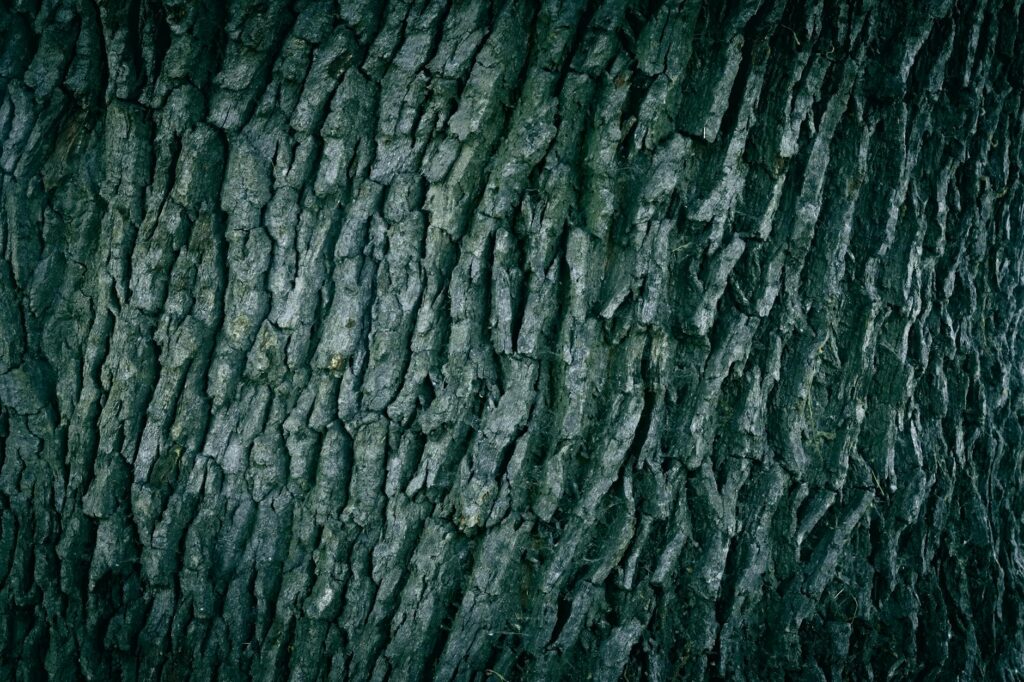
Even if you never touch a pruning saw, oak wilt can still move. Oaks of the same species often fuse their roots underground when they grow near each other. In a mature stand, the roots of a dozen red oaks can be functionally one network. Once one tree is infected, the fungus travels tree-to-tree through those root grafts, invisible from the surface. This is how single infections turn into expanding circles of dead trees in a woodland, and it is exactly why oak wilt management sometimes includes severing roots with a vibratory plow between healthy and infected trees.
Firewood is the third vector. Cut oak from a diseased tree can sprout fungal mats in storage. If you or your neighbor brings in cheap firewood from an unknown source, especially across county lines, you are importing risk. The old rule holds: do not move firewood. Buy it local, burn it local.
What Oak Wilt Looks Like on a Middletown Oak
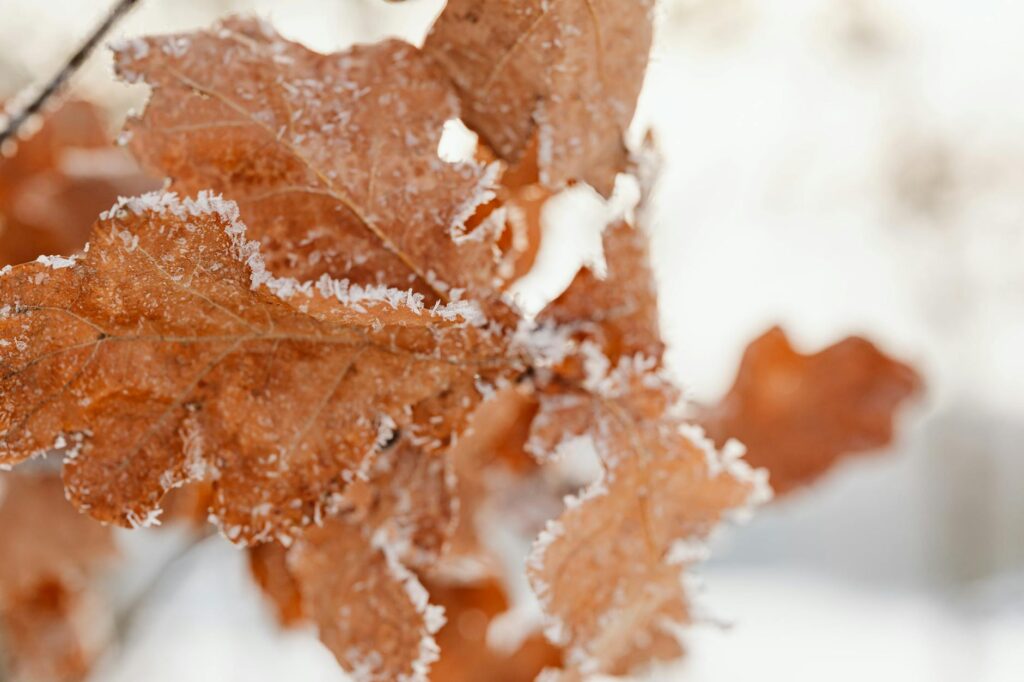
Symptoms usually show up in early to mid-summer, which means an oak infected at this month’s pruning can be visibly dying by July. On red-group oaks, the leaves turn a bronzy brown from the tips and margins inward, often with a sharp line between green and brown tissue. The discolored leaves drop while still partly green, carpeting the base of the tree in what looks like premature fall. Canopy dieback spreads fast, from the top down and outward.
On white oaks, symptoms are subtler and slower. You may see scattered branches flagging brown across multiple seasons before the tree either walls the infection off or declines.
If you suspect oak wilt, the only reliable confirmation is a lab test of wood samples, typically coordinated by a certified arborist working with a state forestry office. The International Society of Arboriculture maintains a directory of certified professionals trained in diagnosis. Do not rely on a visual guess from a landscaper or a web search, because several other oak problems, including bacterial leaf scorch and two-lined chestnut borer, can mimic parts of the symptom picture.
What to Do Instead This Spring
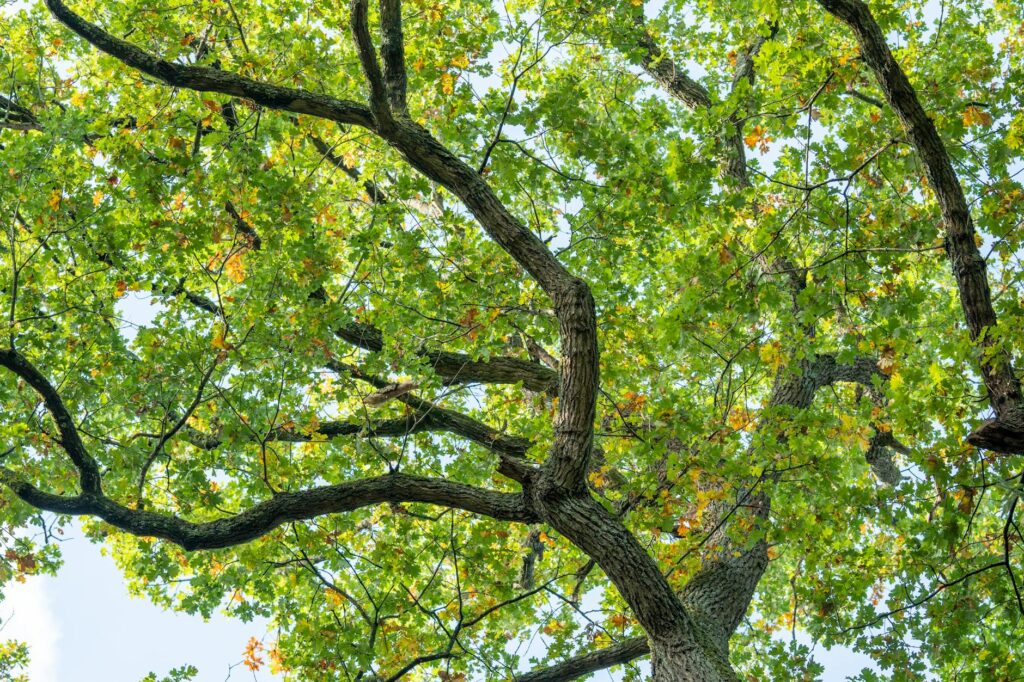
Put the saw down until late fall. That is rule one. For most homeowner pruning goals, a November through March window works fine in Middletown Township and does not meaningfully slow the tree.
If a storm forces your hand, for example if a nor’easter cracks a major limb in May, you may not have a choice. In that case, prune only what safety requires, make clean cuts, and paint the wound immediately with a pruning sealer or even a water-based latex paint. Pruning sealants are not generally recommended for most wounds, but for oaks during the growing season they are an exception endorsed by extension services specifically to block beetle visits during the critical first hours after cutting.
Spring is a great time for everything else. Inspect your oaks from the ground with a good pair of binoculars. Look for last year’s dead branches that will be easier to spot now with fresh leaves around them. Watch the canopy through leaf-out for thin spots, flagging, or premature yellowing. Look at the soil within the dripline and make sure nothing was stacked, compacted, or buried over the winter. Check for signs of other pests common in our area, including the spongy moth egg masses that should be fully hatched by late April and the early signs of emerald ash borer activity if you have any remaining ash on the property.
Water matters too. A dry April, which we have had in recent years along the Bayshore, stresses oaks before they have fully leafed out. A deep soak once during a rainless stretch, applied to the outer dripline rather than the trunk, will do more for an oak this spring than any pruning cut.
Middletown's #1 Tree Expert Company
FREE Inspection & Estimate | Certified Arborists | Trimming, Pruning, Removal, More!
Sponsored
When to Call a Certified Arborist
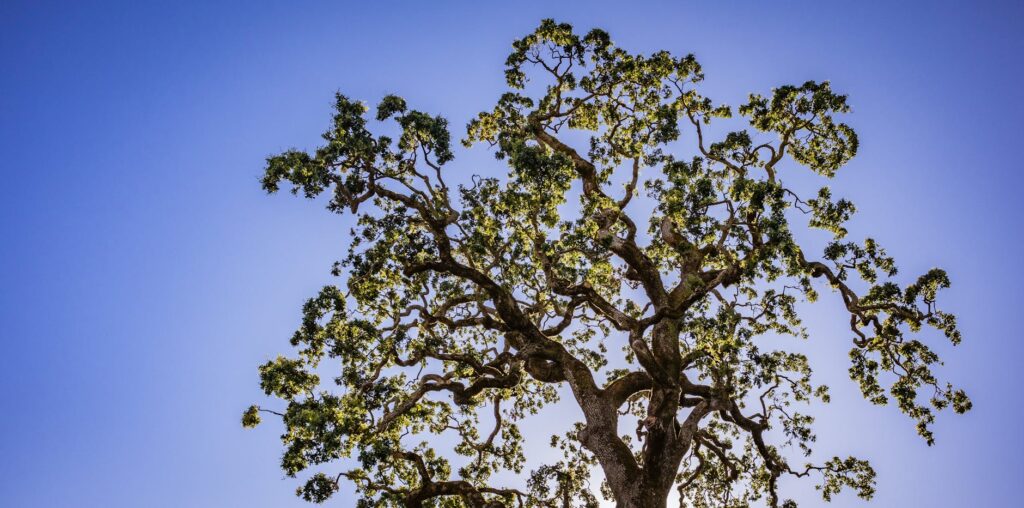
Three situations warrant a professional eye this spring. First, if you see any symptoms that could be oak wilt on your property or a neighbor’s, bring in a certified arborist fast. Oak wilt management works best early, and it often involves coordination with adjacent properties because of the root-graft problem. Second, if storm damage forces you to cut a live oak branch during the no-prune window, a pro can make the cut quickly and seal it correctly. Third, if you have mature oaks close to your house, pool, driveway, or power lines, an annual spring inspection is genuinely worth the call. A trained eye catches codominant stems, cracks, cavities, and fungal conks that most homeowners miss until a limb is on the roof.
Middletown Township’s oak canopy is one of the best things about living here. It predates every subdivision on the map, and once a hundred-year oak is gone, the replacement will not shade your grandchildren the way the original shaded you. Leaving the saw in the shed for a few months is the easiest thing a homeowner can do for tree health all year. When a cut genuinely needs to happen, a certified arborist can do it safely and at the right time of year for your specific tree.
Photo credits: Featured image by Johannes Plenio on Pexels; Section 1 by Curtis Adams on Pexels; Section 2 by Vladimir Srajber on Pexels; Section 3 by susana MaRo on Pexels; Section 4 by Wyxina Tresse on Pexels; Section 5 by www.kaboompics.com on Pexels; Section 6 by Masood Aslami on Pexels; Section 7 by Robert So on Pexels.