Middletown's #1 Tree Expert Company
FREE Inspection & Estimate | Certified Arborists | Trimming, Pruning, Removal, More!
Sponsored
Not All Tree Workers Are the Same: What's at Stake in Middletown
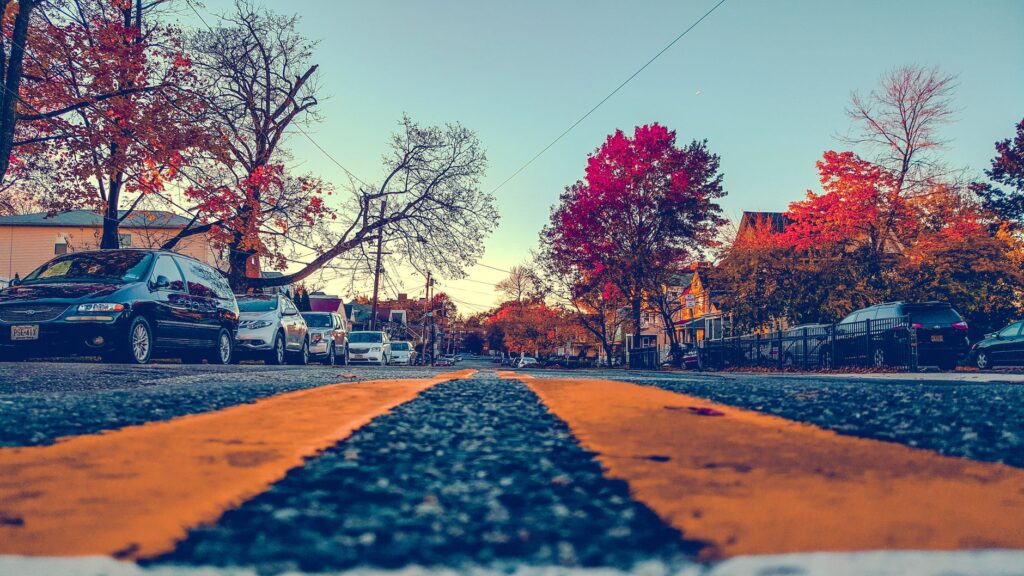
Every summer, when the nor’easters are behind us and the heat settles in over Monmouth County, Middletown homeowners start thinking about tree work. Maybe a limb came down in the spring storms. Maybe a big oak near the house has been looking thin on one side for two seasons now. Maybe a contractor finally has an opening in their schedule. Whatever the reason, summer is prime time for tree service — and unfortunately, prime time for making an expensive mistake.
The mistake isn’t always the obvious one. Most people can tell the difference between a professional crew and a pickup with a chainsaw bouncing in the bed. But fewer homeowners understand the real distinction that matters: the difference between a tree trimmer and a certified arborist. Those two roles overlap in tools — both carry chainsaws, both work in trees — but they represent very different levels of training, liability awareness, and judgment about what your tree actually needs.
Knowing which one to call, and when, is one of the most practical things a Middletown homeowner can learn before the phone ever rings.
Tree Trimming Is a Trade — and a Valuable One
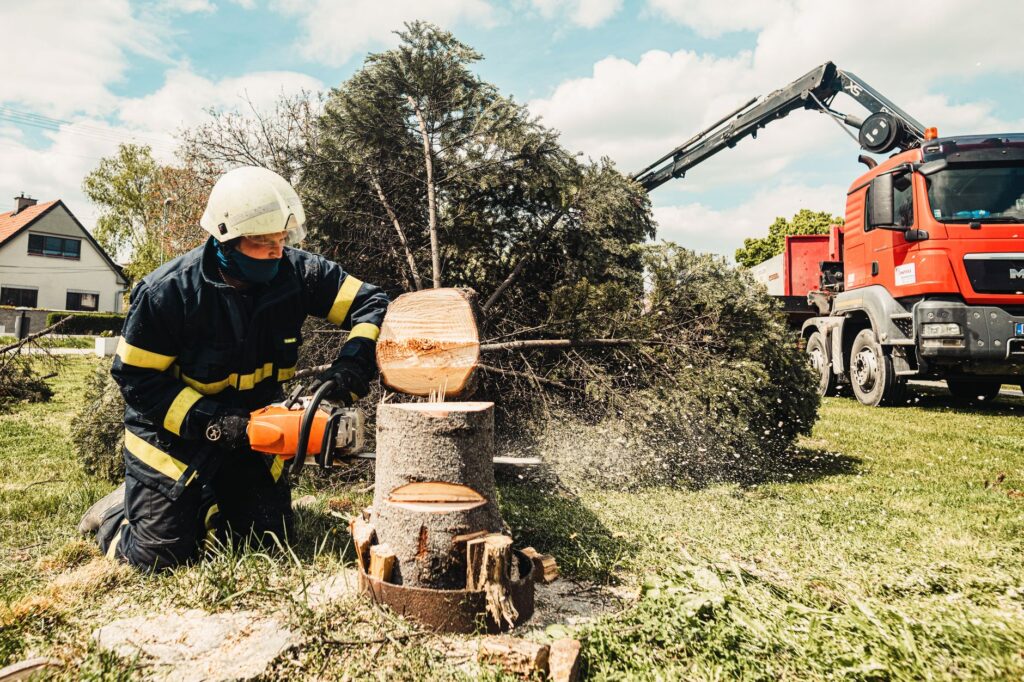
Let’s be fair: skilled tree trimmers are worth their hire. The work is physical, demanding, and genuinely dangerous. A good tree service crew can clear storm debris, remove a dead limb over a roof line, or clean up crown overhang efficiently and safely. For straightforward removals or cleanup after a storm, they’re exactly what you need.
But the scope of trimming work is limited by design. A trimmer’s job is to execute the cut — not to evaluate whether the cut should be made in the first place, or what it will mean for the tree’s long-term health. They’re not typically trained in tree risk assessment, tree biology, soil conditions, or the ANSI A300 pruning standards that define proper arboricultural practice. They’re skilled workers, not diagnosticians.
The problem arises when homeowners call a trimmer for a job that actually requires a diagnosis. A tree that’s losing leaves on one side, or one with a deep co-dominant crotch midway up the trunk, or one that has been “cleaned up” every summer for twenty years with flush cuts — these trees need an arborist’s eye before anyone picks up a saw. Without that evaluation, well-intentioned trimming can accelerate a decline that was already underway.
ISA Certification: What It Means and Why It Matters
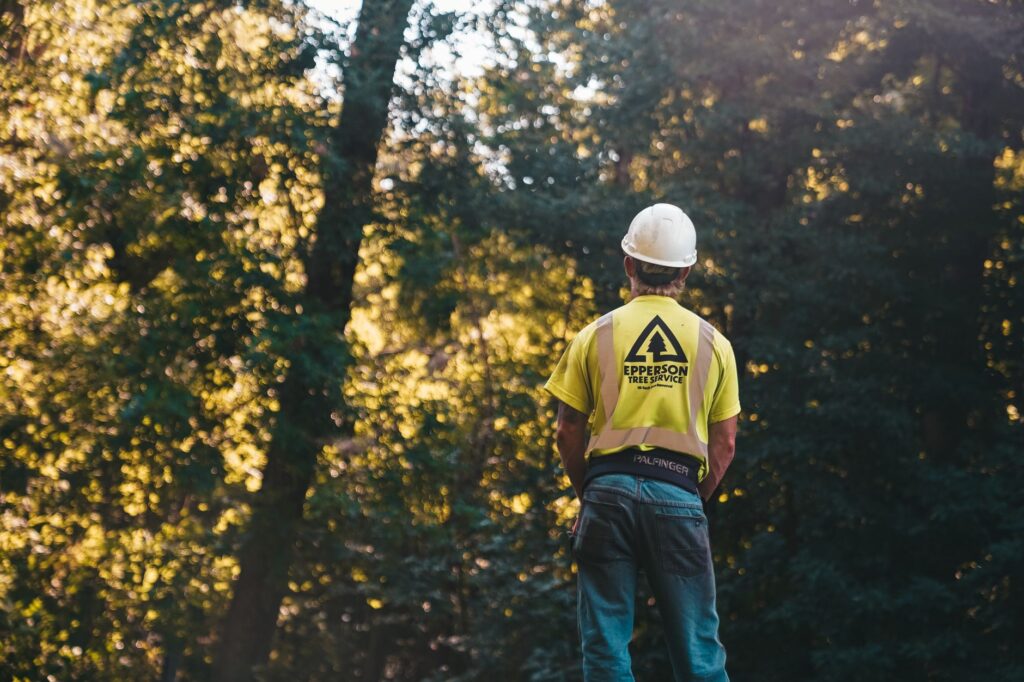
A certified arborist has passed a comprehensive examination administered by the International Society of Arboriculture (ISA), one of the most respected professional organizations in arboriculture worldwide. The exam covers tree biology, soil science, diagnosis, pruning theory, tree risk assessment, and safe work practices. Once certified, arborists must complete continuing education to maintain their credential — knowledge in this field advances, and the ISA expects its certified members to keep pace.
That foundational knowledge changes what an arborist does in your yard. Where a trimmer sees branches, an arborist sees a biological system. They’re trained to distinguish between crown thinning (selective removal of interior branches to improve light and airflow), crown cleaning (removing deadwood, crossing branches, and adventitious growth), and crown reduction (carefully shortening a tree’s spread while maintaining its structure). Each is a different intervention with different goals — and recommending the wrong one does real harm.
Certified arborists also apply the ANSI A300 pruning standards — the industry benchmark for what constitutes proper tree care — to every cut they recommend. Those standards exist because decades of research have shown that cuts made the wrong way, in the wrong place, or at the wrong time create decay pathways that outlast the immediate problem. Proper pruning requires knowing the biology of how trees compartmentalize wounds, and that knowledge takes training to develop.
Middletown's #1 Tree Expert Company
FREE Inspection & Estimate | Certified Arborists | Trimming, Pruning, Removal, More!
Sponsored
Reading the Whole Tree: Ground to Crown
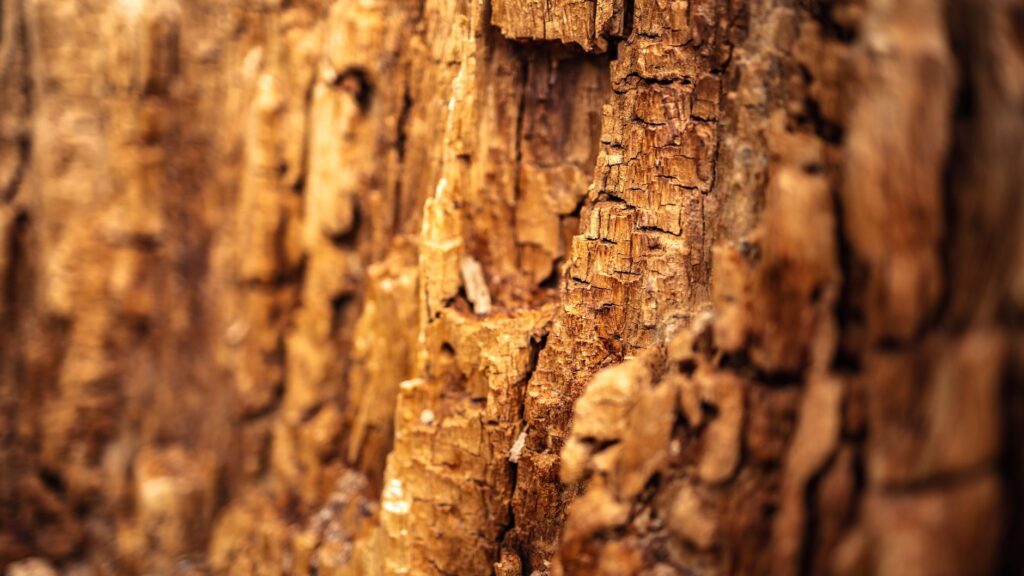
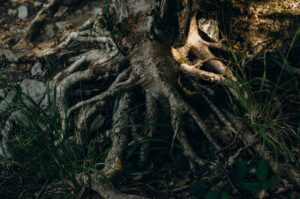
One of the most important things a certified arborist does is evaluate the tree from the ground up, not just from the canopy down. The health and structural integrity of a tree are often written in places most people would never think to examine: the root flare, the bark near the base, the transition zones where major scaffold branches meet the trunk.
In Middletown’s variable soils — a mix of clay-loam and sandy loam depending on location, with wetter sites near Port Monmouth and the Bayshore and drier upland conditions toward Lincroft and Red Hill — root health is frequently the critical factor. Soil compaction from decades of lawn mowing or landscape fill can restrict root oxygen exchange even when the canopy looks fine from the street. A trained arborist checks the root flare for circling or girdling roots, for signs of root rot pathogens, and for evidence that a tree was planted too deep — a mistake that slowly strangles the trunk over ten or twenty years.
Moving up the tree: a trained eye reads bark for anomalies — cracks, cankers, sunken patches, weeping sap, callus formation around old pruning wounds. These are the tree’s stress signals, and interpreting them correctly requires knowing what’s normal for a given species at a given age. A mature red maple (Acer rubrum) handles injuries differently than a tulip poplar (Liriodendron tulipifera), and both respond differently than a stressed white oak (Quercus alba) managing the coastal humidity near the Navesink.
The canopy assessment comes last: crown density relative to the season, dieback patterns (tip dieback and interior dieback indicate different problems), the presence and density of epicormic shoots, and any co-dominant stems with included bark — a structural defect that’s nearly invisible from the ground but represents one of the most common failure mechanisms in Monmouth County’s storm damage. By the time an arborist finishes, they’ve built a coherent picture of the entire tree.
Middletown's Mature Tree Stock Is Worth Protecting
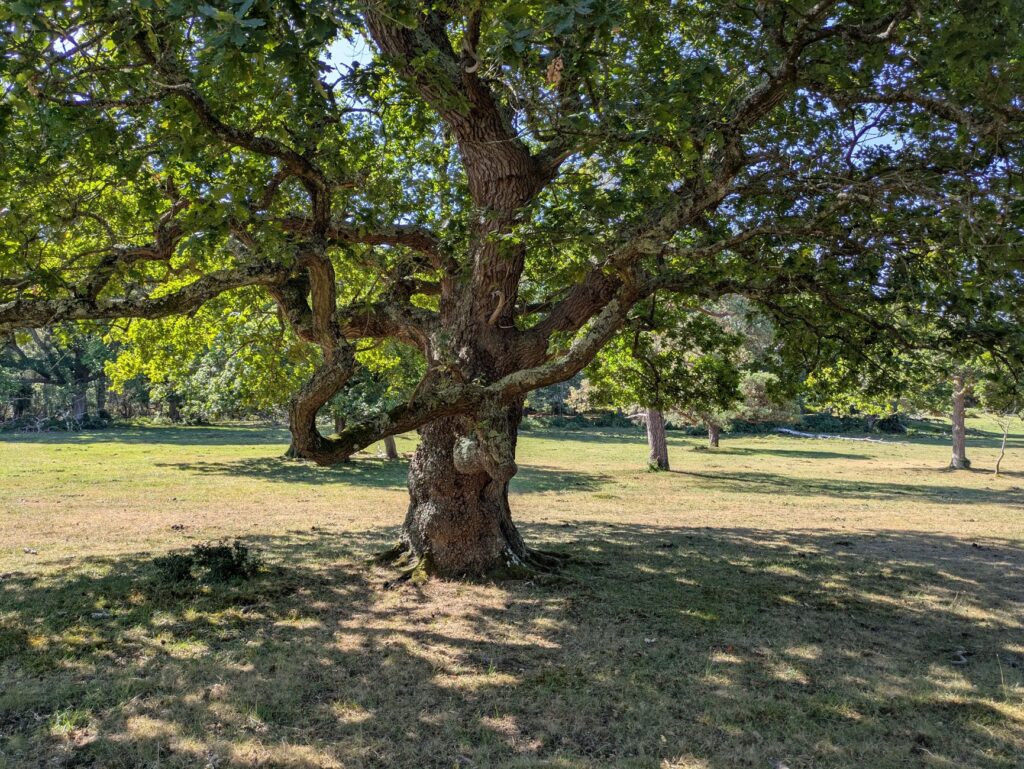
Middletown Township has an unusually rich stock of mature trees. Drive along Navesink River Road on a summer evening or walk the trails at Hartshorne Woods Park, and you’ll encounter white oaks measuring four feet across the trunk — trees that have been growing since before the American Revolution. Even in older neighborhoods like Leonardo and Atlantic Highlands, many backyards hold maples and oaks that are 60 to 80 years old or more. These trees represent enormous ecological value, meaningful property value, and real liability if they enter decline without being managed thoughtfully.
Middletown’s storm history complicates the picture further. Superstorm Sandy in 2012 left invisible damage on thousands of trees — not just the ones that fell, but the ones that bent and recovered, lost major limbs under ice-loaded crowns, or had their root systems partially heaved. A tree can look perfectly healthy three or five years after a major structural event and still carry a defect that makes it a serious failure risk in the next storm. Identifying that kind of deferred damage is exactly what arborists are trained to do — and exactly what a trimmer is not equipped to assess.
According to Rutgers New Jersey Agricultural Experiment Station (NJAES), proper management of existing mature trees is almost always more ecologically and economically valuable than removal and replanting. That management, though, needs to be informed — guided by someone trained to read what the tree is actually telling you, rather than just responding to how it looks from the curb.
How to Find and Verify a Certified Arborist in Middletown
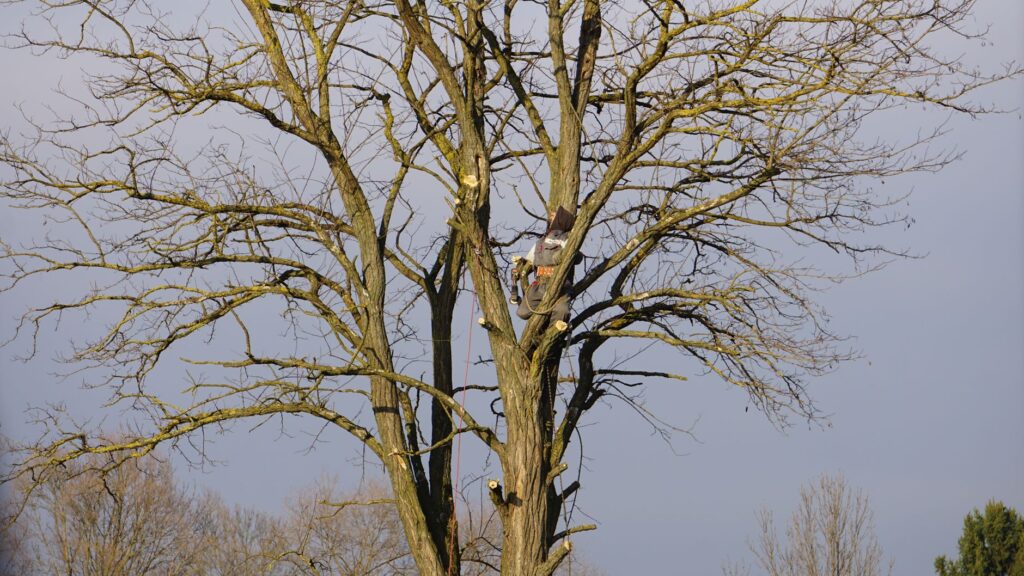
The easiest starting point is the ISA’s Find-an-Arborist tool at treesaregood.org, which lets you search by zip code for currently credentialed arborists in your area. The operative word is “currently” — ISA certification requires ongoing renewal, so a certification that lapsed three years ago doesn’t carry the same weight as an active one. The tool shows current certification status and lets you verify a credential before you schedule anyone.
Beyond the ISA lookup, here’s what to look for before committing to any tree work:
- A certificate of insurance showing both liability coverage and worker’s compensation — ask for it directly, not just their word that they’re covered
- A written estimate that describes the specific work to be done (not just “trim the tree” but which branches, what type of cut, and the reasoning behind it)
- Familiarity with ANSI A300 pruning standards — if the person you’re talking to doesn’t know what A300 is, that’s meaningful information
- Membership in the Tree Care Industry Association (TCIA), which sets safety and accreditation standards for the industry
A few red flags worth knowing: cash-only bids, no written estimate, aggressive door-to-door soliciting after a major storm, and any recommendation to “top” a tree as a solution to height or crown problems. Topping — cutting a tree’s primary leaders back to stubs — is one of the most damaging practices in tree care, and no credentialed arborist would propose it as a legitimate treatment option. If you hear that suggestion, it’s a signal to call someone else.
Middletown's #1 Tree Expert Company
FREE Inspection & Estimate | Certified Arborists | Trimming, Pruning, Removal, More!
Sponsored
Summary: When the Right Call Is an Arborist, Not Just a Tree Service

For simple, routine work — clearing fallen branches from the lawn, chipping brush after a cleanup, grinding out a stump from a tree that’s already been removed — a reputable tree service crew without specialized arborist credentials can be perfectly adequate. The work is physical, not diagnostic.
But the moment the question involves a living tree’s health, structural integrity, or long-term future, you want someone trained to think about the whole system. The clearest situations calling for a certified arborist include:
- A large tree within striking distance of your home, a vehicle, or a neighbor’s property
- Any tree showing signs of structural concern: cracks or seams in the trunk, a lean that has developed or deepened recently, substantial deadwood in the upper crown
- A tree that lost major limbs in a storm and you’re uncertain what remains structurally sound
- A tree that has been previously topped or heavily cut back, and you want to understand the long-term options
- Any significant construction or excavation project planned within 100 feet of a tree you want to keep
- A mature tree — the kind that took 50 or 80 years to become what it is — that you’d like to see remain healthy for another generation
Many certified arborists in the Middletown area offer consultations before committing to work — and a good arborist who looks at your tree and tells you nothing urgent is needed right now is giving you genuinely valuable information. That’s the kind of professional relationship worth building before a storm makes the question urgent.
Photo credits: Featured image by Dmytro Glazunov on Pexels; Section 1 by Ibrahim Boran on Pexels; Section 2 by Helena Jankovičová Kováčová on Pexels; Section 3 by Grant on Pexels; Section 4 by Marek Piwnicki on Pexels; Section 5 by David Allen on Pexels; Section 6 by Dmytro Glazunov on Pexels; Section 7 by RDNE Stock project on Pexels.