Middletown's #1 Tree Expert Company
FREE Inspection & Estimate | Certified Arborists | Trimming, Pruning, Removal, More!
Sponsored
The Tree Right Outside Is Trying to Tell You Something
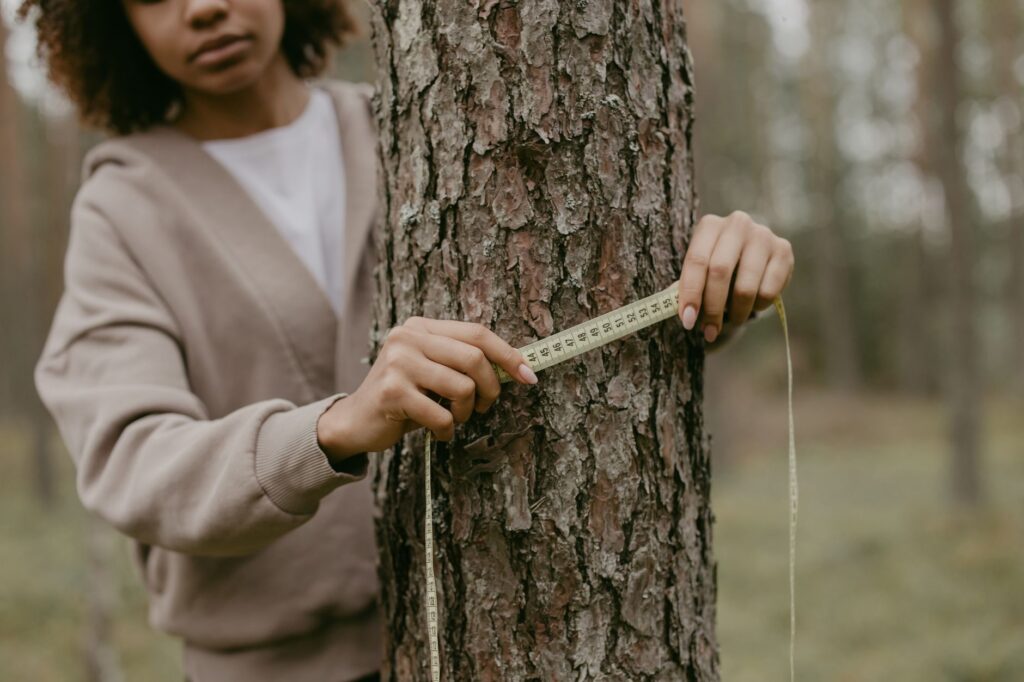
Every spring, I walk dozens of Middletown properties doing tree assessments, and the same conversation keeps happening. Homeowners apologize for not knowing something was wrong sooner. “I didn’t see any symptoms,” they say. But when I ask whether they noticed the long vertical crack on the south side of the trunk, or the dark staining around the base, or the rough, sunken patch of bark midway up the main stem — they often say yes. They just didn’t know what it meant.
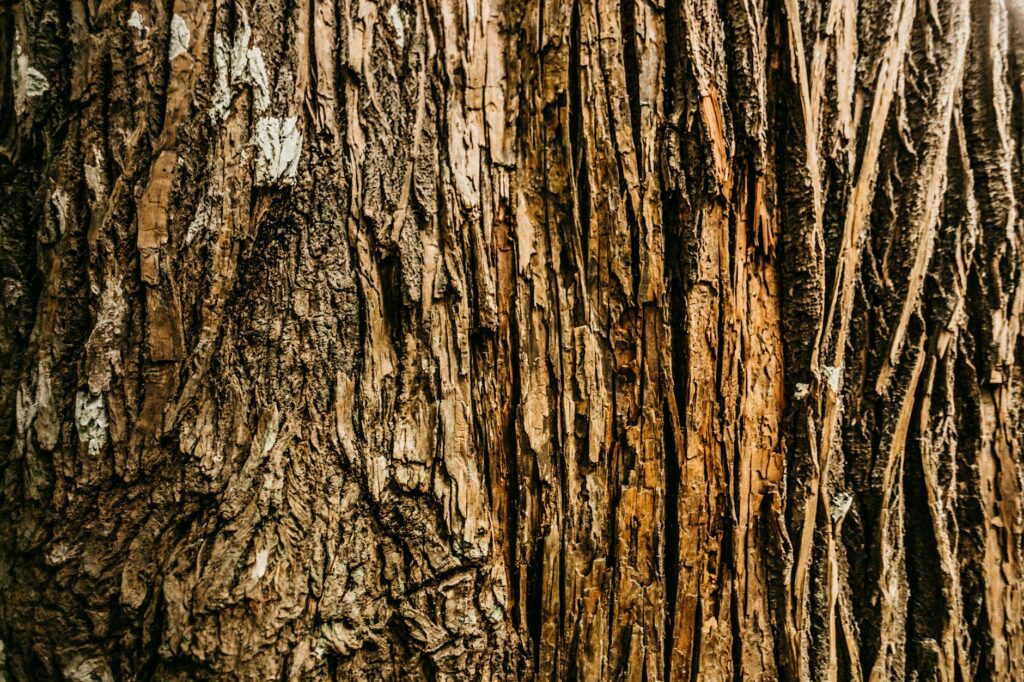
Tree bark is a living record. It stores years of stress, disease, mechanical injury, and recovery in visible patterns. Unlike leaves, which come and go with the seasons, bark accumulates. A crack that opened two summers ago after a drought is still there. A canker that started near a pruning wound three years back has been slowly expanding ever since. A wet stain at the base that appeared after last October’s nor’easter is a clue about what’s happening underground.
In June, with Middletown’s trees fully leafed out and actively growing, bark symptoms are at their most revealing. The tree has been pushing water and nutrients through its vascular system all spring, and anything impeding that flow — disease, injury, or decay — tends to become visible on the bark surface by early summer. Here’s how to read what you’re seeing, and what it means for the trees in your yard.
First, Know What Healthy Bark Looks Like
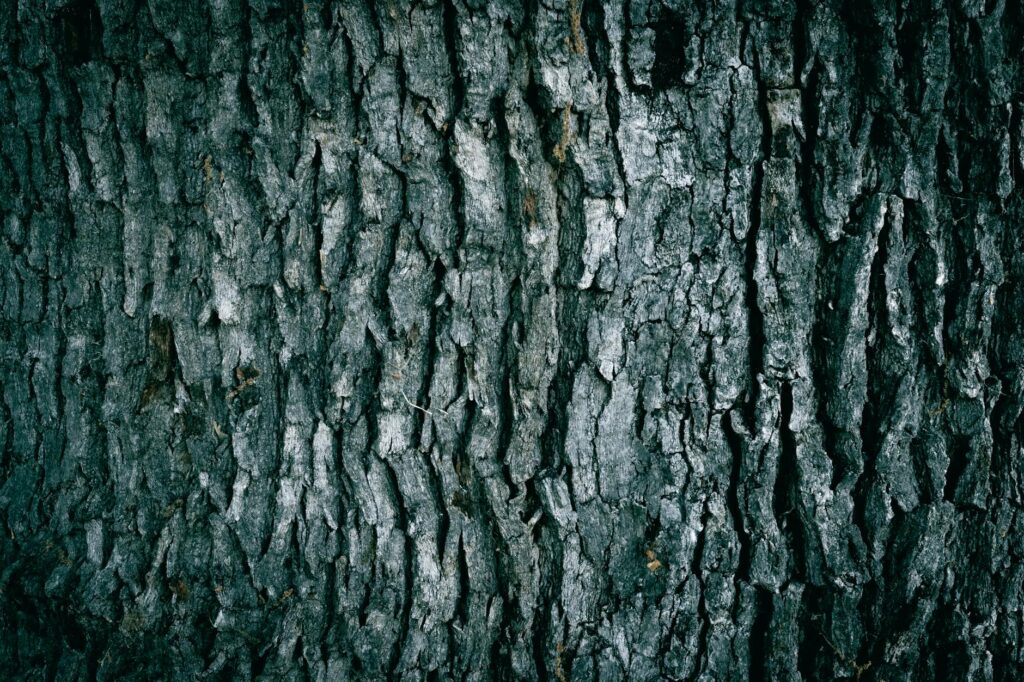
Before you can read bark symptoms, you need a baseline. Healthy bark looks very different across species, and what’s alarming on one tree is perfectly normal on another. Misreading a species’ natural bark pattern leads to unnecessary worry — or, worse, to missing a real problem because it looks like “normal” variation.
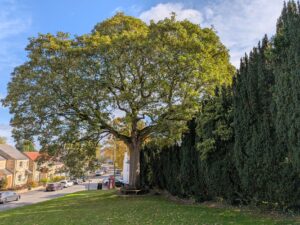
Middletown’s most common shade trees each have a distinct bark personality. White oaks (Quercus alba) have light gray, flaky bark that naturally breaks into rough rectangular blocks — loose, shaggy edges at the plate margins are completely normal. Red maples (Acer rubrum) start with smooth gray bark when young, developing shallow furrows and narrow ridges as they mature. Tulip poplars (Liriodendron tulipifera) develop deeply interlaced ridges that look almost corded on older trunks. American beech (Fagus grandifolia) stays smooth and silver-gray its entire life — which makes any roughness or discoloration immediately visible against that clean surface.
Lichen and moss growing on bark are normal in humid, coastal climates like Middletown’s Bayshore corridor. They don’t harm the tree and don’t need to be removed. That said, heavy lichen growth appearing on a tree that previously had clean bark can indicate slowing annual growth — worth noting as context, not treating as a standalone problem.
The best time to establish your baseline is now, while you’re already doing yard work. Spend five minutes walking around each significant tree. Note the texture, color, and any markings. Take a photo. That baseline becomes invaluable when something changes next year.
Cracks and Splits: Normal Aging vs. Real Red Flags
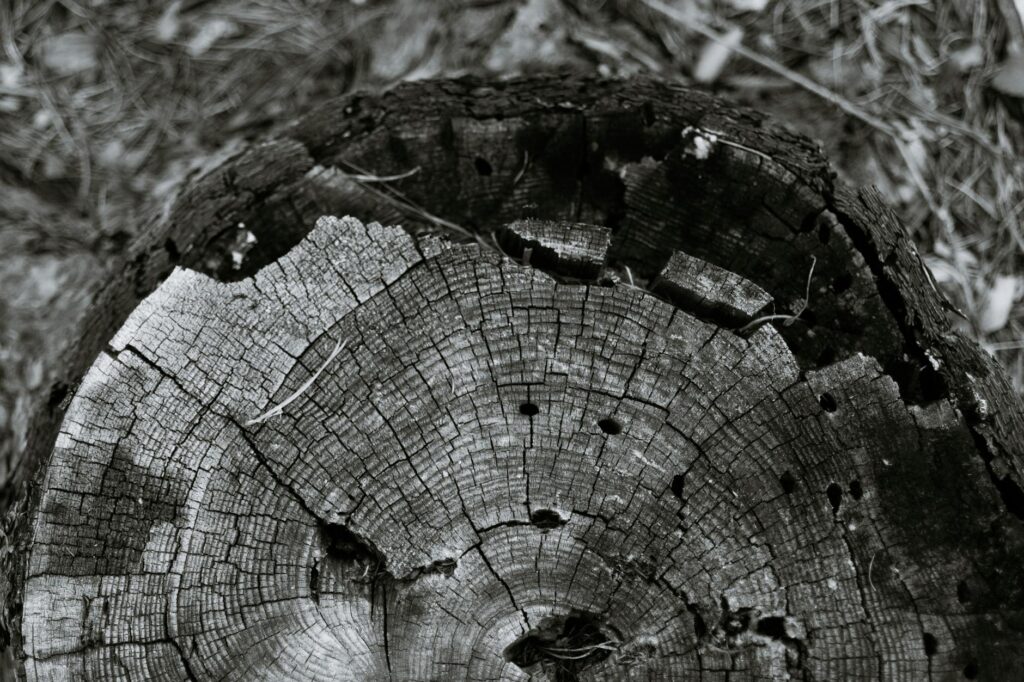
Not all cracks are problems. As trees grow, their bark expands and naturally develops furrows, ridges, and surface fissures — this is how bark accommodates a trunk that grows wider every year. The question is whether you’re looking at surface-level bark texture or a structural crack that penetrates into the wood beneath.
One crack to watch closely: a long, vertical fissure running from near the base of the tree upward along the trunk, especially appearing on the south or southwest face. This is often frost cracking — also called a radial shake — caused by rapid temperature swings between warm winter afternoons and freezing nights. Monmouth County’s coastal climate, with its marine influence from Raritan Bay, creates exactly these freeze-thaw conditions. Frost cracks often close during the growing season, then reopen each winter. Over time they weaken structural integrity and become entry points for decay fungi.
An even more urgent red flag: cracks in the crotch where two major limbs originate, or at the union of co-dominant stems. These indicate either included bark — bark tissue trapped between two stems as they grew together — or the beginning of structural failure at a weak attachment point. A co-dominant stem with a crack at its base is a genuine hazard, particularly on trees overhanging structures, driveways, or outdoor living areas. The International Society of Arboriculture’s tree care resource library covers these failure types in detail and explains how certified arborists assess structural risk.
Lightning strikes leave their own signature: a distinctive vertical streak of shredded or missing bark from the crown downward, sometimes spiraling around the trunk. A struck tree may survive if enough vascular tissue remains intact, but a professional assessment of stability and decay potential is essential before making that call.
Middletown's #1 Tree Expert Company
FREE Inspection & Estimate | Certified Arborists | Trimming, Pruning, Removal, More!
Sponsored
Cankers: What That Sunken, Discolored Patch Means
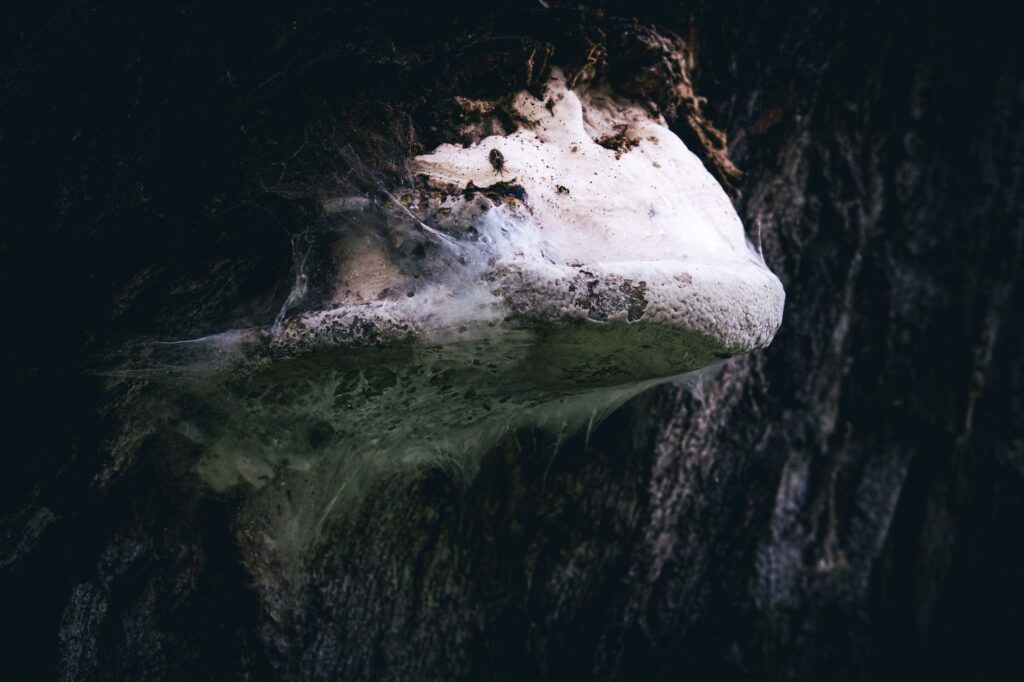
A canker is a localized area of dead bark — typically appearing as a sunken, discolored, or rough patch on an otherwise normal section of trunk or branch. Cankers are caused by fungi or bacteria that kill the bark and the cambium layer beneath it, and they’re one of the most important bark symptoms to catch early because they spread over time, often expanding faster during stress events like drought or extreme heat.
Common canker diseases in Middletown and Monmouth County include:
- Nectria canker (coral spot): Identified by small, bright orange or red fruiting bodies clustering around the margins of a sunken, dark patch. Common on maples, beech, and oaks that have experienced prior stress. Entry points are often wounds from pruning, branch failures, or mechanical damage.
- Cytospora canker: Primarily affects spruce and pine, producing resin-soaked bark that turns gray-brown and becomes sunken as the disease progresses. Tends to spread from lower branches upward over multiple seasons.
- Hypoxylon canker: A more aggressive pathogen of oaks and other hardwoods, leaving a distinctive silvery-gray crust on the bark after killing the cambium beneath. This one follows drought or root stress and can move quickly through major stems.
All cankers are opportunistic — they enter through wounds or weakened tissue in a stressed tree. If you’re finding multiple cankers on the same tree, that’s the tree’s way of telling you it has been under cumulative stress: drought cycles, root damage, soil compaction, or a history of poor pruning cuts. Treating the canker in isolation without addressing the underlying stress rarely stops progression.
The Rutgers Plant Diagnostic Laboratory offers sample submission services for New Jersey homeowners and can identify fungal and bacterial canker pathogens from bark samples — a useful resource when you’re not sure what you’re looking at.
Weeping Sap and Dark Staining: What's Really Happening
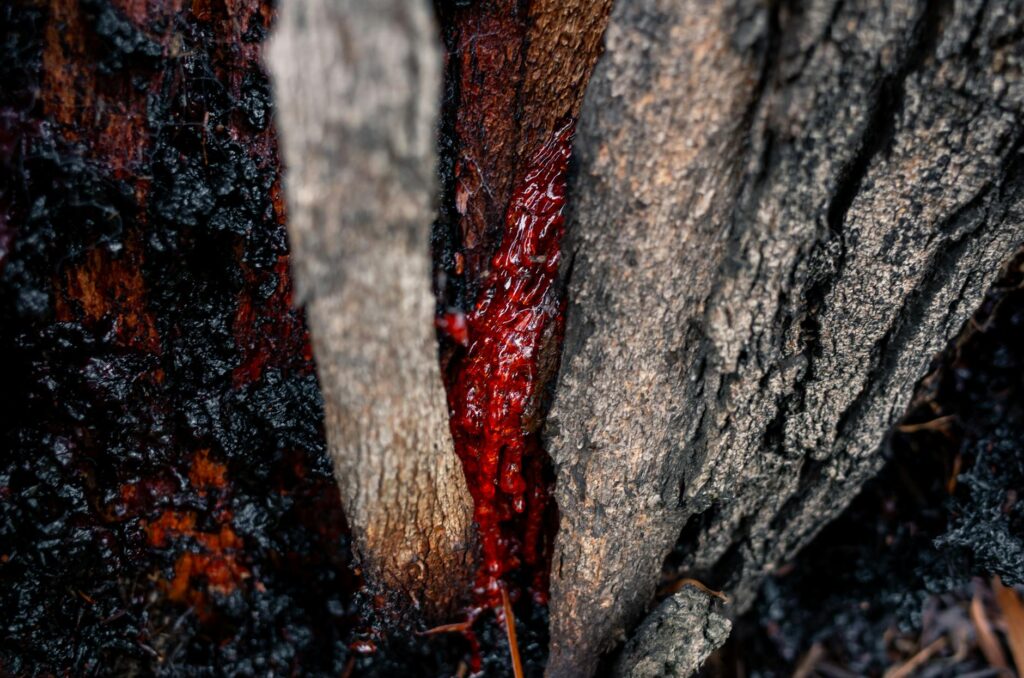
A tree weeping liquid from its bark is one of those symptoms that homeowners see regularly but find hard to interpret. Sometimes it’s alarming; sometimes it’s not. The specific character of the oozing — color, texture, smell, and location — matters enormously in telling them apart.
Slime flux (bacterial wetwood) is one of the most common causes in Middletown’s shade trees, particularly elms, oaks, and large maples. It appears as a dark, watery liquid seeping from a crack or wound, often with a faintly sour or fermented smell. It’s caused by bacterial activity in the heartwood — the bacteria ferment internal fluids and build up pressure that forces liquid out through any crack or wound opening. Slime flux is generally not fatal, though it indicates internal wetwood decay and the flowing liquid can damage bark tissue where it contacts the trunk surface.
Sticky, clear or amber oozing around small holes — especially at the base of the trunk or along scaffold limbs — is a significantly more serious sign. This is sap mixed with frass from wood-boring beetles. Small, perfectly round exit holes (about the diameter of a pencil lead to a pencil eraser, depending on the species) near the oozing are confirmation. Bronze birch borer, two-lined chestnut borer, and other wood borers active in stressed Monmouth County trees leave exactly this signature. These insects typically target trees already weakened by drought or root stress, and their tunneling through the cambium layer can kill major limbs or entire trees within one to three seasons if unchecked.
Foamy, frothy oozing with a strong fermented or yeasty smell is often alcoholic flux — another bacterial condition, distinct from slime flux, that indicates internal decay and anaerobic conditions in the wood. Like slime flux, it’s generally symptomatic rather than immediately fatal.
Peeling, Falling, or Discolored Bark: Sunscald, Rot, and Decline
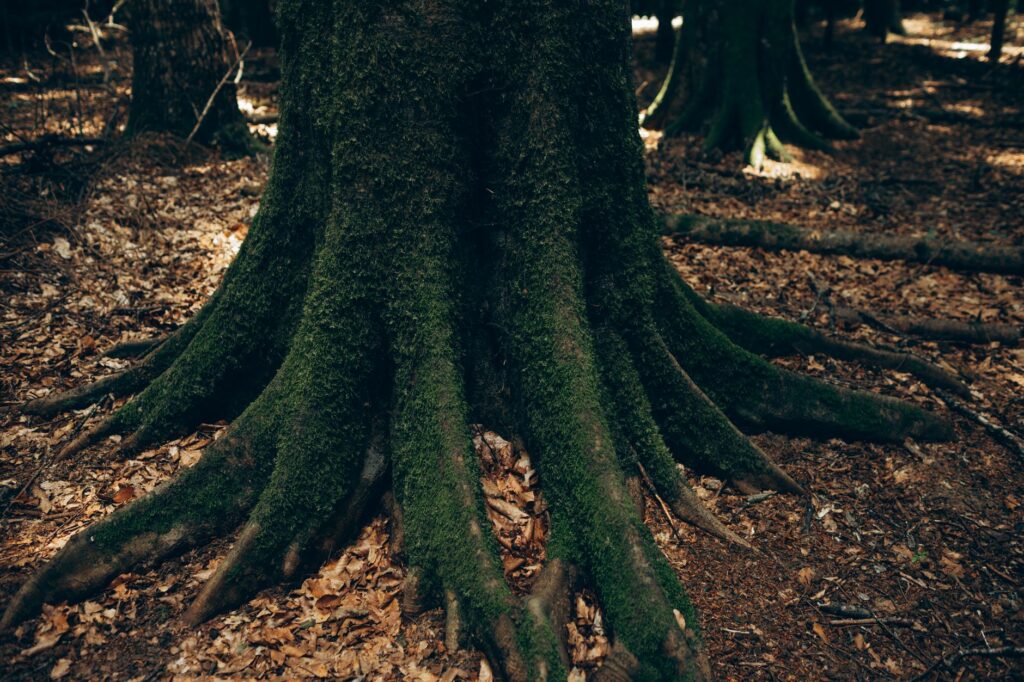
Some bark changes are structural — the tree shedding old bark as part of normal growth. Sycamores (Platanus occidentalis), river birches, and paperbark maples all have naturally exfoliating bark that peels away in patches, strips, or sheets. On these species, peeling is cosmetic, not pathological. If you’re not sure whether your tree is supposed to peel, that’s a good question for a quick online search with the species name — or a conversation with a certified arborist.
Peeling on species that don’t normally exfoliate is a different matter:
- Southwest disease (sunscald): On young trees in exposed locations, the southwest-facing bark heats dramatically on winter afternoons, then freezes rapidly as the sun drops. Repeated freeze-thaw cycles kill the cambium on that side of the tree, and the bark eventually dries, cracks, and peels away. Young red maples, lindens, and crabapples planted in open yards throughout Middletown are especially vulnerable. The damage appears as a vertical strip of dried, cracked, or sunken bark on one side of the lower trunk.
- Armillaria root rot (honey fungus): Causes the bark at the root collar and just above the soil line to soften, discolor, and separate from the wood. Peeling back the loose bark and finding white, papery mycelial fans — flat sheets of fungal tissue — between the bark and the wood is the diagnostic sign. Armillaria affects both conifers and hardwoods and is present throughout Monmouth County’s wooded residential areas. The NJ DEP State Forestry Services lists it among the significant tree pathogens active in New Jersey landscapes.
- General decline: When a tree is dying, it often stops producing vigorous new bark tissue. Old bark becomes loose, sounds hollow when tapped, and may fall away in sections. Press gently on any suspect area — live bark has pressure behind it from active cambial flow and pushes back slightly. Dead bark is hollow and gives without resistance. That single touch tells an arborist a great deal before any further examination.
Any combination of peeling bark and other symptoms — thinning canopy, reduced annual growth, discolored leaves — should be evaluated together. Bark symptoms rarely appear in isolation from the rest of the tree’s health picture.
Middletown's #1 Tree Expert Company
FREE Inspection & Estimate | Certified Arborists | Trimming, Pruning, Removal, More!
Sponsored
Summary: When Bark Symptoms Warrant a Call to a Certified Arborist
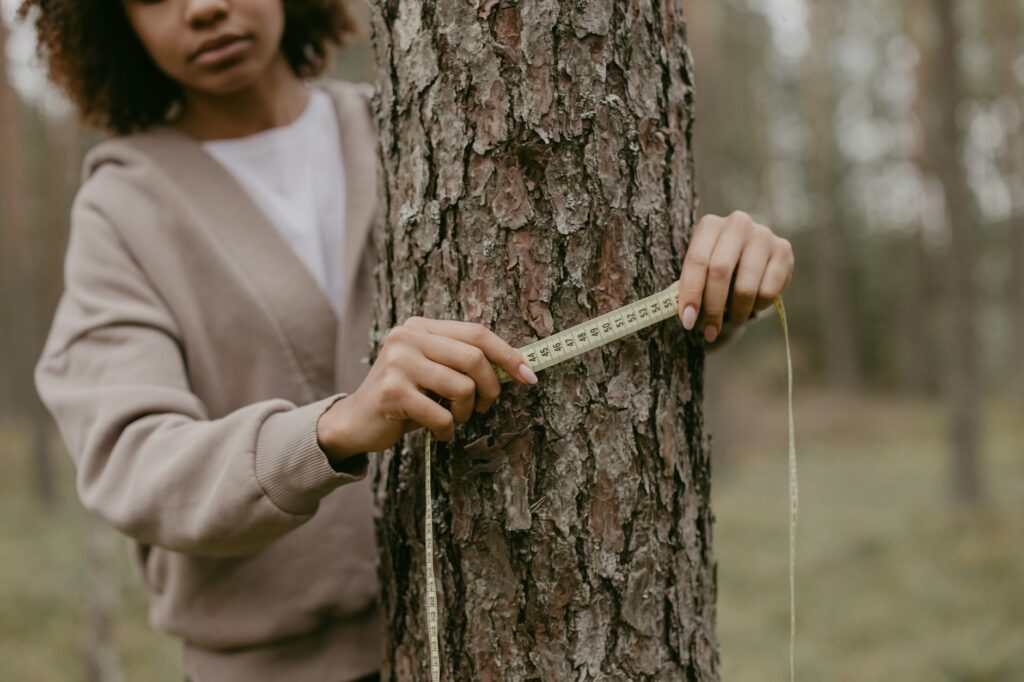
Much of what you’ll find on Middletown’s trees this June is either normal — age-related bark texture, lichen, minor surface fissures — or early-stage, where identifying it now and addressing the underlying stress can still make a difference. Learning to distinguish the two is one of the most practical tree skills a homeowner can develop.
Consider calling a certified arborist when you find any of the following:
- A vertical crack running a significant portion of the trunk’s length, especially one wide enough to insert a finger into
- Cracks at the union of co-dominant stems or the origin of major scaffold branches
- A canker that appears to have grown since last season, or multiple cankers on the same tree
- Sticky oozing combined with small round holes — signs of active wood-boring beetles
- Peeling bark at the root collar with white mycelial fans visible beneath it
- Large sections of bark that sound hollow when tapped firmly
An ISA-certified arborist evaluates bark symptoms in context — crossing what they see against the tree’s species, age, site conditions, and recent stress history. In Middletown, where heavy clay-loam soils, salt exposure near the Bayshore, and storm events create layered stress patterns, that local context matters. A bark symptom on a well-rooted white oak in Hartshorne Woods means something different than the same symptom on a red maple planted five years ago in compacted fill soil near Route 35.
If something on your trees doesn’t look right this June, trust that instinct and have it evaluated. A consultation is almost always far less costly than emergency removal — and far less than the liability that comes with a structural failure you could have prevented.
Photo credits: Featured image by Jonathan Borba on Pexels; Section 1 by cottonbro studio on Pexels; Section 2 by Wyxina Tresse on Pexels; Section 3 by Plato Terentev on Pexels; Section 4 by Wyxina Tresse on Pexels; Section 5 by Sonny Sixteen on Pexels; Section 6 by Irina Novikova on Pexels; Section 7 by cottonbro studio on Pexels.