

Middletown's #1 Tree Expert Company
FREE Inspection & Estimate | Certified Arborists | Trimming, Pruning, Removal, More!
Sponsored
The Question That Comes Up Every May in Middletown
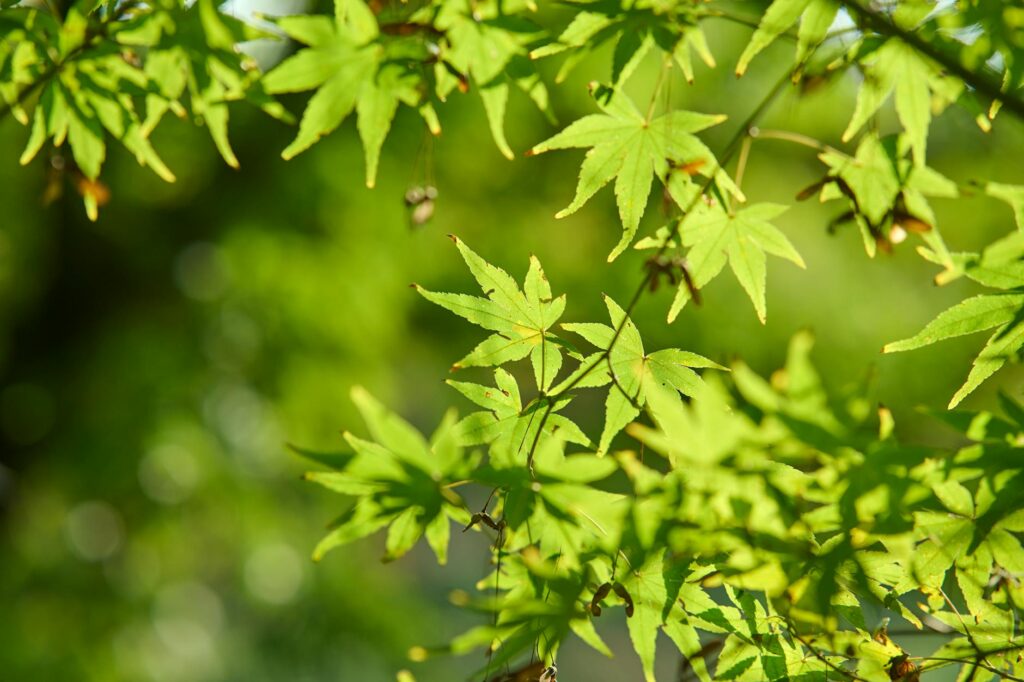
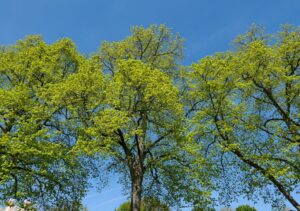
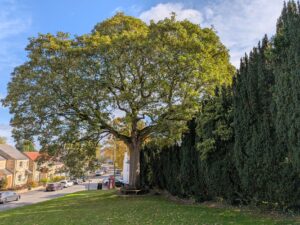
Once the trees in Middletown are fully leafed out in late May, homeowners start comparing canopies. You notice the red maple two doors down looks full and lush while yours is looking sparse. The pin oak on your front lawn has that yellowish cast it seems to develop every year right about now. The big white oak in the back corner — you’re not sure, but the upper crown seems a little thinner than it was five years ago.
This is usually when the question comes up: should I get deep root fertilization done? Tree service companies and lawn care companies will both tell you yes — which makes it reasonable to wonder whether that’s the right answer or a convenient one. The truth is that deep root fertilization is genuinely useful in certain situations and a largely wasted expense in others. What makes the difference is the tree, the soil it’s growing in, and whether what you’re seeing is actually a nutrition problem.
In Monmouth County, with its particular mix of clay-loam soils, compacted suburban root zones, and a range of tree species that vary widely in their soil chemistry requirements, the answer is almost always it depends. This piece breaks down what deep root fertilization actually does, when it’s worth the investment, and what questions to ask before you commit to it.
What Deep Root Fertilization Actually Is
Most homeowners have used granular fertilizer — the kind spread across a lawn with a spreader in spring. Some of it reaches tree roots, but far less than you might expect. Turfgrass has an aggressive, shallow root system that intercepts most surface-applied nutrients before they can migrate down to where tree roots are actively feeding. In compacted suburban soil, dissolved nutrients from surface granular applications may never move deeper than a few inches.
Deep root fertilization works differently. An arborist uses a pressurized probe — a long metal needle attached to a solution tank — to inject a dissolved nutrient mix directly into the root zone, typically at depths of 8 to 12 inches, in a grid pattern beneath the canopy. Injection points are spaced every 18 to 24 inches. The solution bypasses the turf root layer and the compaction zone and delivers nutrients to the depth where feeder roots are actively absorbing water and minerals.
There’s a secondary benefit that doesn’t get mentioned enough: the water injected under pressure provides temporary relief from soil compaction near each probe hole. In a dense clay-loam soil, even a momentary opening of pore space matters to roots that have been operating in a low-oxygen environment. It’s not a permanent fix for compaction — but it’s not nothing either, especially combined with repeated treatments over successive seasons.
What's Going Into the Ground

The composition of deep root fertilization products varies more than most homeowners realize, and it matters — you aren’t treating all trees the same way with the same formula. Understanding what goes into the injection is part of knowing whether a given treatment will actually help your trees.
At the most basic level, a DRF treatment provides macronutrients: nitrogen for growth and chlorophyll production, phosphorus for root development and energy transfer, and potassium for cellular function and stress tolerance. For most trees in suburban New Jersey soils, nitrogen is the primary driver — it’s the most leachable nutrient in the soil cycle and the first to become limiting when leaf litter is removed and natural decomposition is interrupted by lawn management.
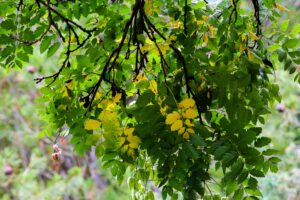
Many quality formulas also include micronutrients — iron, manganese, zinc, boron — that may be deficient or unavailable to the tree based on soil pH. This is particularly relevant for pin oaks (Quercus palustris) and red maples (Acer rubrum) in Middletown, which frequently show iron chlorosis when grown in high-pH clay soils. In those cases, a DRF formula with chelated iron and acidifying agents can address the inter-vein yellowing that homeowners often mistake for a general fertilization problem.
Premium treatments also include humic acids, seaweed-based biostimulants, and mycorrhizal inoculants. Humic acids improve nutrient uptake efficiency in the root zone. Mycorrhizal fungi form symbiotic relationships with tree roots that dramatically increase the effective absorptive surface area — Rutgers Cooperative Extension’s soil and plant nutrition program documents how these mycorrhizal associations are critical to nutrient cycling in trees and how they are frequently disrupted in managed suburban landscapes where leaf removal and compaction are the norm.
Middletown's #1 Tree Expert Company
FREE Inspection & Estimate | Certified Arborists | Trimming, Pruning, Removal, More!
Sponsored
Why Monmouth County Soils Make the Problem Worse
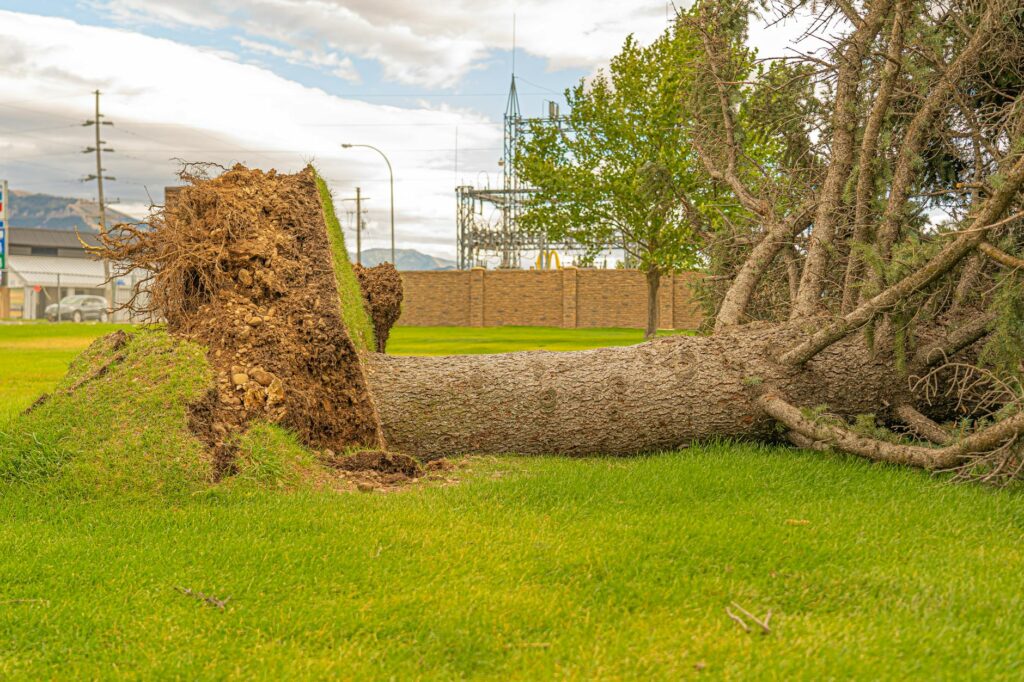
Middletown Township has a heavy preponderance of clay-loam soils — particularly in developed neighborhoods that were previously farmland or forest. These soils have real strengths: they hold moisture well, they’re mineral-rich, and they support a diverse native tree community. The problem is what happens when they’re compacted — and in suburban settings, virtually all surface soils are compacted to some degree.
When clay particles are compressed by foot traffic, lawn equipment, vehicles, and construction activity, the pore space between them collapses. That pore space is what allows oxygen to penetrate, water to move, and dissolved nutrients to become available to roots. A compacted clay soil becomes dense, poorly aerated, and slow to drain. Tree roots in those conditions operate under chronic stress — reduced oxygen exchange, slower nutrient uptake, and diminished capacity to resist pathogens and opportunistic insects.
The NJ DEP Forest Service identifies soil compaction as one of the primary drivers of tree decline in developed areas of New Jersey — a problem invisible at the surface but profoundly limiting to everything a tree does underground. In Middletown’s older residential neighborhoods, trees planted in the 1970s and 1980s have been operating in those compressed soils for 40-plus years, often without any management of the root-zone environment.
The practical consequence for fertilization is straightforward: in heavily compacted Monmouth County clay, surface granular applications are almost entirely captured by turf. The only reliable way to get nutrients into the root zone is to go below the compaction layer. That’s not marketing language — it’s the physical reality of how dissolved nutrients move through compressed clay soil.
The Trees That Benefit Most — and the Ones That Don't

Deep root fertilization isn’t a universal answer. For some trees it’s a meaningful investment; for others it’s an expensive intervention addressing a problem the tree doesn’t actually have. The key is matching the treatment to the actual condition.
Trees that tend to benefit most:
- Mature trees in high-clay compacted soils showing signs of slow decline — progressive crown thinning, leaves smaller than in prior years, reduced annual growth
- Pin oaks with iron chlorosis in high-pH soils — chelated iron delivered directly to the root zone addresses what surface soil acidifiers can’t reach reliably
- Trees in tight urban or suburban situations with severely limited soil volumes — street tree pits, narrow planting beds surrounded by pavement or hardscape
- Trees recovering from construction damage, root disturbance, or grade changes that stressed the root system years earlier
- Large, mature specimen trees with high shade or landscape value where maintaining health is more practical than removal and replacement
Situations where DRF is less compelling:
- Young trees planted within the last three years — they need water and establishment time, not aggressive nutrient loading
- Healthy trees growing in loose, loamy soil with good structure and natural leaf decomposition — adequate nutrient cycling is already happening
- Trees in severe structural decline where the root system is already compromised beyond recovery — fertilization won’t reverse major decay or girdling root damage
- Any tree where the actual problem hasn’t been diagnosed — adding nutrients to a tree with a disease process or a drainage problem may delay the right intervention
There’s also a timing component. DRF applied in early spring (pre-bud break) or late fall (after dormancy begins) tends to produce better results than mid-season treatments, because the tree is either primed to absorb nutrients at bud break or actively moving resources into root storage for winter. The ISA’s tree care resources at treesaregood.org provide context on seasonal timing of tree care — late-spring treatments are still useful but are less efficient than dormant-season applications for many nutrients.
What to Ask Before You Hire Anyone for DRF

Deep root fertilization is offered by a wide range of contractors — some are ISA-certified arborists with real soil and plant knowledge, some are lawn care companies that added the service as a revenue line with minimal additional training. The treatment itself isn’t complicated to apply, but the assessment that should precede it requires genuine expertise. The right questions will tell you quickly what kind of contractor you’re dealing with.
What’s in the formula, and why is it right for my trees? A knowledgeable arborist should explain the N-P-K ratio, whether the formula includes chelated micronutrients, and whether your specific trees have known deficiencies the formula addresses. Generic high-nitrogen turf fertilizer injected quickly into the root zone is not the same as a thoughtfully selected tree nutrition treatment.
Did you assess the soil, or just the tree? A soil test — or at minimum a visual assessment of texture, compaction, and drainage — should inform the treatment. Monmouth County’s high-clay areas, sandy pockets near the Bayshore, and the pH variations across the township all affect which nutrients are deficient and which are already adequate.
Are you an ISA-certified arborist? Ask for the certification number and verify it. This is a baseline credential, not a guarantee, but it separates contractors with formal tree knowledge from those without any.
When do you recommend treating, and why? A contractor who says "any time of year is fine" isn’t thinking about tree biology. There are optimal windows — a contractor with real knowledge will have a clear view on when your trees will benefit most.
What outcome should I expect, and over what timeframe? DRF is not a one-week fix. Realistic expectations run to one to two growing seasons. Anyone describing dramatic results by next month is overpromising.
Middletown's #1 Tree Expert Company
FREE Inspection & Estimate | Certified Arborists | Trimming, Pruning, Removal, More!
Sponsored
Summary: When to Have the Conversation with a Certified Arborist
Deep root fertilization is a real intervention with real benefits — in the right situation. For a large mature tree in a compacted Middletown yard, showing progressively thinner foliage over several growing seasons, a well-designed DRF program can meaningfully extend the tree’s productive life in a soil environment that has been working against it for decades. For a healthy young tree in reasonable soil, the same treatment is largely an expensive waste.
The honest answer is that deep root fertilization should follow a diagnosis, not substitute for one. If you’re looking at a tree and wondering whether DRF would help, the right first step is a formal assessment by a certified arborist who can evaluate the tree, probe the soil, and tell you whether nutrition is actually the limiting factor — or whether what you’re seeing is the result of compaction, root disease, girdling roots, or drainage problems that fertilization won’t touch.
An arborist worth working with will tell you honestly whether DRF makes sense for your trees, what formula they’d recommend and why, and what realistic outcomes look like over the next growing season or two. If you have a mature shade tree in Middletown that hasn’t looked quite right in recent years — thinner than it was, slower to recover from drought, just not the canopy it used to have — this conversation is worth having before another growing season passes. Catching nutritional stress before it compounds into structural decline is almost always easier and less expensive than the alternative.
Photo credits: Featured image by Gustavo Fring on Pexels; Section 1 by 开 心 on Pexels; Section 2 by Peter Dyllong on Pexels; Section 3 by Annushka Ahuja on Pexels; Section 4 by Castorly Stock on Pexels; Section 5 by Christy Rice on Pexels; Section 6 by Alex Green on Pexels; Section 7 by Peter Xie on Pexels.