Middletown's #1 Tree Expert Company
FREE Inspection & Estimate | Certified Arborists | Trimming, Pruning, Removal, More!
Sponsored
The Window You Don't Want to Miss
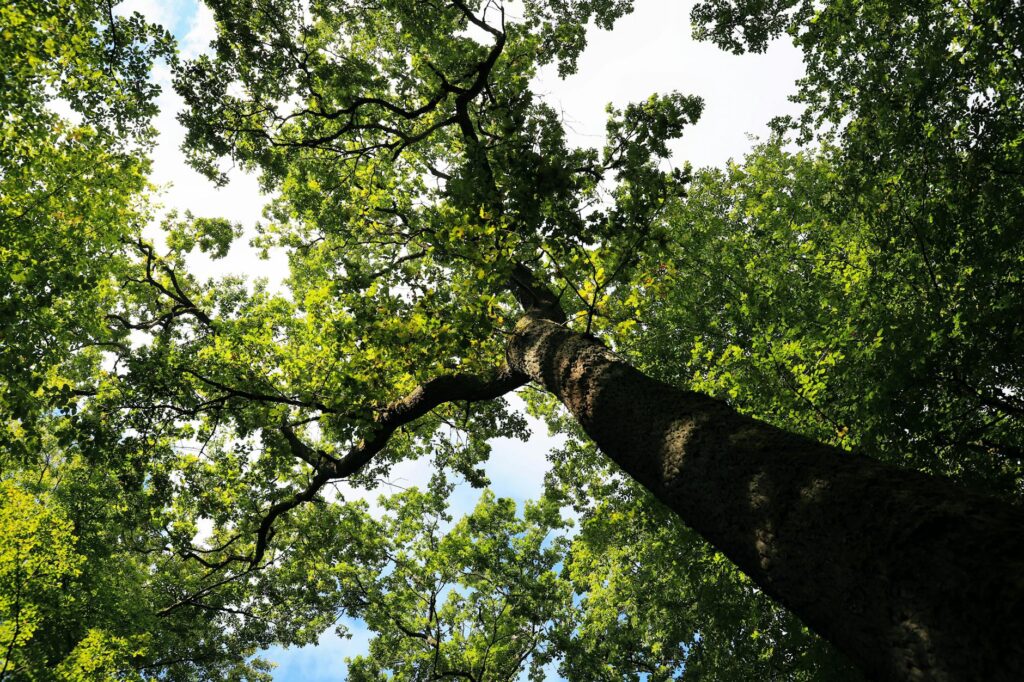
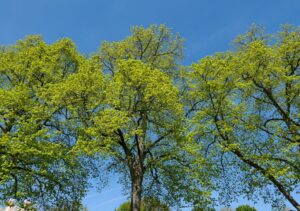
By the last weekend of May, every tree in Middletown Township has finished its spring push. The oaks in Hartshorne Woods have leafed out. The red maples along Middletown-Lincroft Road are fully green. The tulip poplars and white ashes in Poricy Park are carrying their full summer canopy. And somewhere in a backyard on your street, a homeowner is looking at their tree and thinking: that doesn’t look right.
They’re correct to wonder. Late May is the single best window of the year to read your trees for problems. In April, the canopy is still filling in — a sparse tree in early May might just be a slow leafer. By late May, there’s no ambiguity. Every branch has committed to its seasonal effort, and anything that couldn’t produce leaves has declared itself. A thin upper crown right now is a tree telling you something real.
The other reason this week matters: New Jersey’s peak storm season runs from June through September. That window is bearing down fast. A co-dominant stem with a tight V-crotch, a large dead limb over a roof, a hollow section in the main trunk — these aren’t problems you want to discover in the middle of a Bayshore thunderstorm. The few minutes you spend walking your property this week could save you a serious headache before August arrives.
This guide walks through what to look at, what it means, and when to call a certified arborist for a professional opinion.
Start at the Top: Reading Your Tree's Canopy
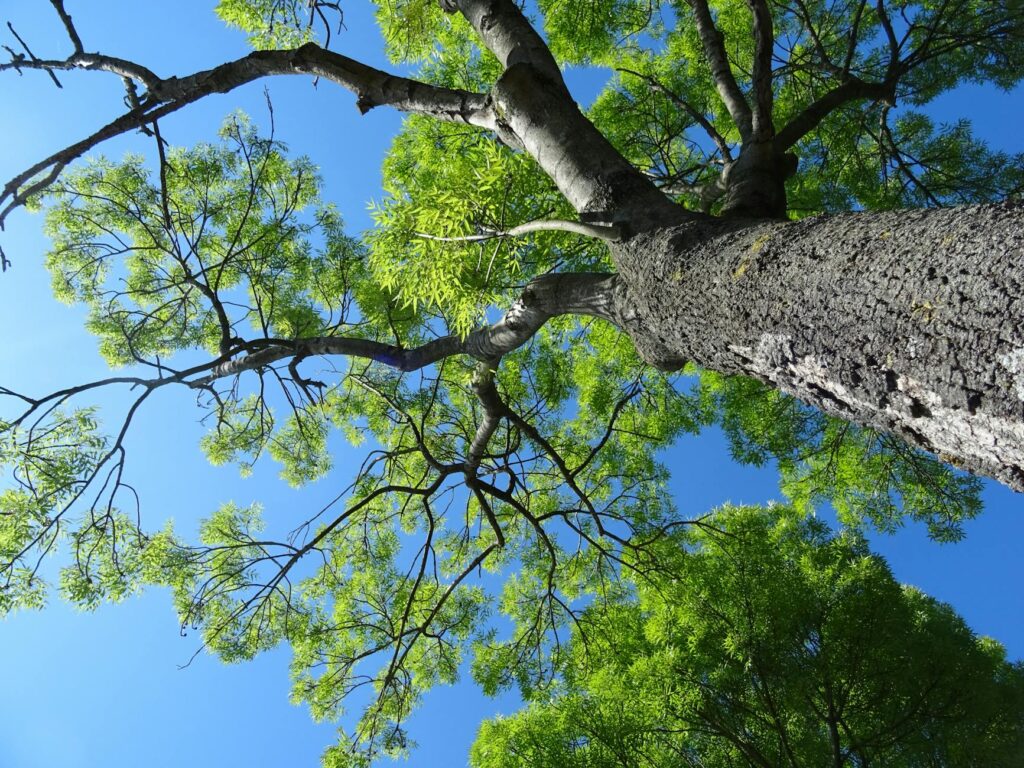
Stand at the base of the tree and look up. A healthy, mature tree should have a dense, reasonably even canopy with minimal dead wood visible from below. What you’re watching for is anything asymmetrical, sparse, or discolored in ways that can’t be explained by shade from a neighboring structure.
Sparse upper crown: If the top third of the tree has noticeably fewer leaves than the lower branches — a symptom arborists call crown dieback — it’s often a signal of root-zone stress. Causes include compacted soil, construction damage from years past, girdling roots, or a disease process that’s been reducing vascular function gradually. Rutgers Cooperative Extension notes that many tree decline symptoms appearing above ground in New Jersey originate in root-zone problems that developed years earlier — the crown is always the last to show it and the last to recover.
Dead branches in full foliage: A completely bare branch in an otherwise leafed-out canopy is dead wood that needs evaluation. If it’s over a structure, a play area, or a frequently used path, treat it as a priority. Dead wood doesn’t flex — it breaks — and branch failures during summer storms are among the most common causes of property damage in Monmouth County.
Leaves smaller or fewer than normal: A tree running on reduced resources — from drought stress, root damage, or soil compaction — often produces smaller-than-usual leaves across the entire canopy. Compared to a neighbor’s same-species tree, your tree’s leaves may look noticeably undersized. This alone isn’t cause for alarm, but combined with dieback or sparse upper crown, it’s a pattern worth documenting. Take a dated photo now so you have a comparison baseline for next May.
Bark, Branches, and What They're Hiding
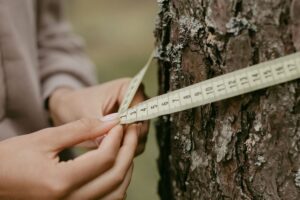
After checking the canopy from below, work your way down. Bark and branch structure tell a different story — one about structural integrity and whether the tree is dealing with disease or pest activity internally.
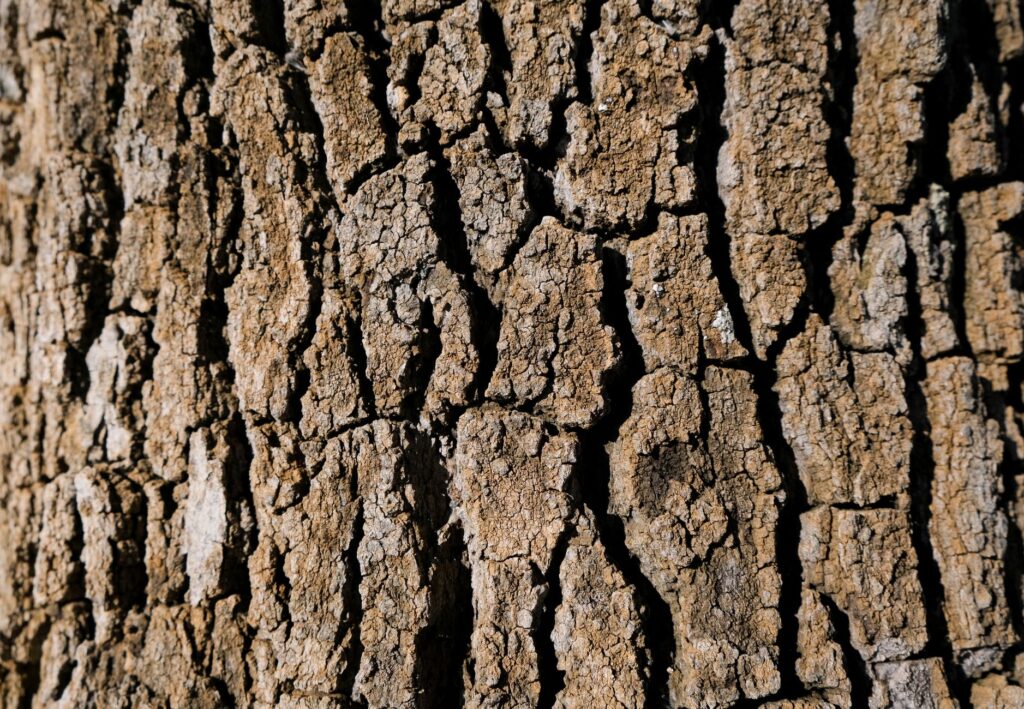
Weeping sap or wet spots on bark: A patch of bark weeping dark, sour-smelling liquid is a condition called slime flux or wetwood, caused by bacterial fermentation inside the wood. It’s usually not immediately fatal, but it signals internal decay and reduced structural wood. Separately, amber-colored sap oozing from small entry holes can indicate borer activity — particularly relevant for birches, oaks, and ash trees this time of year.
Cracks or splits at branch unions: Long vertical cracks in the trunk, or cracks at major branch unions, can indicate included bark — a structurally weak arrangement where two stems grew together without forming a proper wood-to-wood union. The union looks squeezed and tight from outside, and the crack may already be visible. Included bark is one of the leading causes of large limb failures during summer thunderstorms across suburban Monmouth County.
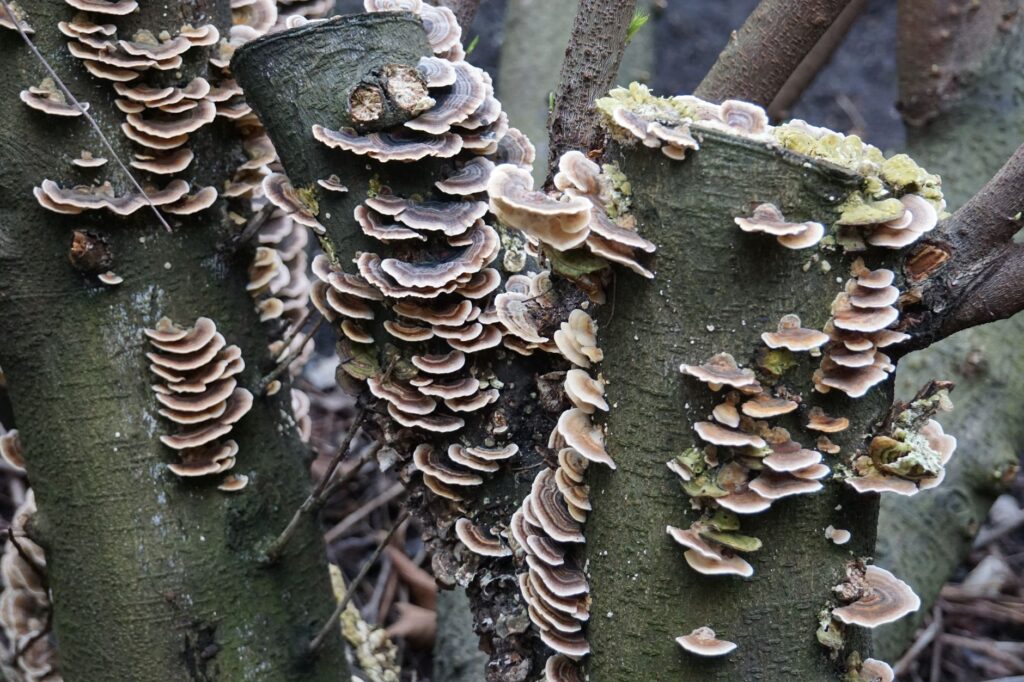
Shelf fungi or conks at the base: Bracket fungi growing from the root flare or lower trunk are a serious warning. These fruiting bodies mean significant decay has been progressing inside the tree for years — by the time the fungus fruits visibly, the internal damage is already extensive. A single conk at the base of a large tree over a driveway or structure is reason to call an arborist for a formal structural evaluation before storm season begins.
A simple sound test can also help: tap the trunk at intervals with your knuckle. A hollow thud in a section that should produce a solid knock is worth noting and worth showing an arborist.
Middletown's #1 Tree Expert Company
FREE Inspection & Estimate | Certified Arborists | Trimming, Pruning, Removal, More!
Sponsored
The Root Zone: What the Ground Around Your Tree Tells You
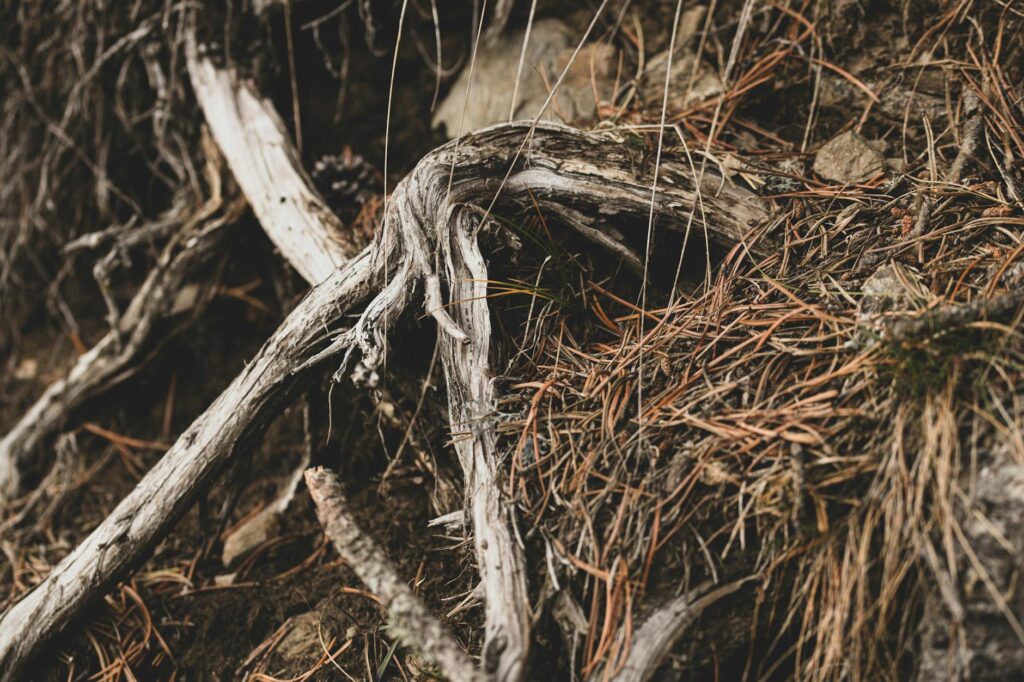
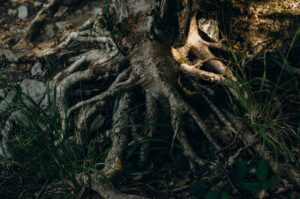
The root zone — extending roughly as far as the canopy drip line, sometimes further — is where most tree health problems originate. Late May is a good time to check it carefully, because the soil has had time to settle from winter and you can see what’s normal and what isn’t.
Mushrooms at the base or along surface roots: Clusters of mushrooms fruiting from the root flare, from the soil surface near the trunk, or from visible roots are often the reproductive bodies of wood-decay fungi colonizing the root system. Like bracket fungi on the trunk, they represent decay that began well before the mushrooms emerged. This is especially concerning on large trees in prominent structural positions.
Soil heaving or cracked pavement: If sidewalk, driveway, or curbing near your tree is cracking and heaving upward, aggressive surface roots are usually responsible. This can indicate that the tree’s deeper root environment — compacted subsoil, hardpan, or a clay layer — is forcing roots to grow laterally near the surface instead of deeper. The NJ DEP Forest Service documents how urban and suburban soil conditions in New Jersey frequently limit tree root development in ways that drive secondary problems above ground for decades.
The root flare: At the base of any healthy tree, the trunk should visibly flare outward where it meets the soil — what arborists call the root flare. If your tree enters the ground like a telephone pole, with no visible widening, the tree is either planted too deep or has been buried under accumulated soil and mulch buildup over the years. Both conditions restrict oxygen to the roots and are leading causes of slow decline in Middletown’s landscape trees.
While you’re at the base: check that mulch isn’t piled against the bark. A mound of mulch heaped against the trunk — the volcano mulch pattern — holds persistent moisture against the bark, invites rot and insect entry at the base, and is one of the most common errors in residential tree care. Pull any volcano mulch back so the root flare is visible and mulch sits 2–4 inches away from the trunk itself.
Storm Season Is Coming: Your Pre-June Hazard Scan
Thunderstorms build in June and peak through August in coastal New Jersey. Raritan Bay funnels warm, moist air in ways that can intensify storms quickly — ask anyone who’s watched a clear sky go dark in 20 minutes from a back deck in Port Monmouth or Leonardo. The time to evaluate your trees for storm risk is now, while you can act deliberately rather than reactively.
Specific structural conditions to check before June:
- Co-dominant stems: Two or more stems of nearly equal diameter rising from the same origin create an inherent weak point. If the union looks tight and V-shaped rather than broadly rounded, there may be included bark inside — and that union is a likely failure point under high wind or ice loading.
- Large dead limbs over structures: Any dead branch over a house, garage, carport, or frequently occupied outdoor area is a near-term priority. Dead wood doesn’t flex in wind — it fractures.
- Heavy, overextended limbs: A long horizontal limb carrying a large leaf mass far from the trunk — especially one that hasn’t been managed in years — can torque and split at the attachment point under storm load, even without visible defects beforehand.
- Recent lean development: A tree that appears to have increased its lean since the last major storm, especially one where you can see soil mounding or cracking on the upwind side at the base, may have experienced root damage or root plate disturbance.
The International Society of Arboriculture provides homeowner-facing guidance on recognizing hazard conditions in trees — useful background before calling an arborist, so you can describe what you’re seeing and ask the right questions.
What Middletown Homeowners Can — and Can't — Do Right Now
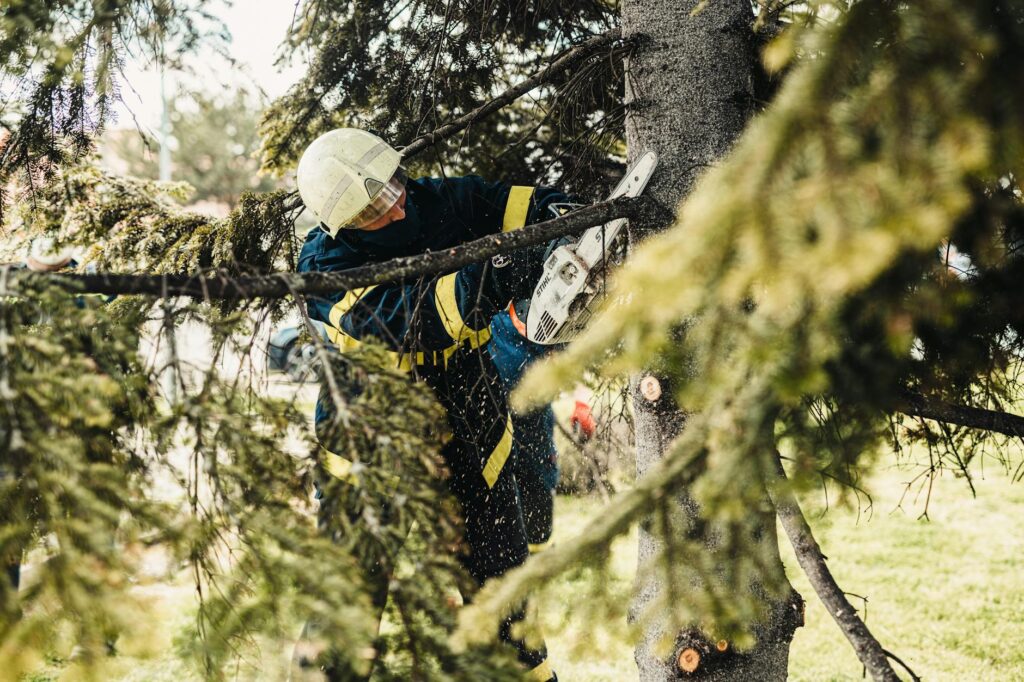
Some late-May tree care tasks fall squarely within what a careful homeowner can handle safely. Others require a certified arborist — not because the work is technically complex, but because working at height with heavy wood is genuinely dangerous, and because misreading a structural problem can turn a manageable situation into a much worse one.
What you can do yourself:
- Correct volcano mulch — pull any buildup away from the trunk so the root flare is visible
- Deep water newly planted trees (in the ground 3 years or fewer) if we’ve had a dry stretch of more than a week
- Document concerns with dated, well-lit photos from multiple angles
- Remove small dead twigs within comfortable standing reach using hand pruners — clean flush cuts, no stubs left
- Remove tree stakes if your tree has been in the ground more than one full growing season
What to leave to a certified arborist:
- Any dead limb larger than 2 inches in diameter, especially at any height
- Any pruning that requires a ladder, rope, or climbing equipment
- Structural assessments — whether a co-dominant stem or large cavity represents real risk
- Cabling or bracing to manage structural weakness
- Any tree removal, even of smaller trees close to structures or utility lines
When hiring, verify credentials. The ISA’s Find an Arborist tool at treesaregood.org lets you confirm that any arborist you hire holds a current certification — a meaningful baseline for competence and professional accountability.
Middletown's #1 Tree Expert Company
FREE Inspection & Estimate | Certified Arborists | Trimming, Pruning, Removal, More!
Sponsored
Summary: What to Do This Week Before Storm Season Arrives
Late May is a genuine gift for Middletown homeowners who pay attention. Trees have committed to their full canopy, storm season hasn’t arrived yet, and you have time to act on what you see before the first major June thunderstorm. The walk-around you do this week — checking the canopy from below, examining bark and root flare, scanning for structural concerns — takes 15 minutes and costs nothing.
What you find might be nothing at all. Or it might be the start of a useful conversation with a certified arborist about whether a 40-year-old oak over your back deck needs cabling, some selective pruning, or simply a correction to its mulch situation. Most tree problems are manageable when found early. Very few are manageable after a storm forces the issue.
If your walkthrough raised a question you couldn’t answer — a hollow-sounding section, a suspicious crack at a major branch union, mushrooms at the base of a large tree — that’s exactly the right moment to call a professional. A qualified ISA-certified arborist can tell you whether to act now, monitor through the season, or simply let the tree do what healthy trees do. Either way, you’ll face storm season with more information than you had before. That’s the whole point of the late-May check.
Photo credits: Featured image by Grigoriy on Pexels; Section 1 by Christina & Peter on Pexels; Section 2 by Rasa Vilciņa on Pexels; Section 3 by Marian Florinel Condruz on Pexels; Section 4 by Walter Cunha on Pexels; Section 5 by Magda Ehlers on Pexels; Section 6 by Dalia Al-Refai on Pexels; Section 7 by Helena Jankovičová Kováčová on Pexels.