
Middletown's #1 Tree Expert Company
FREE Inspection & Estimate | Certified Arborists | Trimming, Pruning, Removal, More!
Sponsored
When the Grass Is Green and the Tree Is Struggling
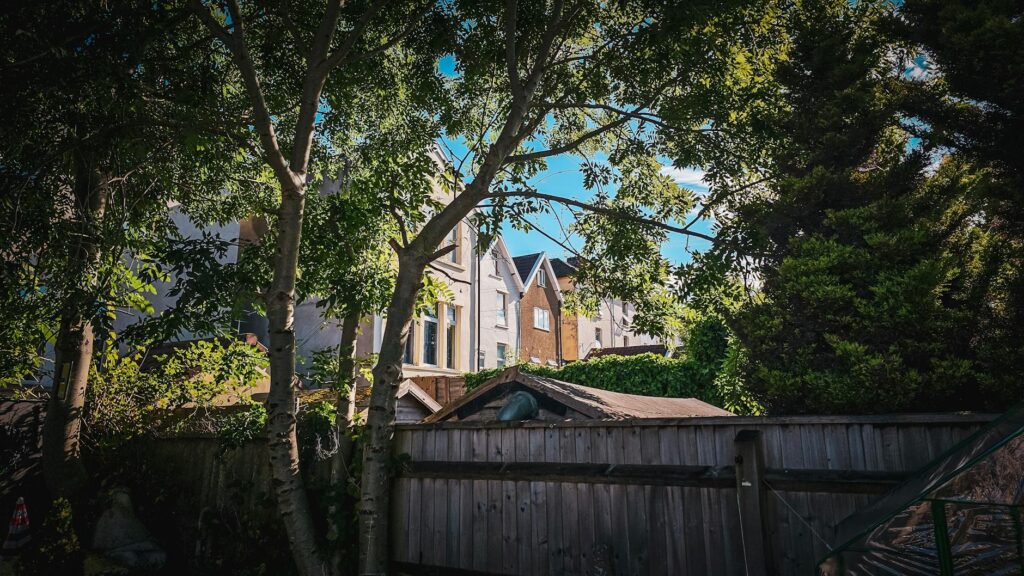
By late May, most Middletown Township yards look lush. The lawn is deep green, the irrigation timer is running on schedule, and everything seems fine. But walk up to your shade tree — that red maple by the patio, or the pin oak at the corner of the lot — and look a little closer. The leaf size might be a touch smaller than last year. The canopy looks a bit thin. A few branches in the upper crown seem tired in a way you can’t quite name.
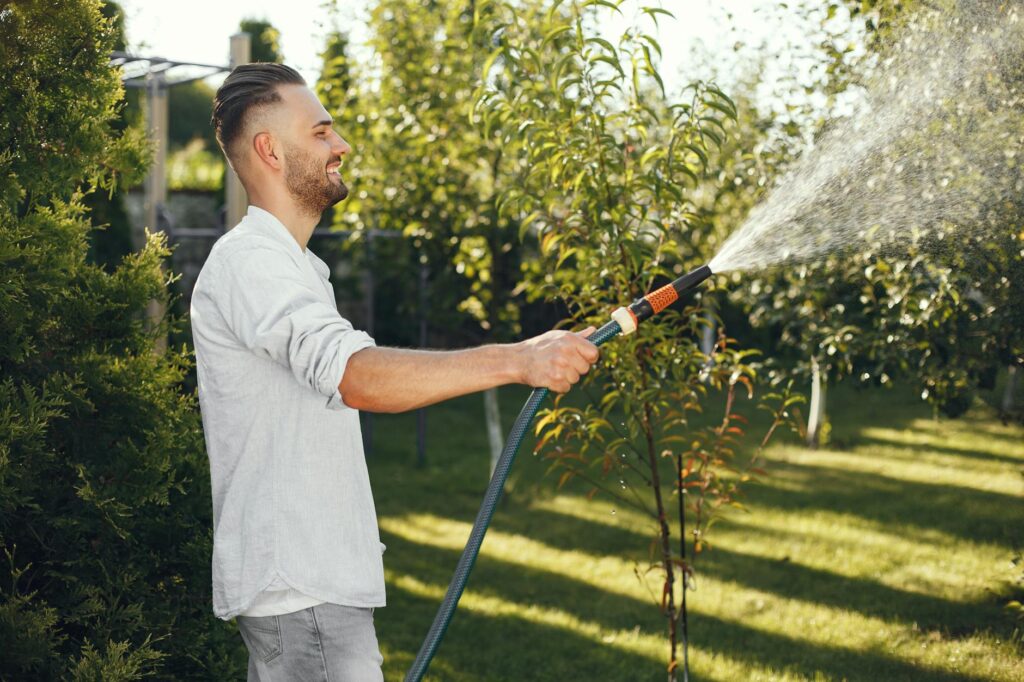
What’s happening is a mismatch I see in this area every summer: homeowners are irrigating their properties, but they’re watering their turf, not their trees. Sprinkler systems are engineered for grass, which has shallow roots and needs frequent, light moisture. Trees have entirely different water requirements — and in Middletown’s clay-loam soils, that distinction matters more than most homeowners realize.
The good news is that fixing this takes no special equipment and no contractor. Understanding how your soil actually behaves, and how to put water where your trees can use it, is one of the highest-value things a Middletown homeowner can do for their trees this season.
Middletown's Clay-Loam Soils: Why They're Tricky for Tree Watering
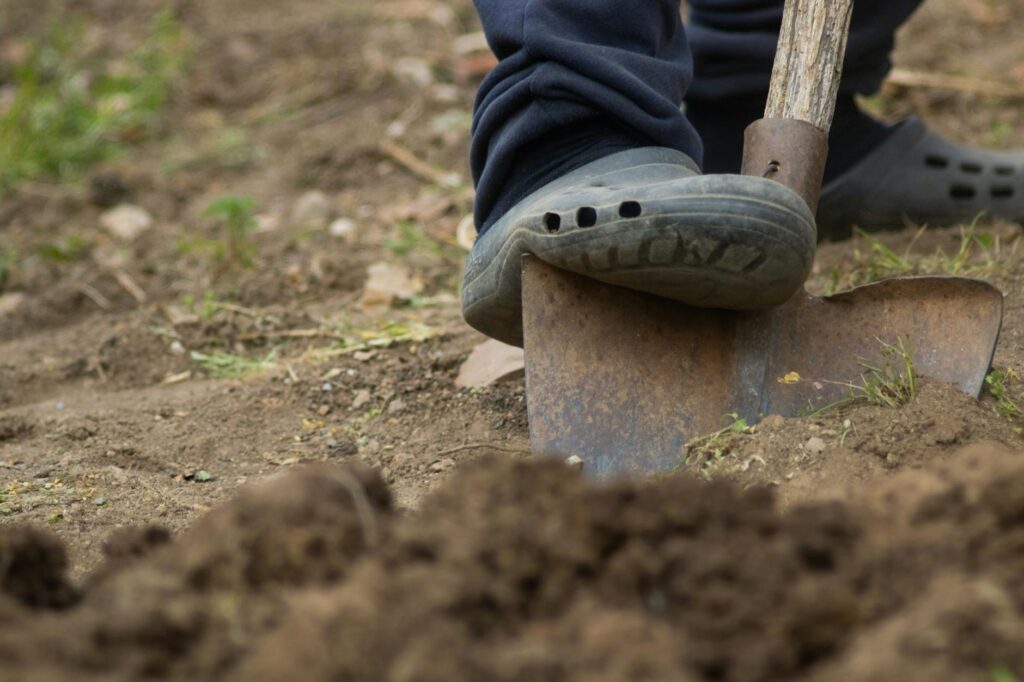
Middletown Township sits on a mix of sandy loam and clay-loam soils, with heavier clay content as you move away from the bay and into areas like Lincroft, Oak Hill, and New Monmouth. Clay-loam soils have real virtues — they retain nutrients and moisture better than the sandy coastal soils near Port Monmouth or Leonardo. But they also compact easily, drain slowly, and create a deceptive surface condition.
When clay-loam is dry, water applied too quickly beads up and runs off rather than penetrating. This is especially common after a stretch of warm, dry weather — which Middletown typically sees from June through August. You run the sprinkler, the surface gets wet, and you assume your trees are getting water. But you’ve only moistened the top inch of soil. The feeder roots of an established shade tree operate in a zone six to eighteen inches deep, and that zone may be nearly dry.
New Jersey’s variable spring and summer rainfall patterns mean that even a wet-seeming May can be followed by drought conditions that quietly stress established trees by July. Rutgers Cooperative Extension’s tree and landscape guidance consistently emphasizes that soil moisture at root depth — not surface appearance — is the real measure of whether your trees are adequately watered. The finger test tells you what the surface looks like; a probe or a soil knife tells you what your tree is actually experiencing six inches down.
Why Your Sprinkler System Isn't Watering Your Trees
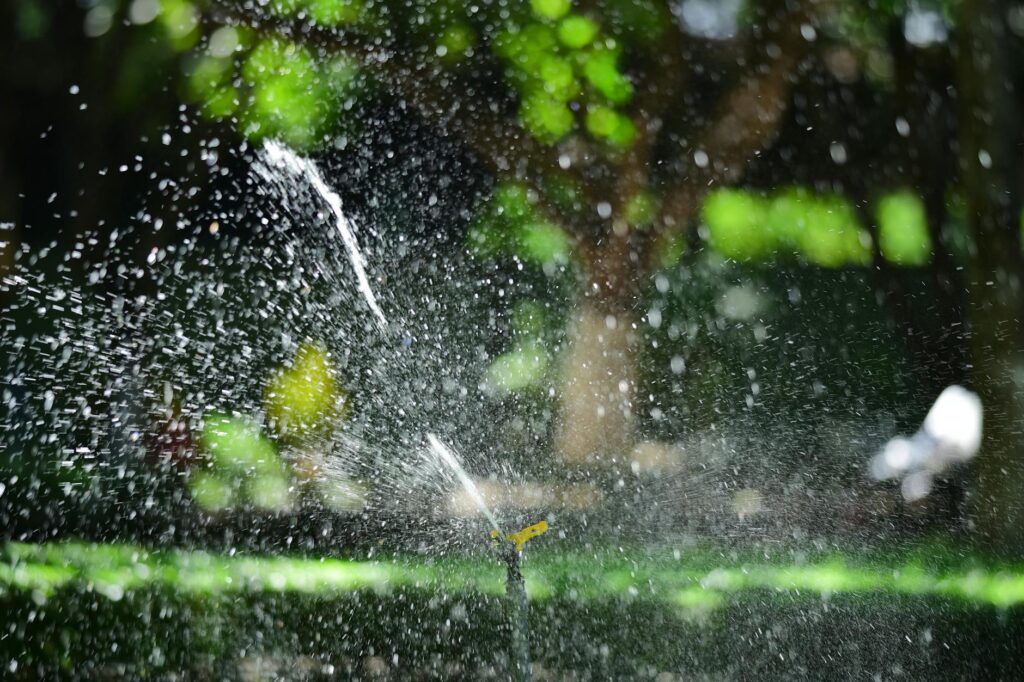
Lawn irrigation systems are engineered to maintain turf. They’re designed to apply water frequently — often every day or every other day during dry periods — in short cycles that keep the top two to four inches of soil moist. That’s exactly what grass roots need. It is essentially the opposite of what your trees need.
Frequent, shallow watering applied near the base of a tree trains the tree’s roots to stay close to the surface, where the moisture is. Over years, this creates a root architecture that is shallow and laterally dense — roots that become highly vulnerable to summer drought when that surface moisture disappears, and vulnerable to freeze-thaw cycles in winter when shallow roots are exposed to temperature extremes. The tree effectively becomes dependent on your irrigation system, and any interruption — a broken sprinkler head, a week away, a dry stretch — hits it hard.
There’s a disease consideration, too. Overhead sprinklers that run at night keep foliage wet during the coolest, least evaporative hours — exactly the conditions that favor fungal pathogens. For trees like dogwoods (Cornus florida), crabapples, and ornamental cherries that are already susceptible to leaf fungus, nightly wet foliage is a problem you’re paying your water bill to create.
The International Society of Arboriculture’s Tree Owner’s Manual is clear on this point: trees need deep, infrequent irrigation that encourages roots to grow downward toward stable moisture — not shallow, frequent watering that keeps roots locked near the surface where conditions fluctuate wildly from week to week.
Middletown's #1 Tree Expert Company
FREE Inspection & Estimate | Certified Arborists | Trimming, Pruning, Removal, More!
Sponsored
What Deep Watering Actually Looks Like
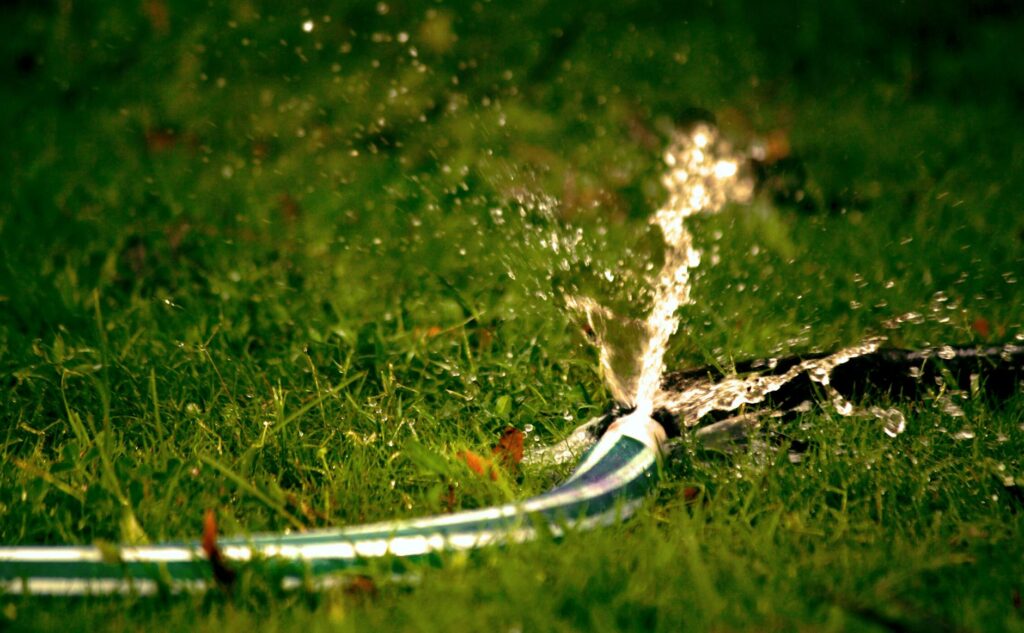
Deep watering means applying water slowly enough that it penetrates to a depth of at least twelve to eighteen inches in the root zone. For clay-loam soils, slow is the operative word — water applied faster than the soil can absorb it will run off the surface or pool in low spots. The goal is infiltration, not saturation.
Here are the approaches that work reliably for Middletown homeowners:
- Soaker hose or drip line at the drip zone: Place the hose in a loose spiral starting about two feet from the trunk and extending out to the edge of the canopy (the drip line, roughly beneath the outermost branch tips). Run it for 45 to 90 minutes, once or twice per week during dry stretches. This is the most consistent method for established trees and costs almost nothing to set up.
- Slow trickle from a garden hose: Set the hose to a slow trickle and let it run at three or four spots around the drip zone for 15 to 20 minutes each, moving it around the base. It takes attention but delivers water exactly where you want it.
- Tree watering bags for newly planted trees: Products like Treegator bags release water very slowly over several hours — ideal for young trees in their first two or three seasons in the ground.
What to avoid: directing water at the trunk base (which keeps bark wet and invites fungal rot), and running a standard sprinkler head aimed at the tree for 20 minutes and considering the job done. That wets the surface and the lawn. It does not water the tree.
For most established shade trees in Middletown — oaks, maples, beeches, sweetgums — the target is roughly one inch of total water per week from rain and supplemental irrigation combined during the growing season. When rainfall is adequate, you may not need to supplement at all. The goal is to bridge dry gaps, not replace natural precipitation.
Newly Planted Trees Are a Different Case Entirely

If you planted a tree this spring — a red maple (Acer rubrum), a serviceberry (Amelanchier), a native oak — the watering rules are different. A freshly planted tree has had its root system radically reduced compared to what it had in the nursery or the woods. It is operating at a deficit, rebuilding its root structure in unfamiliar soil while simultaneously pushing leaves and trying to grow. Water stress during this period can set a tree back years or, in a bad summer, kill it quietly.
For trees in their first two growing seasons, I tell Middletown homeowners to water deeply every three to four days during dry weather, and every five to seven days even when rainfall seems normal. The goal is to keep the root ball — the original soil mass that came with the tree — consistently moist but never waterlogged. The simplest check: press your finger into the soil right at the trunk base, six inches down. Dry means water. Moist means wait.
The USDA Forest Service’s urban forest management program emphasizes that the critical establishment window for most deciduous trees spans two to three years, with the first summer carrying the highest risk. Water stress in year one can impair root development in ways that don’t become visible until year two or three, when a tree that seemed fine suddenly declines — often right when you thought it had made it through the hard part.
Mulching makes a significant difference for newly planted trees. A three-inch ring of organic mulch — kept away from the trunk, extending two to three feet outward — retains soil moisture, moderates soil temperature, and reduces competition from grass roots. A properly mulched new tree needs substantially less supplemental watering than an unmulched tree in the same conditions.
Reading Your Tree's Water Stress Signals
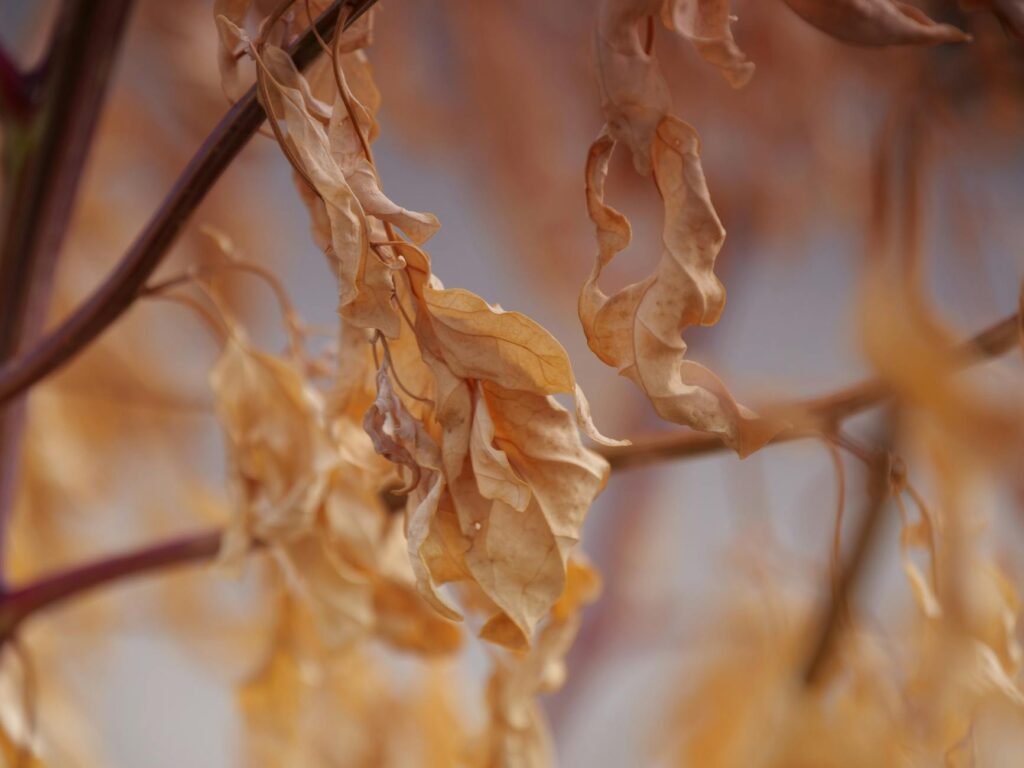
Trees communicate water stress in ways that are easy to read once you know what to look for. By late May in Middletown, the early signals are starting to appear in trees that are being under-watered or that came out of a dry April with a moisture deficit already built up.
Signs of drought stress to look for now:
- Leaf curl or marginal scorch: Leaves curl inward along their edges, or the margins turn dry and brown. The tree is reducing its surface area to limit water loss.
- Smaller-than-normal leaf size: A subtle early signal. Compare this year’s leaves to photos from prior years. Noticeably smaller leaves mean the tree was producing foliage on reduced resources.
- Premature leaf drop in July or August: Some species — red maples and river birches in particular — will shed leaves early as a survival response to severe drought stress. By the time this happens, the stress has been building for weeks.
- Afternoon wilt that doesn’t recover by evening: Some midday leaf droop on hot days is normal. A tree that stays wilted into the evening is telling you something important.
Overwatering is less common in Middletown’s clay-loam soils but does happen, particularly in poorly draining areas. Symptoms include uniform yellowing across the canopy, soil that stays saturated for days at a stretch, and an anaerobic smell from the root zone. If you’re uncertain, dig a small hole near the drip line and check the soil six inches down before adding more water. In heavy clay, it’s almost always better to wait one more day than to add water to a root zone that’s already saturated.
Middletown's #1 Tree Expert Company
FREE Inspection & Estimate | Certified Arborists | Trimming, Pruning, Removal, More!
Sponsored
When to Call a Certified Arborist About Tree Water Stress
Proper tree watering is one of those skills that looks deceptively simple but makes a measurable difference in tree health over time. For Middletown homeowners, the core principles are straightforward: water deeply and infrequently, target the drip zone rather than the trunk base, and let your soil type guide your timing. Your sprinkler system is keeping your lawn green. It is not watering your trees in any meaningful way — and it may be conditioning their root systems to stay shallow, where they are most vulnerable.
For established trees, a soaker hose or slow trickle around the drip line once or twice a week during dry stretches is usually enough. For newly planted trees in their first two seasons, more frequent attention is warranted — check the soil at root depth, not just the surface, every few days.
If a tree in your yard continues to show stress despite your best watering efforts — persistent leaf curl, dieback advancing into the canopy, dramatic decline compared to prior years — that’s a signal worth investigating with a certified arborist. Water stress often combines with other problems: girdling roots, soil compaction from foot traffic or construction, surface roots damaged by lawn equipment, or root disease that’s been developing below grade. An arborist can assess the root zone and soil conditions to tell you whether more water is the answer, or whether something else is happening beneath the surface that watering alone won’t fix. Sometimes the most important thing a professional can offer is clarity about what a tree actually needs.
Photo credits: Featured image by Gustavo Fring on Pexels; Section 1 by Boys in Bristol Photography on Pexels; Section 2 by Riccardo Falconi on Pexels; Section 3 by Sóc Năng Động on Pexels; Section 4 by Ashish on Pexels; Section 5 by Curtis Adams on Pexels; Section 6 by Arri Bom on Pexels; Section 7 by Malcolm Garret on Pexels.