Middletown's #1 Tree Expert Company
FREE Inspection & Estimate | Certified Arborists | Trimming, Pruning, Removal, More!
Sponsored
Why Middletown Homeowners Are Rethinking What They Plant
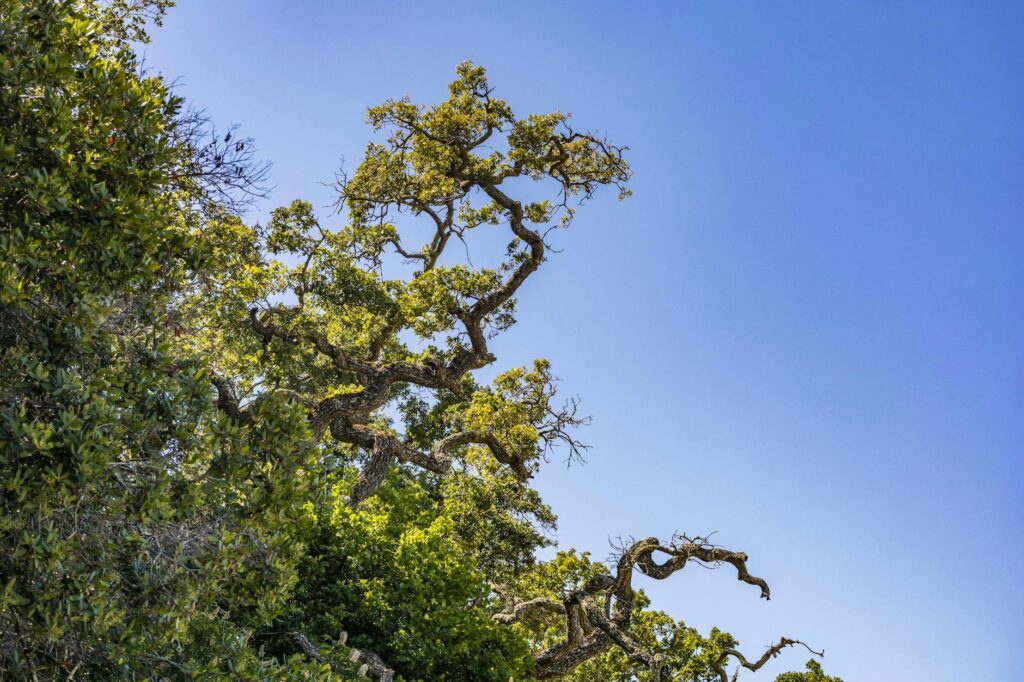
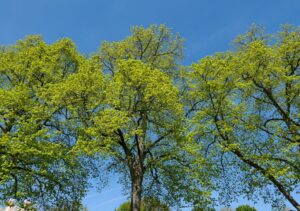
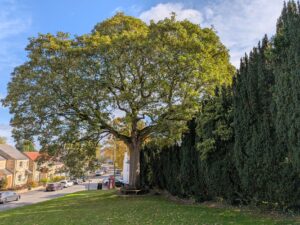
Stand at the edge of a mature oak grove in Hartshorne Woods Park on a hot afternoon in late June and you’ll understand immediately why a shade tree is worth every year of patience it takes to grow one. The temperature drops five to eight degrees under a full canopy. The lawn stays green longer. Birds, insects, and squirrels share the space in a way that no ornamental planting can match.
Every spring in Middletown Township, I talk to homeowners who want to add a shade tree to their yard — and the first question I ask is whether they’ve thought about going native. Not out of ideology, but out of practicality. Middletown’s clay-loam soils, its nor’easters, its wet springs and dry late summers — native trees evolved for exactly these conditions. Ornamental imports can look good for a few years, then start struggling in ways that are expensive to diagnose and fix.
Late May is a great time to plan your next shade tree, even if you wait until fall to plant. You can watch what’s working in your neighbors’ yards, evaluate how the light moves across your property, and give yourself time to pick the right species for your site. Here’s what I’ve seen succeed in Middletown yards over the years.
What Makes a Tree Native — and Why It Matters for Your Yard
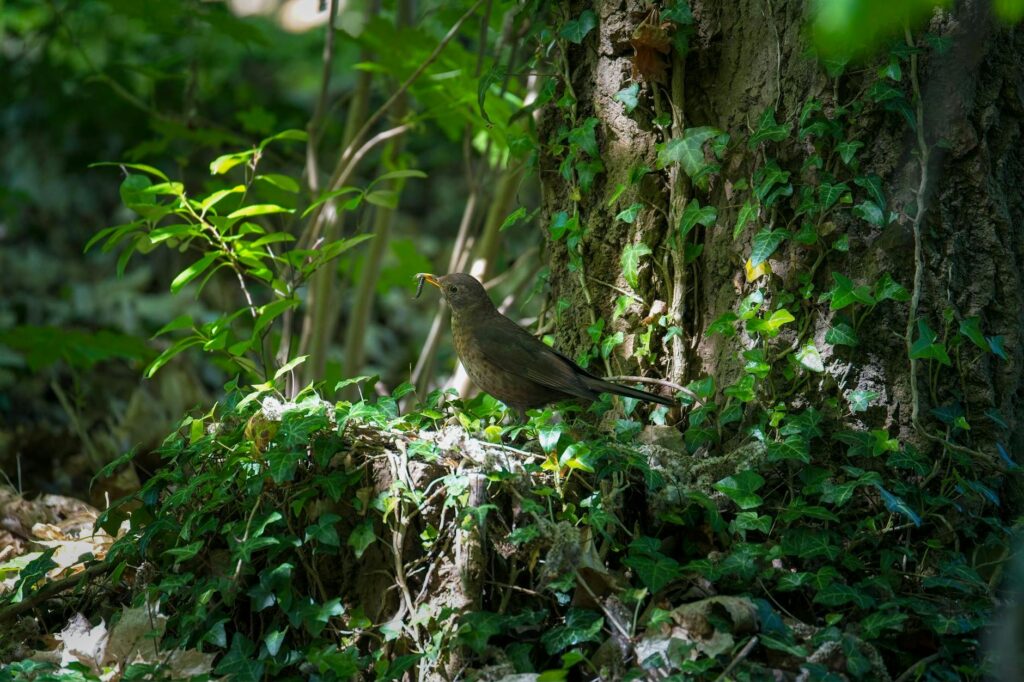
A “native tree” isn’t just a tree that happens to grow in New Jersey. In the ecological sense, it’s a species that evolved in this region over thousands of years, developing relationships with local soils, insects, fungi, birds, and mammals. When you plant a native tree in your Middletown yard, you’re plugging into a system that already exists — one where caterpillars know how to process the leaves, where birds know where to nest, and where the tree knows how to survive the freeze-thaw cycles of a NJ winter.
Non-native species don’t carry those relationships. A Callery pear (the so-called Bradford pear) blooms brilliantly for a decade, then splits at the crotch in a summer thunderstorm. A Norway maple leafs out dense and full, shades out everything below it, and seeds aggressively into surrounding woods. Rutgers NJAES publications document how native plantings support local biodiversity at rates that non-natives simply cannot match — including the insects that birds depend on to feed their nestlings.
For Middletown homeowners specifically, this matters because Monmouth County still has significant forested corridors — Hartshorne Woods Park, Poricy Park, Tatum Park, Thompson Park — that serve as wildlife refuges. What you plant in your yard can either connect to or disconnect from those corridors. Native shade trees, even a single one, function as a stepping stone in that habitat network.
White Oak (Quercus alba): The Long-Game Champion
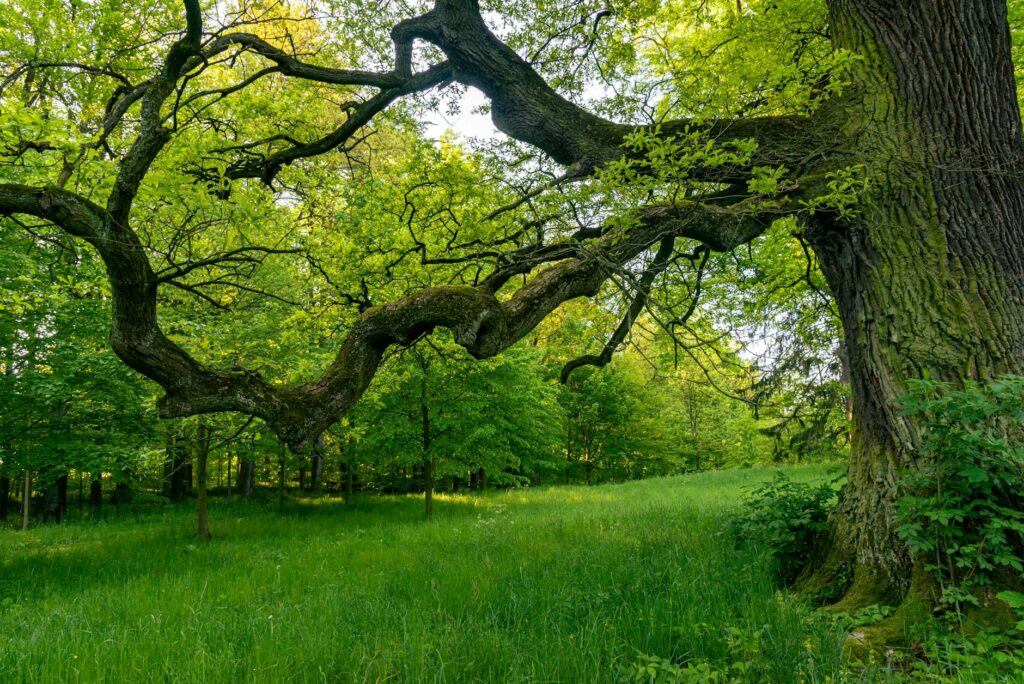
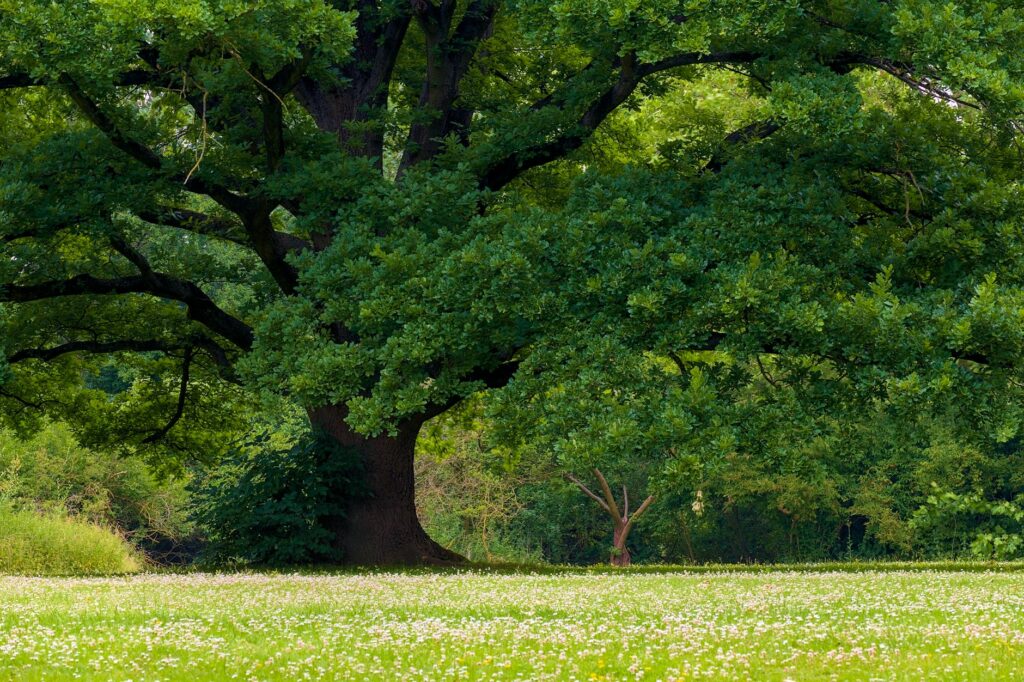
If you have space for one tree and you’re thinking generationally, plant a white oak (Quercus alba). Of all the native trees I’ve recommended over my career, white oak delivers the most tangible ecological and practical benefit per square foot of canopy — and it’s perfectly suited to Middletown’s clay-loam soils.
White oaks grow slowly at first, typically adding 12–15 inches per year in the establishment phase. That patience is rewarded. A mature white oak at 60–80 feet tall can shade an entire yard, support hundreds of caterpillar and moth species that form the base of the local bird food web, and live for three hundred years or more. The large specimens you can see at Hartshorne Woods Park and Tatum Park are the real thing — and some of those trees were saplings when Middletown Township was first settled.
White oaks develop a deep taproot in their first few years, which makes them drought-tolerant once established and resistant to wind throw during nor’easters. They’re not a good choice for small lots (allow at least 40 feet of spread at maturity), near overhead wires, or in poorly drained areas. But on a standard Middletown residential lot with clay-loam soils and adequate space, they’re nearly ideal.
One important caution: avoid pruning oaks between April and July if you can. The open pruning wound during that window creates an entry point for oak wilt, a disease transmitted by beetles attracted to fresh cuts. Late summer through late winter is the safe pruning window for all oaks in Monmouth County.
Middletown's #1 Tree Expert Company
FREE Inspection & Estimate | Certified Arborists | Trimming, Pruning, Removal, More!
Sponsored
Red Maple (Acer rubrum): Fast Color, Hardy Roots
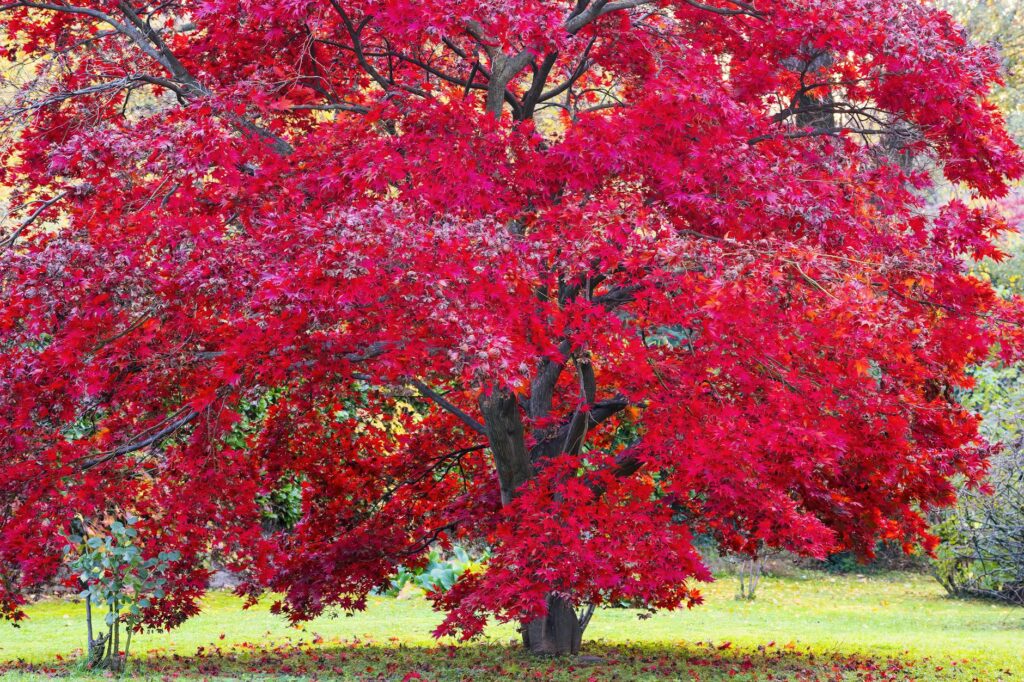
For homeowners who want shade faster — and on a smaller lot — red maple (Acer rubrum) is the workhorse of Middletown’s residential tree canopy. It’s already everywhere in Monmouth County: hedgerows, stream edges, woodlot borders. That’s not an accident. Red maple is extraordinarily adaptable.
Red maples grow faster than oaks, typically 3–5 feet per year in good conditions, and begin providing meaningful shade within 8–10 years of planting. They tolerate Middletown’s clay-loam soils exceptionally well — even clay that stays damp well into spring. If you have a low-lying area in your yard that holds water seasonally, red maple is one of the best choices available.
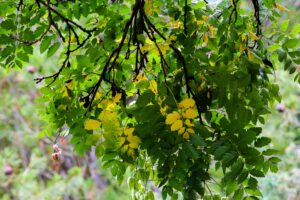
The fall color on red maple ranges from orange to deep scarlet and arrives early — often by late September in Monmouth County. Along the Bayshore communities of Port Monmouth and Leonardo, red maples in residential yards are among the first visual signs that autumn has arrived.
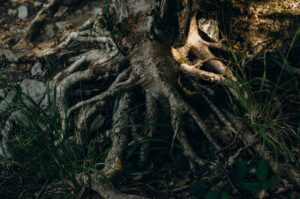
One thing to manage with red maple: surface roots. In clay soils that stay consistently wet, red maple roots can emerge near the soil surface over time. Keep lawn mowers and string trimmers at least 3 feet from the trunk to avoid the slow bark damage that invites decay. A wide ring of wood chip mulch around the base is the simplest and most effective preventive measure.
Other Native Trees Worth Planting in Middletown
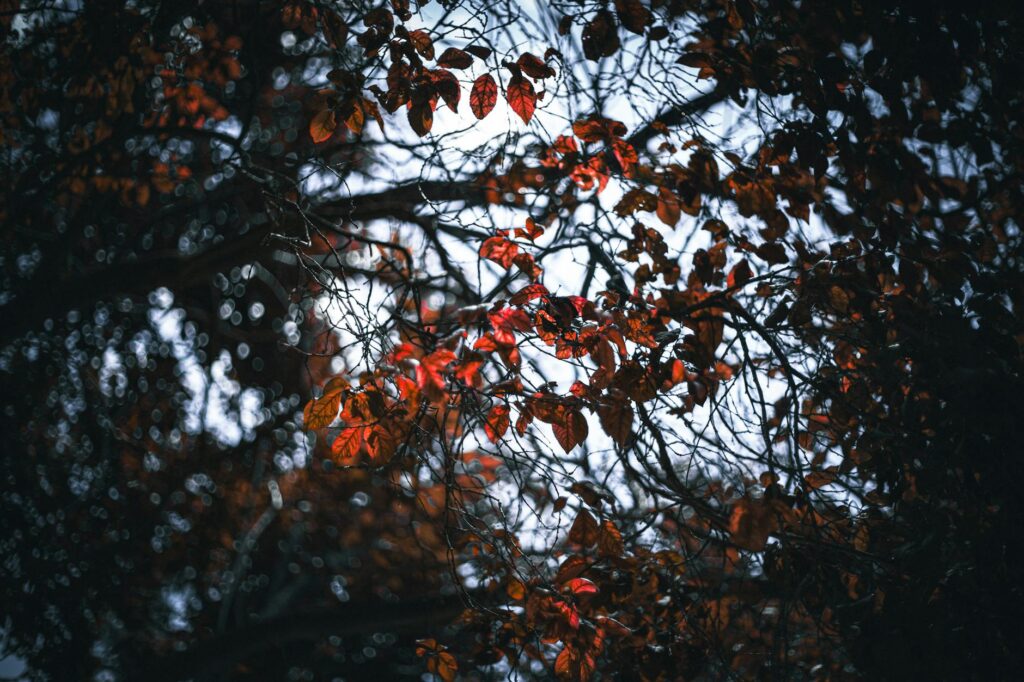
Beyond oak and red maple, Middletown’s soils and climate support a handful of other native shade trees worth considering, depending on your site conditions.
Black gum (Nyssa sylvatica) is one of the most underplanted native trees in suburban yards and deserves more attention. It’s a mid-size native (40–60 feet) with some of the most vivid fall color of any tree in North America — deep scarlet to purple-red, typically before red maple peaks. Black gum tolerates clay soils and moderate wetness, and its small dark berries are a high-value food source for migratory birds passing through the Bayshore corridor. It can be slow to establish and doesn’t transplant easily from large sizes, so plant small containerized stock and give it time.
River birch (Betula nigra) is the right call for wet areas near Raritan Bay tributaries, stream edges, or low spots that hold water. Its peeling cinnamon-and-cream bark is beautiful year-round, and it’s resistant to the bronze birch borer that devastates European and paper birches. River birch grows quickly and provides dappled, not dense, shade — ideal under powerlines or near patios.
Tulip poplar (Liriodendron tulipifera) grows fast and tall — 80 feet or more — with distinctive tulip-shaped flowers in late spring and good fall color. It’s one of the most common native trees in Middletown’s mature woodlots. The caution: tulip poplars form included bark at major branch attachments, which can lead to structural failures in severe thunderstorms. They’re best planted where a large limb drop won’t endanger a structure or utility line.
The NJ DEP Forest Service maintains resources on native tree species suitable for Monmouth County, and is a useful reference when cross-checking which species grow naturally in your part of New Jersey.
How to Plant a Shade Tree in Middletown's Clay-Loam Soil
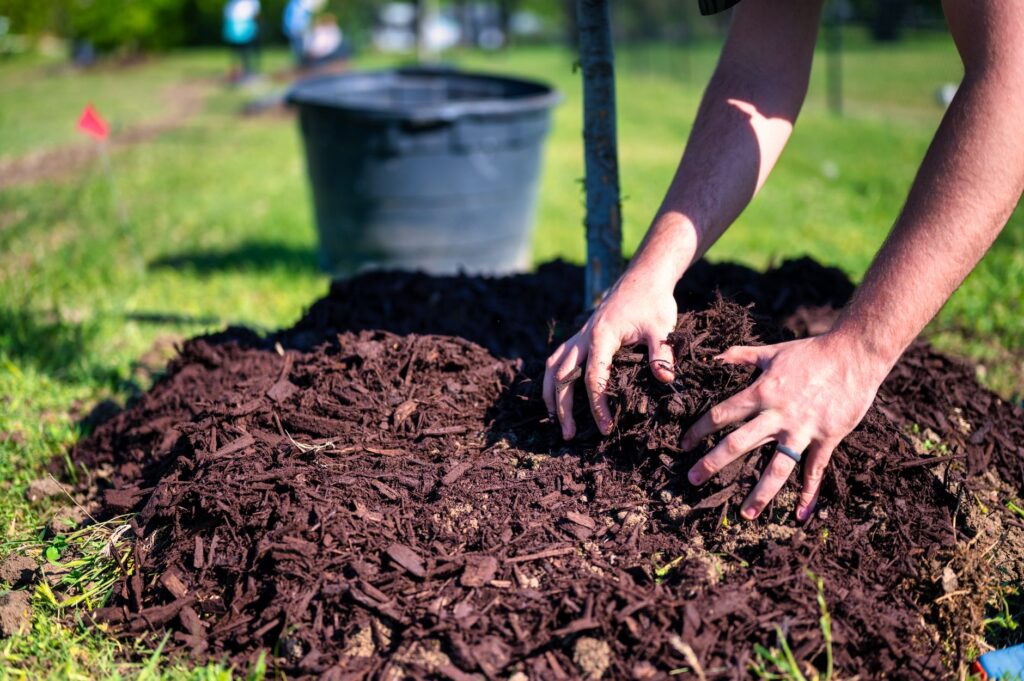
The most common planting mistake I see in Middletown yards isn’t choosing the wrong species — it’s planting the right tree too deep. In clay-loam soil, a tree planted even two inches too deep can fail slowly over five to ten years, developing girdling roots and a declining canopy that baffles homeowners who feel they did everything else right.
The rule: dig a wide, shallow hole. The planting hole should be two to three times the width of the root ball, but no deeper than the root ball itself. Before you lower the tree in, locate the root flare — the point where the trunk begins to widen at the base. That flare should sit at or slightly above the final soil grade. On balled-and-burlapped nursery stock, the actual root flare is often buried under several inches of nursery soil; remove that excess carefully before you plant.
In Middletown’s clay soils, resist the urge to backfill with amended soil, compost, or peat. This counterintuitively creates a “bathtub” effect — water moves into the amended backfill easily but can’t drain through the surrounding clay, and roots tend to circle inside the improved zone rather than extending outward. Use the native clay-loam soil you dug out as your backfill.
After planting, apply 3–4 inches of wood chip mulch in a wide ring around the tree, extending at least to the drip line if possible. Keep the mulch 3 inches back from the bark. Water deeply two times per week for the first full growing season: a slow trickle for 30–45 minutes at the drip line outperforms a quick overhead spray every time. Rutgers Cooperative Extension’s home lawn and garden resources cover soil preparation and planting best practices for NJ homeowners in detail.
Middletown's #1 Tree Expert Company
FREE Inspection & Estimate | Certified Arborists | Trimming, Pruning, Removal, More!
Sponsored
Summary / When to Call a Pro

Picking the right native shade tree for your Middletown yard is more nuanced than it might seem. Overhead utility lines, proximity to the foundation, soil drainage, deer browsing pressure, neighboring structures — all of these change the answer for your specific property. What thrives on a half-acre lot in Lincroft may not work on a smaller coastal lot in Port Monmouth a few blocks from the bay.
A certified arborist can walk your property and give you a site-specific recommendation before you spend money on a tree that turns out to be the wrong species or placed in the wrong spot. That assessment can also flag existing issues — poor drainage, compacted soil, overhead wire conflicts, root competition — that would limit a new tree’s long-term success. The International Society of Arboriculture’s arborist locator can help you find a certified arborist serving Monmouth County.
The best time to plant a shade tree in Middletown is either now — late spring, before summer heat sets in — or in October, when cooler temperatures reduce transplant stress and fall rains help roots establish before the ground freezes. If you’re planning ahead, use the next few months to observe what’s thriving in your neighborhood, note where the afternoon shade falls on your property, and consult a certified arborist before you dig. A few minutes of planning saves years of watching the wrong tree struggle.
Photo credits: Featured image by ArWeltAtty Attila on Pexels; Section 1 by Robert So on Pexels; Section 2 by Gundula Vogel on Pexels; Section 3 by Radosław Krupa on Pexels; Section 4 by Rino Adamo on Pexels; Section 5 by Talha Uğuz on Pexels; Section 6 by Alfo Medeiros on Pexels; Section 7 by Kindel Media on Pexels.