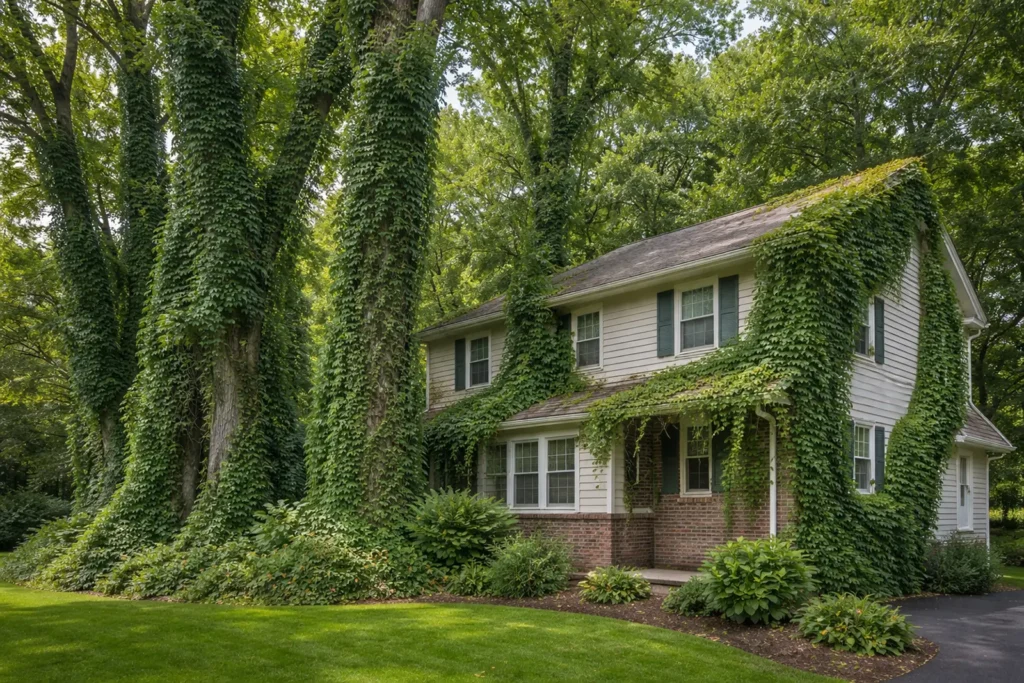
Across Middletown, from the established properties in Lincroft to wooded edges in Chapel Hill, Belford, and the areas surrounding Poricy Park and Hartshorne Woods, vines are a constant presence. Many homeowners assume they are part of the natural landscape. In reality, once vines move beyond ground level and begin climbing into a tree’s canopy, they begin to influence how that tree grows, how it responds to weather, and how stable it remains over time.
What starts as a thin vine wrapping around a trunk can quickly evolve into dense growth that spreads across major limbs and fills the crown. From the ground, it often looks harmless. Up close, it tells a different story. Increased weight, hidden defects, and altered canopy structure all combine to create a tree that behaves very differently than it was meant to.
In Middletown’s environment, where trees already deal with seasonal storms, wet snow, and coastal wind patterns, those changes matter. A tree that might have stood strong on its own can become vulnerable once vines take hold.
Understanding how vines affect tree health and stability is the first step in preventing avoidable damage.
How Vines Disrupt Tree Growth and Canopy Performance
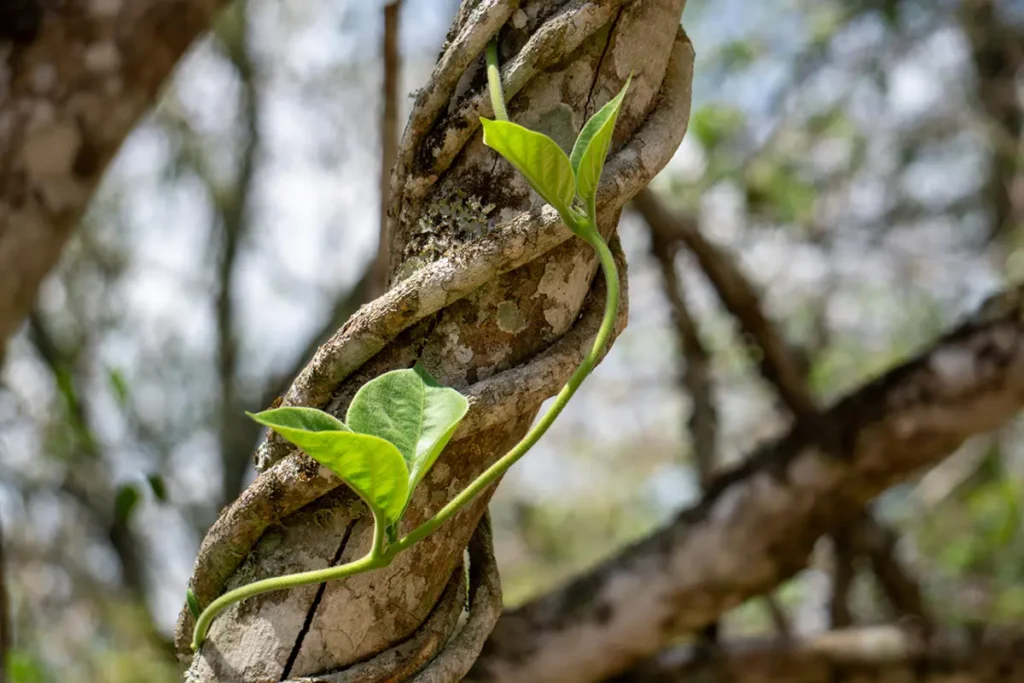
When vines climb into a tree, they do not simply coexist. They compete directly with the tree for light and space. In many cases, they also introduce additional foliage that the tree was never designed to support.
In Middletown, common species like English ivy, wild grape, poison ivy, and bittersweet are particularly aggressive. These vines grow quickly, especially in partially shaded areas, along fence lines, and at the edges of wooded properties. Once established, they move upward and outward, eventually spreading across major limbs.
For the tree, this changes how the canopy functions. Light that should reach the tree’s leaves is intercepted by vine growth. Airflow through the crown becomes restricted. Moisture lingers longer after rain or snow, which can increase the likelihood of fungal activity and decay.
For the property owner, visibility becomes a major issue. Dense vine coverage hides deadwood, cracks, and weak branch connections. From the ground, the tree may appear full and healthy. In reality, important warning signs are being masked.
Local conditions in Middletown make this worse. Many properties have transitional zones between lawn and wooded areas. These edge environments are ideal for vine growth. Add in moisture-retentive soil and seasonal growth surges, and vines can spread faster than most homeowners expect.
Over time, the tree is forced to adapt to conditions that are working against it. Growth patterns change, stress increases, and structural balance can begin to shift.
Key early warning signs include:
- Reduced visibility into the canopy structure
- Dense, uneven foliage not typical of the tree species
- Vines reaching into upper crown areas
- Moisture retention along the trunk and major limbs
- Suppressed or thinning tree foliage beneath vine growth.
As vines continue to expand, the conversation shifts from growth interference to something more serious, structural risk.
Middletown's #1 Tree Expert Company
FREE Inspection & Estimate | Certified Arborists | Trimming, Pruning, Removal, More!
Sponsored
Added Weight and Wind Resistance Increase Failure Potential
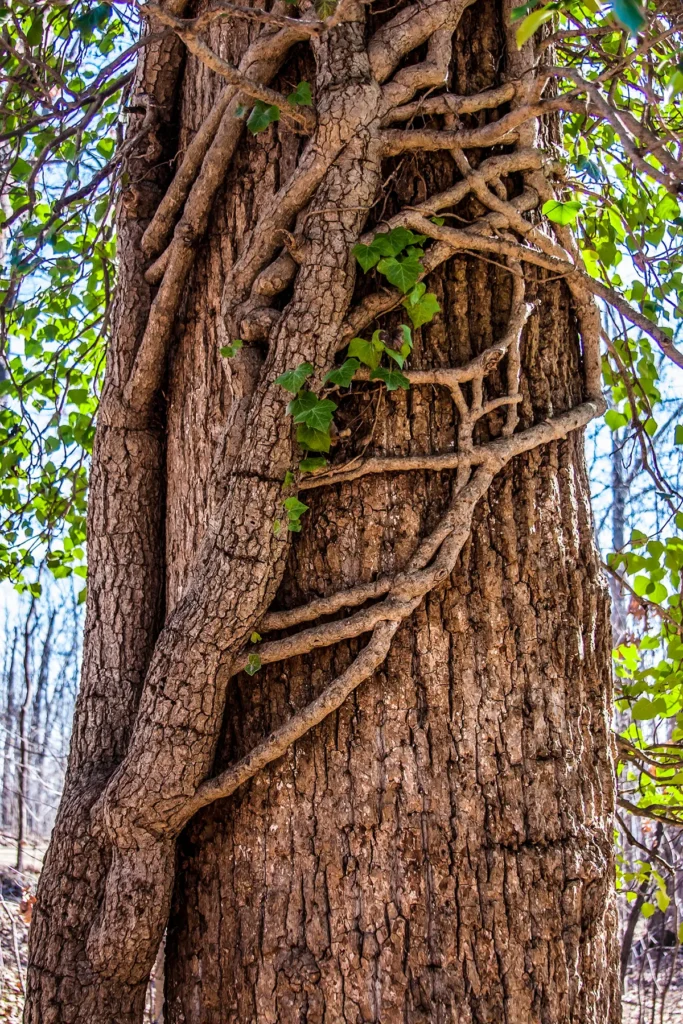
Tree stability depends on balance. The crown, trunk, and root system are designed to work together under normal conditions. Vines disrupt that balance by adding weight and increasing wind resistance in ways that are not immediately obvious.
In Middletown, where thunderstorms and coastal weather patterns are common, wind exposure is already a factor. A tree without vines can flex and move naturally. A vine-covered tree behaves differently. The additional surface area catches wind, and the extra weight increases stress on limbs and branch unions.
Wild grape vines are a common example. They can add significant seasonal weight, especially when fully leafed out. Ivy creates dense coverage that traps moisture and adds drag during storms. Together, these forces increase the likelihood of branch failure.
Location plays a role as well. Trees along open lawns, near roadways, or at the edge of wooded areas are more exposed to wind. When those trees are also carrying heavy vine growth, the risk multiplies.
Another major concern is hidden structural defects. Vines can completely obscure cracked limbs, decayed areas, and weak branch connections. Without clear visibility, routine maintenance is often delayed. By the time a problem is noticed, it may already be severe.
This is why many failures appear sudden. In reality, the underlying issues were present for years but hidden by vine coverage.
Common risks associated with vine-covered trees include:
- Increased likelihood of limb breakage during storms
- Greater wind load on already stressed branches
- Hidden decay and structural weakness
- Reduced effectiveness of routine pruning
- Delayed detection of hazardous conditions
As these risks build, the focus turns toward what can be done to correct the situation before damage occurs.
Vine Removal Is Only Step One, Evaluation Is Critical
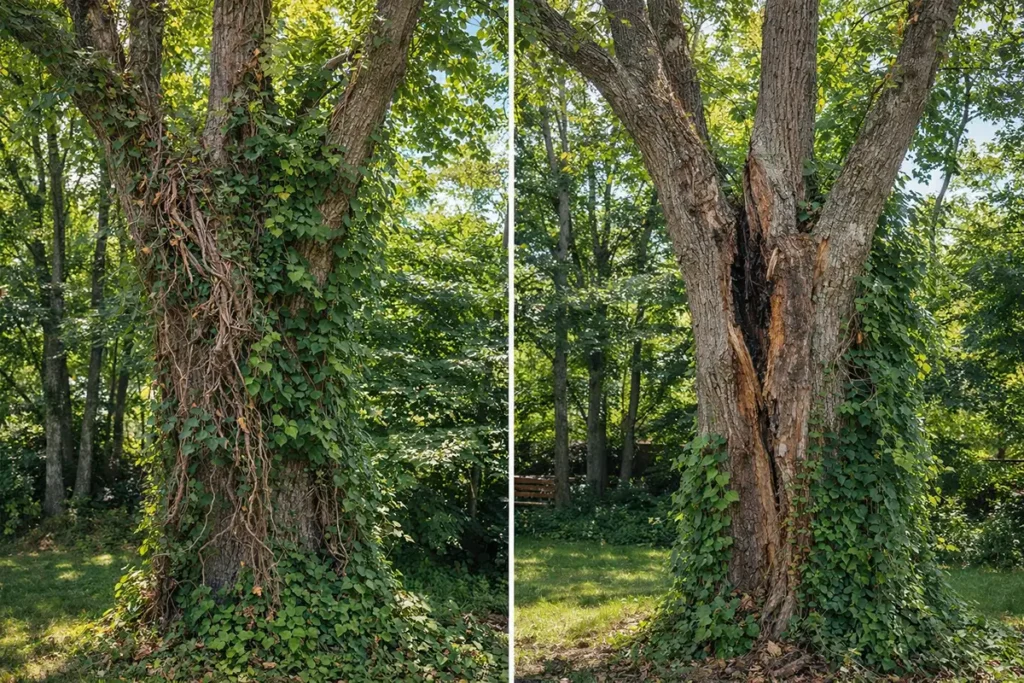
Removing vines is an important step, but it is not the complete solution. Once the vines are cut and begin to die back, the underlying condition of the tree must be evaluated.
In some cases, the tree recovers well. The canopy opens up, airflow improves, and the tree resumes normal growth. In other cases, the removal reveals deeper issues. Decay, structural imbalance, or long-term stress may already be present.
For Middletown homeowners, this distinction is important. A vine-covered tree over a backyard woodland edge may not pose the same level of concern as a tree over a driveway, patio, or home. Risk is determined by both condition and location.
After vine removal, a proper inspection should focus on the trunk, major limbs, and overall canopy structure. Deadwood, cracks, and weak branch unions that were previously hidden must be addressed. In some situations, pruning can restore balance. In others, removal may be the safer option.
Another factor is regrowth. Many properties in Middletown have surrounding vegetation that allows vines to return quickly. Fence lines, wooded borders, and unmanaged areas can serve as a constant source of reinfestation.
Long-term management requires more than a single cut. It involves monitoring and addressing the conditions that allowed the vines to establish in the first place.
Effective vine management typically includes:
- Cutting vines at the base and preventing regrowth
- Inspecting the tree once visibility is restored
- Pruning compromised or overextended limbs
- Monitoring surrounding areas for reinfestation
- Maintaining clear trunk and canopy conditions over time
Taking these steps early prevents small issues from becoming larger structural problems.
Middletown's #1 Tree Expert Company
FREE Inspection & Estimate | Certified Arborists | Trimming, Pruning, Removal, More!
Sponsored
Why Early Intervention Makes a Significant Difference
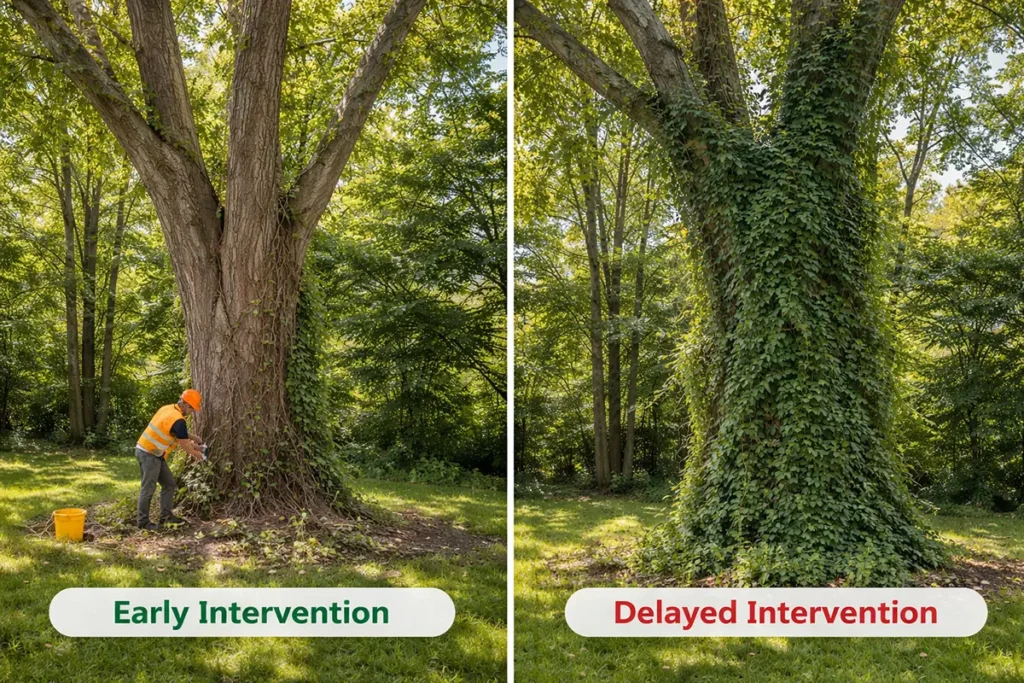
Timing plays a major role in how difficult and costly vine management becomes. Addressing vines while they are still low on the trunk is straightforward. Once they reach the upper canopy, the process becomes more complex and the impact on the tree more significant.
In Middletown, seasonal growth cycles allow vines to expand quickly, especially during spring and summer. What appears manageable one year can become widespread the next.
Early intervention limits the amount of stress placed on the tree. It also makes inspection easier and reduces the likelihood of hidden damage. Waiting too long often leads to more extensive work, higher costs, and increased risk.
From a property perspective, this matters. Trees near homes, driveways, and walkways should be maintained proactively. The cost of prevention is consistently lower than the cost of emergency removal after a failure.
There is also a long-term benefit to tree health. Trees that are maintained properly tend to live longer, remain structurally sound, and provide better value to the property.
Benefits of early vine control include:
- Reduced stress on the tree’s structure
- Improved visibility for inspections
- Lower long-term maintenance costs
- Decreased likelihood of storm-related damage
- Healthier, more stable tree growth
When handled early, vine issues are manageable. When ignored, they often lead to avoidable problems.
Practical Takeaways for Middletown Property Owners
Vines may look natural, but their impact on trees is rarely beneficial once they reach the canopy. In Middletown’s environment, where trees already face weather-related stress, allowing vines to remain unchecked increases the likelihood of failure.
Homeowners should not assume that a full, green canopy means a tree is healthy. In many cases, that fullness is masking underlying issues. Regular inspection and maintenance are key to identifying problems before they escalate.
Properties with wooded edges, older trees, or areas of dense vegetation should be monitored more closely. These conditions are ideal for vine growth and often lead to faster spread.
Addressing vines is not just about appearance. It is about maintaining the structural integrity of the tree and protecting the surrounding property.
Key points to remember:
- Vines compete with trees and disrupt normal growth
- They add weight and increase wind resistance
- Structural defects are often hidden beneath vine coverage
- Removal should always be followed by a full evaluation
- Early action prevents more serious and costly problems
Managing vines is a practical step that helps preserve both tree health and property safety.