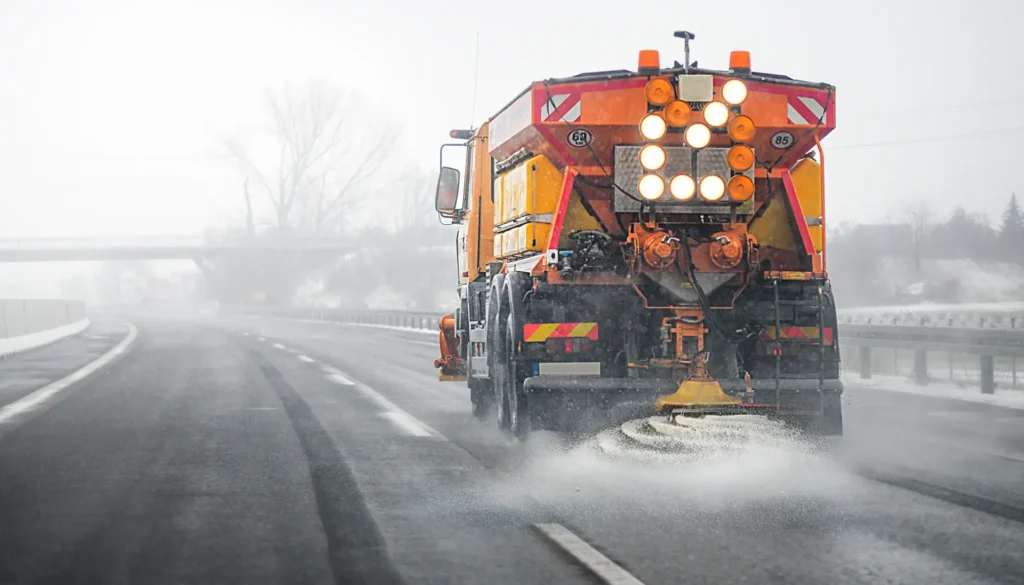
Middletown properties deal with winter conditions that quietly impact trees long after the snow has melted. Across Lincroft, Belford, Leonardo, and areas near Route 35 and Kings Highway, road salt is a consistent factor affecting tree health. It comes from municipal road treatment, private driveway applications, and plowed snow piles that concentrate salt in specific areas.
The problem is not always obvious right away. Trees often carry the effects of winter stress into spring and summer, when symptoms like thinning canopies, leaf scorch, and branch dieback begin to show. By then, the root system may have already been under stress for months.
Many of the trees commonly planted in Middletown, including maples, arborvitae, pines, and ornamental species, are not well adapted to repeated salt exposure. Over time, even moderate seasonal exposure can lead to gradual decline.
Understanding how salt interacts with soil, roots, and canopy structure is essential for protecting trees in these environments.
How Road Salt Damages Trees Above and Below Ground
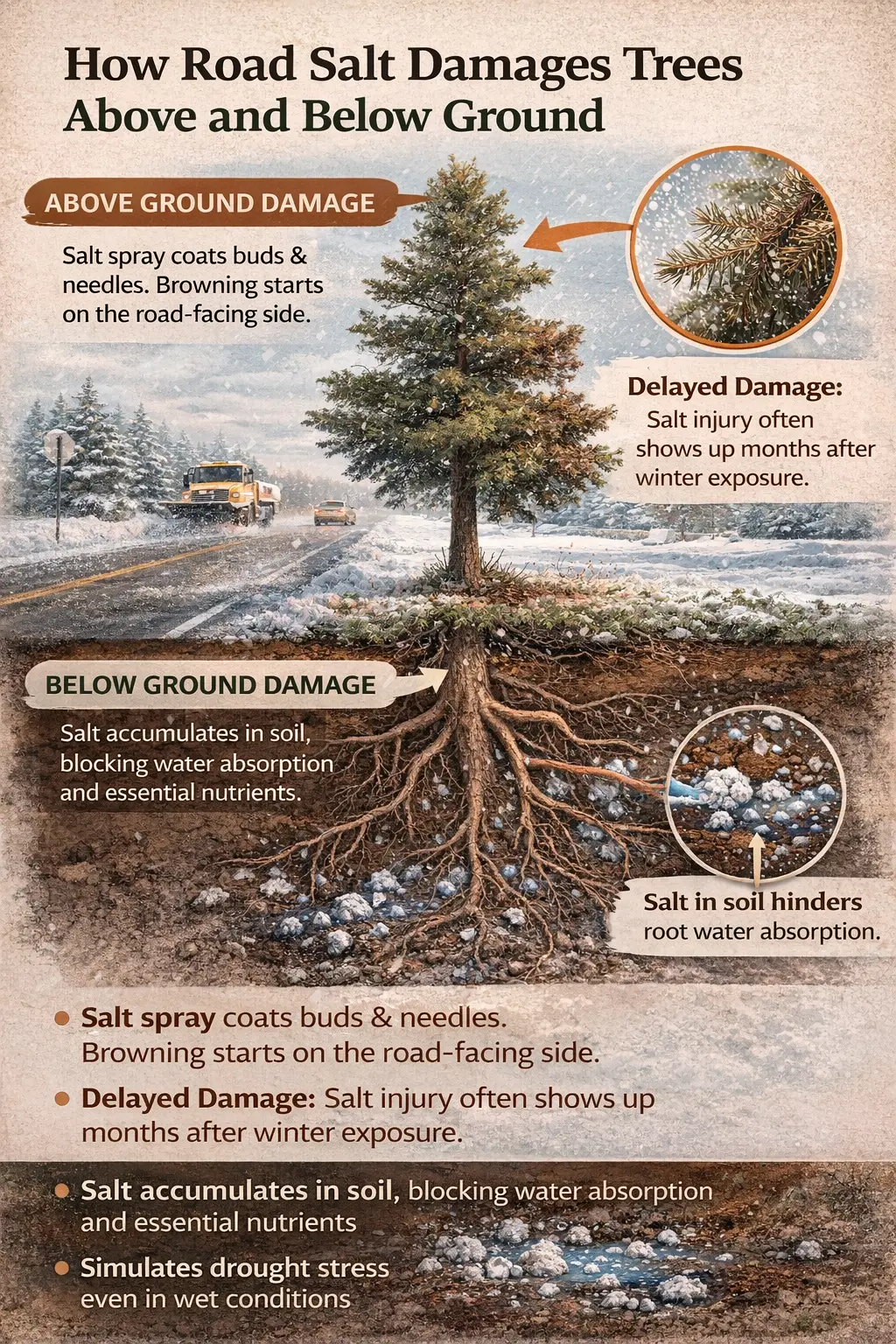
Road salt affects trees in two primary ways. It alters soil chemistry around the roots and it directly damages above-ground tissue through spray and splash.
When salt enters the soil, it interferes with the tree’s ability to absorb water. Even when moisture is present, the roots struggle to take it in properly. This creates a condition similar to drought stress, even during wet periods.
Above ground, salt spray coats buds, needles, and bark. In Middletown, this is especially common along busy roads and near driveways where plowing and passing vehicles push salt outward. Evergreens often show this damage first, with browning on the side facing the road.
The delayed nature of symptoms makes this issue difficult for homeowners to identify. A tree may look stable in winter, only to struggle months later when growth resumes.
Local soil conditions amplify the problem. Compacted suburban soils limit drainage, allowing salt to accumulate in the root zone rather than flushing out naturally.
Common signs of salt-related damage include:
- Browning on one side of the tree, typically facing the road
- Delayed or uneven leaf-out in spring
- Thinning canopy or reduced growth
- Tip dieback on branches
- Gradual decline over multiple seasons
Once this damage begins, the focus shifts from exposure to long-term recovery and prevention.
Middletown's #1 Tree Expert Company
FREE Inspection & Estimate | Certified Arborists | Trimming, Pruning, Removal, More!
Sponsored
Why Middletown Sites Are Especially Susceptible
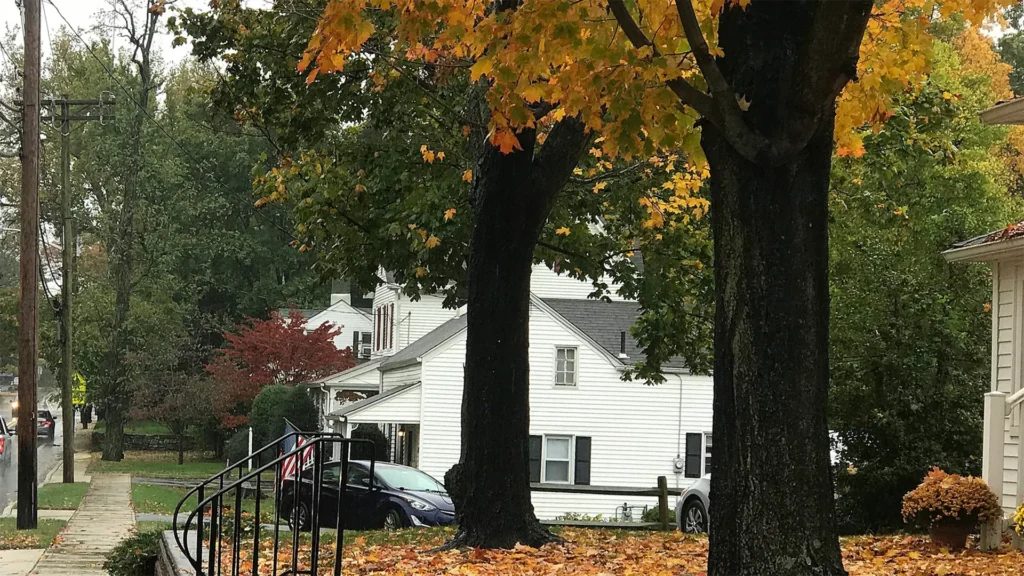
Not all properties experience salt damage the same way. Middletown’s mix of dense neighborhoods, open roadways, and coastal influence creates highly variable exposure patterns.
Trees planted near roads or tight driveways are at the highest risk. These areas receive repeated applications of deicing materials and often accumulate runoff from melting snow. Over time, this creates concentrated zones of salt exposure.
Low-lying areas and poor drainage conditions make the situation worse. Meltwater carrying salt can collect in root zones, exposing trees to prolonged stress.
In neighborhoods closer to the bay, additional environmental stress from wind and exposure can compound the issue. Trees already dealing with challenging conditions are less able to recover from salt damage.
We often see problems in front-yard plantings, screening rows, and decorative trees placed too close to pavement. These trees were not positioned with long-term winter exposure in mind.
High-risk site conditions include:
- Trees planted close to roadways or driveways
- Areas where plowed snow is consistently piled
- Poor drainage or compacted soil conditions
- Evergreen screens exposed to traffic spray
- Narrow planting strips with limited root space
Recognizing these patterns allows property owners to take more targeted action.
Long-Term Soil Impact and Root System Stress
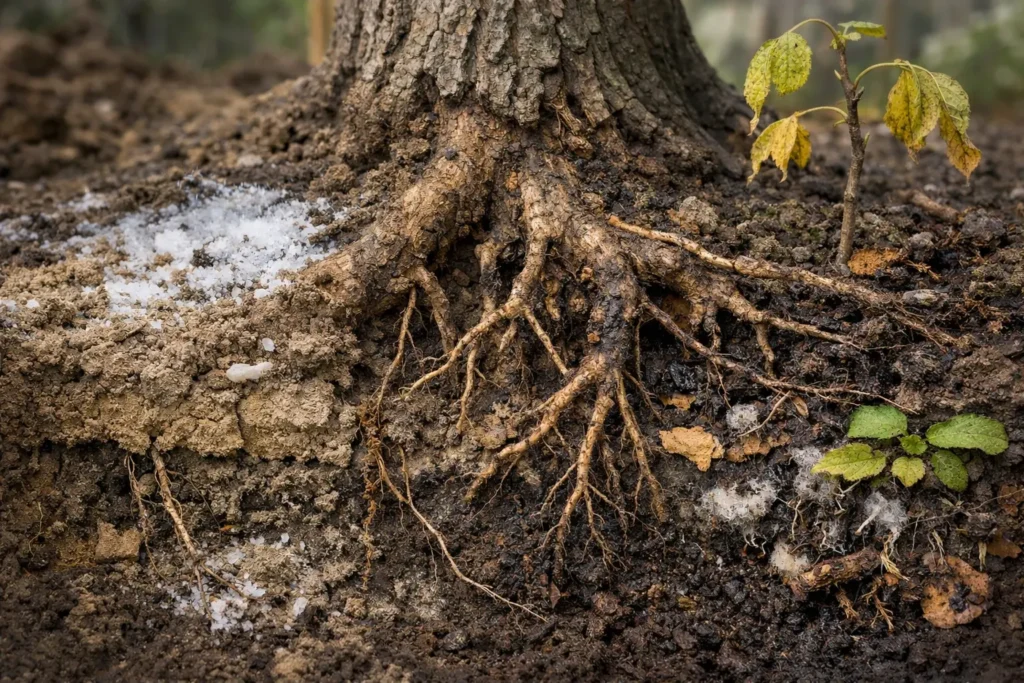
One of the most overlooked effects of road salt is its long-term impact on soil structure. Over time, salt accumulation changes how soil holds water and nutrients.
Healthy soil supports root expansion and microbial activity. Salt disrupts both. It can break down soil structure, reduce oxygen availability, and limit beneficial biological processes.
For trees, this means reduced root growth and diminished access to nutrients. Even if visible symptoms are mild at first, the underlying system is being weakened.
Repeated exposure year after year compounds the issue. Trees that survive initial damage may struggle to recover fully before the next winter cycle begins.
In Middletown, where many properties already have compacted soil conditions, this creates a cycle of ongoing stress.
Soil-related impacts include:
- Reduced water absorption by roots
- Nutrient imbalance in the soil
- Compacted, less permeable soil structure
- Slower root regeneration
- Increased susceptibility to disease and pests
Addressing soil health is critical to long-term tree recovery.
Middletown's #1 Tree Expert Company
FREE Inspection & Estimate | Certified Arborists | Trimming, Pruning, Removal, More!
Sponsored
How Salt Stress Leads to Secondary Tree Problems
Salt damage rarely exists in isolation. Once a tree is weakened, it becomes more vulnerable to other issues.
Drought stress is one of the most common follow-up problems. A compromised root system cannot respond effectively during dry periods, leading to further decline.
Pests and diseases are also more likely to affect stressed trees. Opportunistic insects and pathogens target trees that are already struggling.
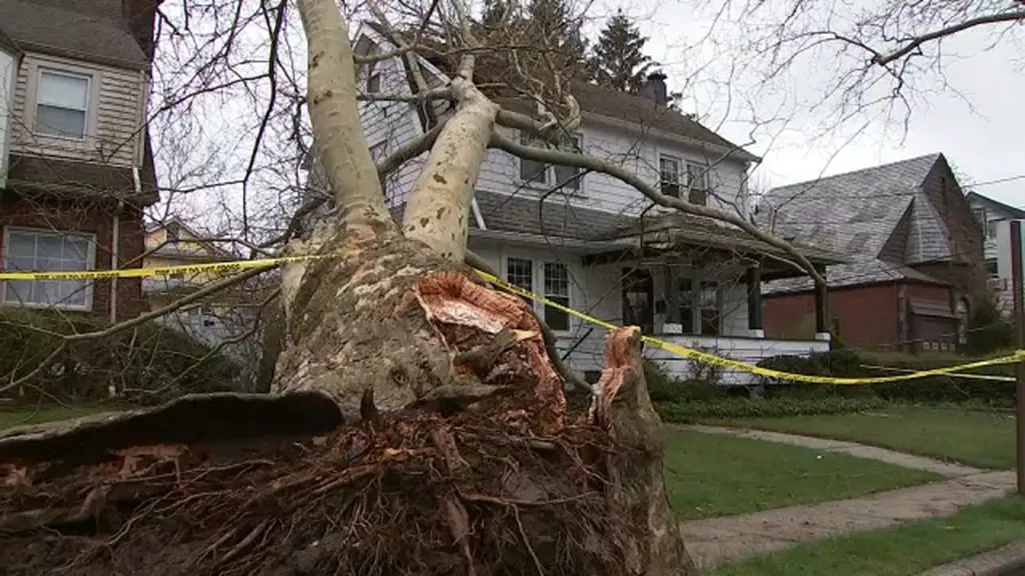
Structural integrity can be impacted as well. Reduced growth and dieback lead to weaker branch development, increasing the risk of failure over time.
In Middletown, this layering of stress is common. A tree affected by salt one winter may show compounded issues in subsequent seasons.
Secondary effects often include:
- Increased pest activity
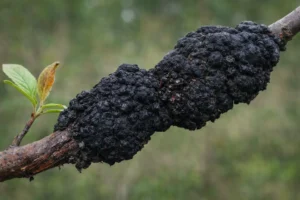
- Fungal infections and cankers
- Weak or brittle branch structure
- Reduced canopy density
- Overall decline in tree vitality
Understanding this progression helps explain why early intervention is so important.
Key Takeaways for Middletown Property Owners
Road salt is one of the most common and least recognized causes of tree decline in Middletown. Its effects are often delayed, making it easy to overlook until significant damage has already occurred.
Trees near roads, driveways, and parking areas should be monitored closely. Preventative care is far more effective than trying to reverse long-term decline.
Understanding how salt interacts with soil and root systems allows homeowners to make better decisions about placement, maintenance, and seasonal care.
Important points to remember:
- Salt affects both roots and canopy health
- Damage often appears months after exposure
- Certain locations and species are more vulnerable
- Soil health plays a major role in recovery
- Early intervention reduces long-term risk
Trees add long-term value to a property, but only when they are supported by the right conditions. In Middletown, managing winter salt exposure is a key part of keeping trees healthy, stable, and safe.