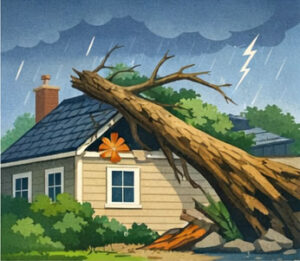
 In the days following a storm or sudden tree failure in Middletown Township, one of the most common and costly mistakes homeowners make is waiting. Waiting on an insurance adjuster. Waiting on a neighbor to accept responsibility. Waiting on an HOA board meeting. Waiting on a lawyer’s opinion. From an arborist’s standpoint, that delay often turns a manageable situation into a far more serious and expensive problem.
Middletown’s older neighborhoods, larger lots, and mature tree canopy make tree-related damage more than a rare event. Areas like Lincroft, Navesink, Locust, Oak Hill, and River Plaza see frequent incidents involving fallen limbs, uprooted trees, and partial failures after storms. When that damage affects a roof, fence, vehicle, or power line, the instinct to pause and seek legal clarity is understandable. Unfortunately, that instinct can backfire.
According to Michael Hufnagel, a certified arborist with decades of experience handling storm response across Monmouth County, cleanup decisions should never hinge on liability debates.
“The tree does not stop being dangerous just because the insurance company has not returned your call,” Hufnagel explains. “From a safety and liability standpoint, the priority is always stabilizing the situation and preventing additional damage.”
This article takes a safety-first, fact-checked look at why delaying tree cleanup can increase risk, undermine insurance claims, and complicate legal responsibility under New Jersey law.
The Immediate Risk Most Homeowners Underestimate
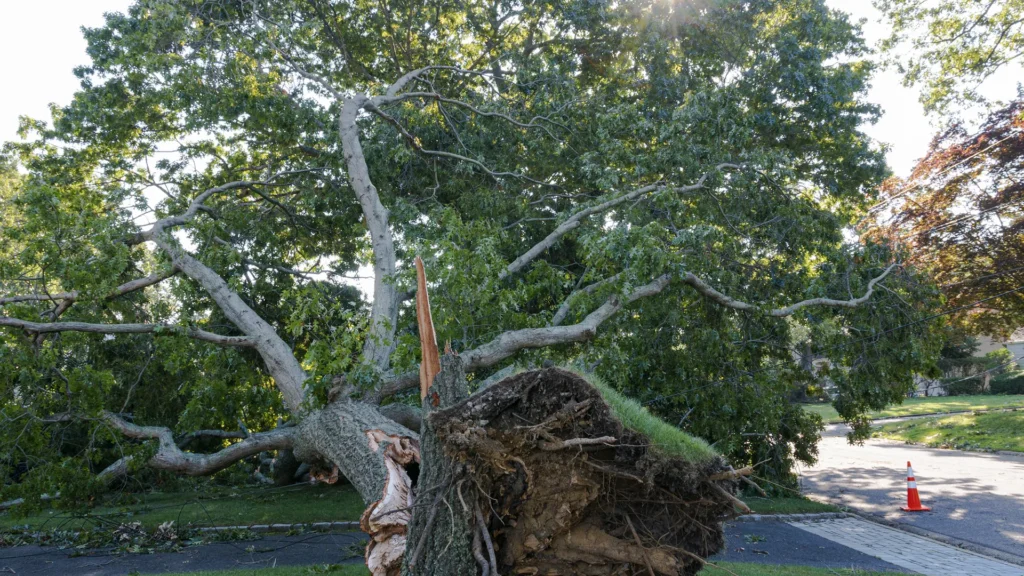
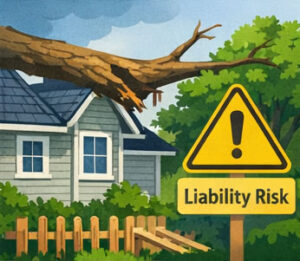 When a tree or large limb falls, what you see is rarely the full hazard. Weight distribution shifts. Root plates loosen. Partially failed trunks remain under tension. Limbs caught on roofs or tangled in utility lines can release without warning.
In Middletown, many properties feature mature oaks, maples, and pines that exceed fifty feet in height. When these trees fail, they often do so incompletely. A trunk may rest against a home, a limb may hang over a driveway, or a split leader may appear stable while actually being one vibration away from collapse.
“A damaged tree is not a static object,” says Hufnagel. “Wind, rain, even temperature changes can cause movement. What looks fine today can fail tonight.”
From a professional standpoint, leaving a compromised tree in place creates a known hazard. That matters not just for physical safety, but for liability exposure if someone is injured after the damage occurs.
Why Waiting Can Increase Legal Exposure in New Jersey
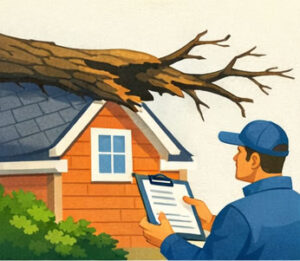 New Jersey tree liability law is often misunderstood. While the state generally follows the principle that storm damage from a healthy tree is considered an act of nature, that protection is not absolute. Once damage occurs, homeowners have a duty to act reasonably to prevent further harm.
This concept is often referred to as the duty to mitigate damages. It does not require homeowners to resolve fault immediately. It does require them to take appropriate steps to reduce ongoing risk.
If a damaged tree or limb causes secondary damage after the initial incident, insurers and courts may question why the hazard was not addressed sooner. The issue is no longer just what caused the tree to fail, but what actions were taken afterward.
“We see situations where the initial damage might have been covered,” Hufnagel notes. “But the follow-up damage happened because the tree was left hanging or unstable. That changes the conversation.”
Importantly, this does not mean homeowners must pay out of pocket without recourse. It means cleanup and documentation should proceed in parallel with insurance and legal review, not after.
How Delayed Cleanup Can Hurt Insurance Claims
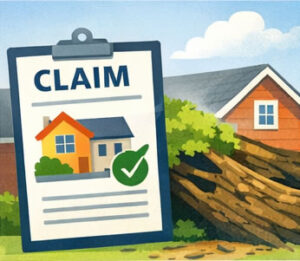 Many homeowners assume insurance companies prefer no action until an adjuster arrives. In practice, most policies expect reasonable steps to protect the property from further damage.
In tree-related claims, insurers commonly look for evidence that the homeowner acted promptly and responsibly. That includes securing the site, removing immediate hazards, and documenting the condition before and after cleanup.
Failing to act can raise red flags.
If rain enters through a roof opening made by a fallen limb, or if a partially fallen tree collapses further days later, insurers may argue that the additional damage was preventable. This can result in reduced payouts or denied portions of a claim.
“Insurance companies do not expect you to leave a dangerous situation untouched,” Hufnagel explains. “They expect you to be smart about it and to document what happened.”
A certified arborist’s involvement can play a critical role here. Written assessments, photographs, and timestamps help establish that cleanup was necessary and appropriate.
The HOA Complication in Middletown Neighborhoods
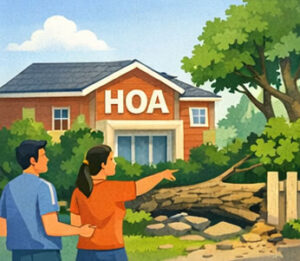 In many Middletown communities, trees are maintained by homeowners associations or are located on common property. When an HOA-owned tree damages a private home, confusion often sets in.
Homeowners may be told to wait while responsibility is reviewed. Boards may delay action pending meetings or legal advice. Meanwhile, the damaged tree remains in place.
This delay can expose both the homeowner and the HOA to greater risk.
If a known hazard is left unaddressed and causes additional damage or injury, liability may increase rather than decrease. Cleanup does not assign blame. It addresses danger.
“HOA disputes are one of the biggest reasons people wait,” says Hufnagel. “But the tree does not care who owns it. If it is unsafe, it needs to be dealt with.”
From an arborist’s perspective, emergency mitigation should proceed first. Responsibility can be sorted out later with documentation in hand.
Secondary Damage Is Where Claims Often Break Down
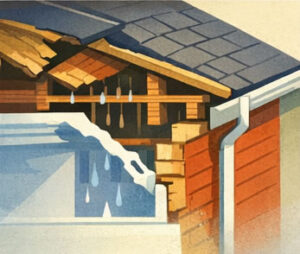 Initial tree damage is often dramatic but limited. Secondary damage is quieter and more expensive.
Water intrusion, structural shifting, cracked rafters, compromised gutters, and foundation stress can all result from delayed action. In Middletown’s climate, freeze-thaw cycles and coastal winds accelerate deterioration.
A limb resting on a roof may not puncture shingles immediately. Over days or weeks, the constant load can weaken framing. When that damage is eventually discovered, it can be difficult to prove it was directly tied to the original incident.
“We have seen roofs that looked fine from the ground,” Hufnagel says. “Once the tree was removed, the damage underneath was significant.”
Prompt removal reduces the risk of these cascading problems and simplifies the documentation trail.
The Role of a Certified Arborist in Risk Reduction
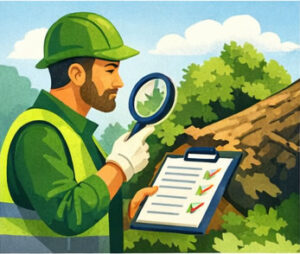 Not all tree work is equal. In situations involving insurance and potential legal review, the qualifications of the professional matter.
A certified arborist provides more than labor. They provide evaluation, risk assessment, and defensible documentation. This is especially important in Middletown, where high-value properties and shared boundaries are common.
An arborist can identify whether a tree failure was consistent with storm impact, decay, root issues, or long-term neglect. They can also note whether additional trees on the property present similar risks.
“Our job is not to decide who pays,” Hufnagel explains. “Our job is to make the site safe and to document what we see accurately.”
That documentation often becomes a critical piece of insurance and legal discussions later.
Why Cleanup Does Not Mean Admitting Fault
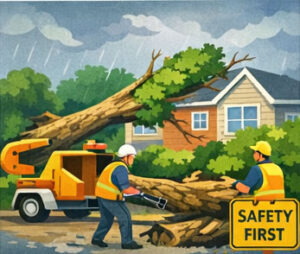 One of the biggest misconceptions homeowners have is that authorizing cleanup somehow accepts responsibility. This is not the case.
Taking steps to remove a hazard is not an admission of liability. It is a demonstration of reasonable care. New Jersey courts and insurers generally view mitigation favorably.
Failing to act, on the other hand, can be interpreted as negligence once a hazard is known.
“People are afraid of doing the wrong thing,” says Hufnagel. “In reality, doing nothing is usually the worst option.”
Cleanup can and should be accompanied by clear records, photos, and professional reports that preserve the facts of the incident.
A Middletown Reality: Trees, Property, and Risk
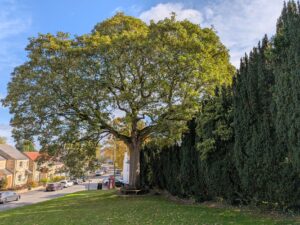
 Middletown’s tree canopy is one of its greatest assets. It is also a source of complex risk. Large trees near homes, shared property lines, and coastal weather patterns create conditions where damage can escalate quickly.
Residents in areas like Lincroft and Navesink often own properties where a single tree failure can affect multiple structures. In these cases, speed, professionalism, and documentation are essential.
“Tree damage is emotional,” Hufnagel says. “It is your home. But decisions still need to be made calmly and correctly.”
What Homeowners Should Do Immediately After Tree Damage
From a safety-first arborist perspective, the steps are consistent.
Secure the area and keep people away from the hazard. Document the scene with photos and video. Contact a certified arborist to assess stability and risk. Notify your insurance provider, but do not wait for permission to address immediate dangers.
Cleanup should focus on stabilization first, full removal second. All work should be documented thoroughly.
Legal and insurance questions can be addressed afterward with far less stress once the danger has been removed.
Final Takeaway for Middletown Homeowners
 Delaying tree cleanup while waiting on insurance or legal decisions often creates more problems than it solves. In Middletown NJ, where property values and tree size amplify risk, prompt action protects safety, preserves claims, and limits liability.
As Michael Hufnagel puts it:
“You can argue responsibility later. You cannot undo an injury or additional damage that happens because a dangerous tree was left in place.”
In tree damage situations, cleanup is not the end of the process. It is the beginning of doing it right.