Middletown's #1 Tree Expert Company
FREE Inspection & Estimate | Certified Arborists | Trimming, Pruning, Removal, More!
Sponsored
The Roots You Keep Tripping Over
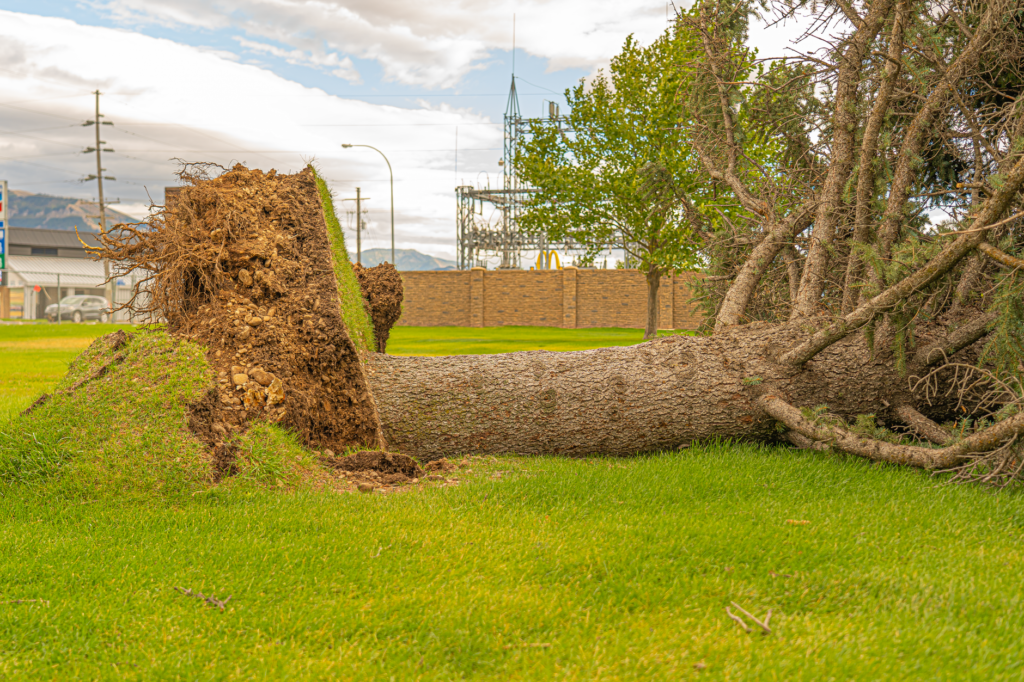
Every summer, I get calls from Middletown homeowners who’ve fired up the mower and discovered a thick, snaking root running across the back lawn like a buried cable. Sometimes it’s a whole network of them radiating out from an old silver maple near the fence line. Sometimes it’s a beech tree near the patio, and the roots are already lifting the edge of the flagstones. And almost every time, the first question is the same: Can we just cut them off?
The answer, almost always, is no — and understanding why tells you something important about how your tree is actually surviving in a Middletown yard.
Surface roots are not a malfunction. They’re an adaptation. Trees push roots toward oxygen, water, and nutrients — and in many of Monmouth County’s heavier clay-loam soils, those resources are concentrated in the top eight to twelve inches of soil. When you see roots at the surface, you’re looking at a tree that has figured out where to live, not one that’s doing something wrong.
This guide is for Middletown homeowners who want to understand what surface roots actually mean, which trees are most prone to them, and — crucially — what to do and what absolutely not to do when those roots start interfering with the lawn, the walkway, or the patio.
Why Roots Come to the Surface in the First Place
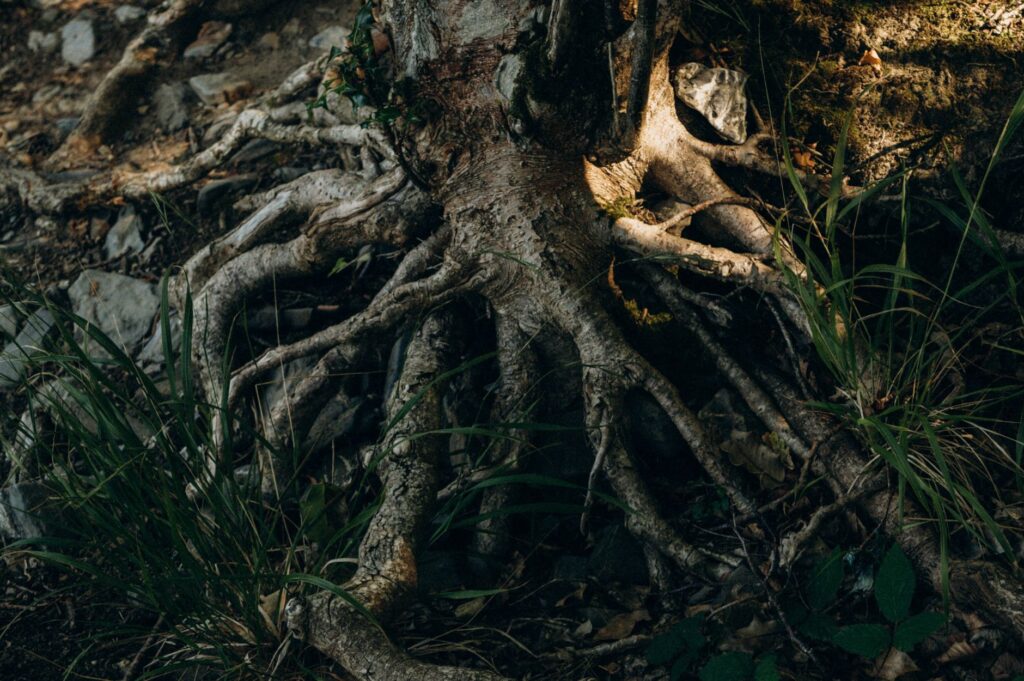
Tree roots need three things to grow: oxygen, water, and nutrients. The roots that find them fastest grow fastest. In deep, well-drained, loamy soil, those resources are distributed throughout the top two to three feet of the ground and roots can grow outward without ever breaking the surface. But Middletown Township sits on coastal plain soils that are often compacted by development, layered with clay subsoil, and slow to drain. When the lower layers become waterlogged or oxygen-depleted, roots migrate upward to find what they need.
Over decades, a mature tree can have a significant portion of its absorbing root mass running just two to four inches below grade — or right at grade. According to the USDA Forest Service Urban & Community Forestry program, most tree roots are found in the top 18 to 24 inches of soil, and surface rooting is strongly associated with compacted or poorly drained sites. In suburban Middletown, that description fits a lot of yards.
Lawn mowing is another factor most homeowners don’t consider. Decades of foot traffic and mower passes compact the top inch or two of soil across the root zone. As soil density increases, roots that were initially below grade gradually work toward the surface where porosity is better. Paved surfaces nearby — driveways, sidewalks, patios — block root expansion in those directions and intensify surface rooting in the open soil that remains.
Mature trees also simply have more root mass than young ones. A thirty-year-old red maple in a Lincroft backyard has an extensive root system that was invisible ten years ago. As the trunk’s root flare enlarges and the surrounding soil compresses beneath it, roots that were once underground become visible. This is not disease. It’s time.
Which Middletown Trees Are Most Likely to Surface Root
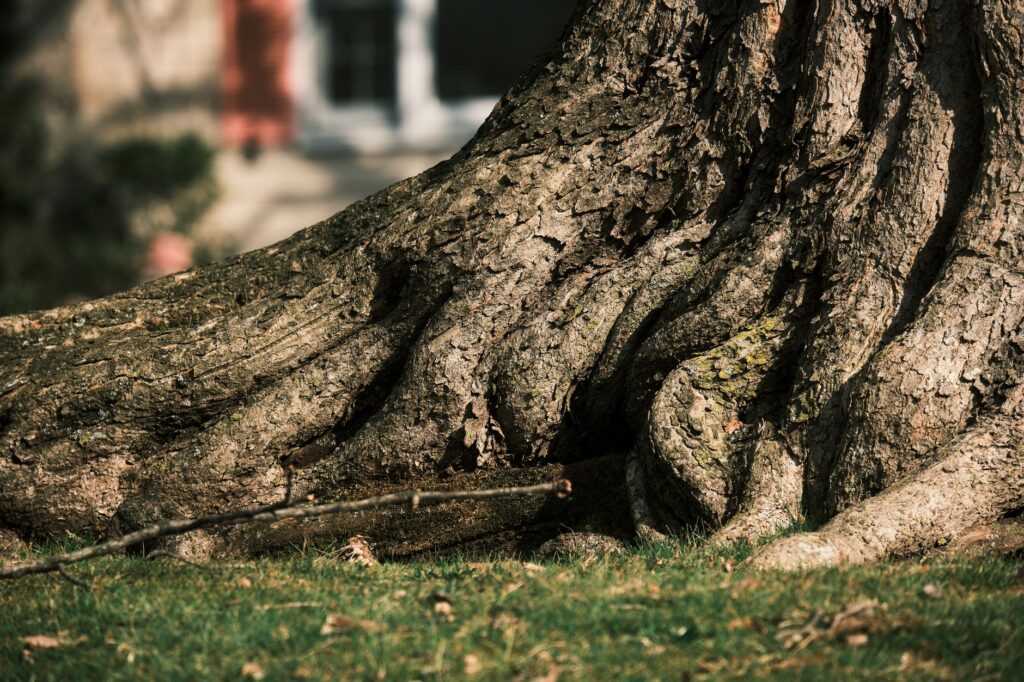
Not every tree does this equally. Some species are notorious for aggressive surface rooting in suburban New Jersey soils; others rarely cause problems. If you have one of the following trees in your Middletown yard, surface roots are almost a given once the tree matures.
- Silver maple (Acer saccharinum) — The surface-rooting champion of suburban New Jersey. Fast-growing, widely planted throughout Middletown, and notorious for roots that invade lawns, lift driveways, and work into drainage pipes. If you have a silver maple over twenty years old, you almost certainly have surface roots — and they will continue expanding.
- Norway maple (Acer platanoides) — An invasive species common in older Middletown neighborhoods. Its dense shade and competitive surface root system make it nearly impossible to grow grass underneath, which compounds the management problem.
- American beech (Fagus grandifolia) — One of Middletown’s most beautiful native trees. Mature beeches develop a spectacular network of surface roots, especially on slopes and near structures like patios and retaining walls.
- Red maple (Acer rubrum) — Less aggressive than silver maple, but still prone to surface rooting in wet or compacted soils, which describes many yards in the lower Bayshore section of Middletown.
- Tulip poplar (Liriodendron tulipifera) — Large, fast-growing, and increasingly common in newer Middletown plantings. Surface rooting becomes visible as the tree reaches maturity, typically fifteen to twenty years after planting.
If you’re choosing a new tree for a spot near a walkway, patio, or driveway and surface roots would be a problem, ask a certified arborist about species with deeper root habits. Many oaks, hornbeams, and native serviceberries are far less likely to create these conflicts over time.
Middletown's #1 Tree Expert Company
FREE Inspection & Estimate | Certified Arborists | Trimming, Pruning, Removal, More!
Sponsored
When Surface Roots Signal a Problem vs. When They're Normal
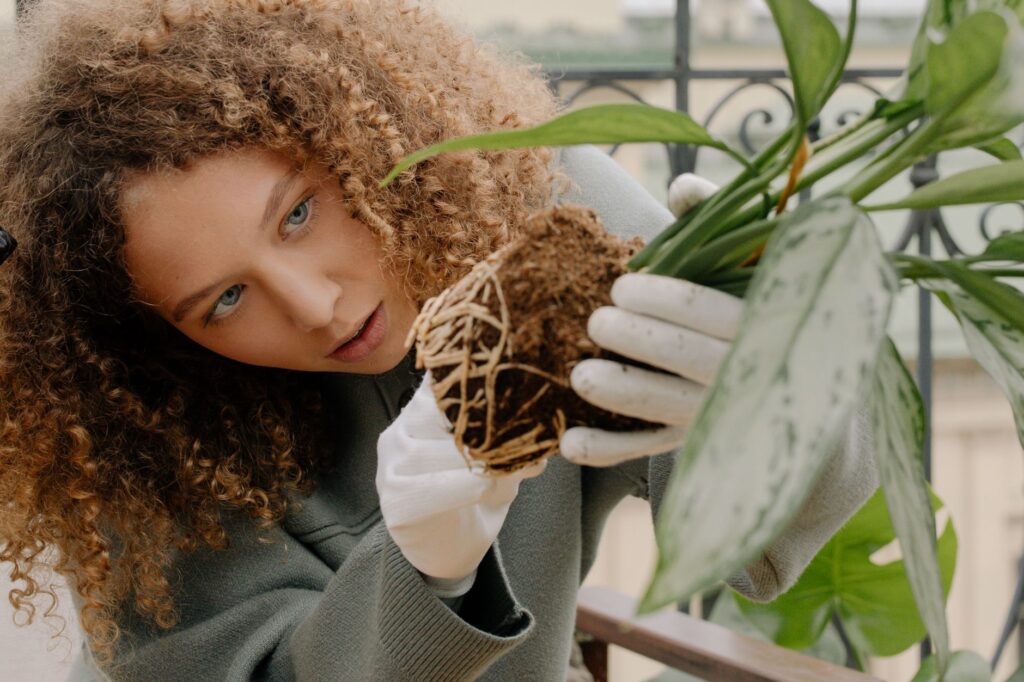
Most surface roots on mature trees in Middletown are completely normal — a predictable result of local soils, tree age, and the realities of suburban compaction. But there are situations where surface rooting can indicate something worth investigating more carefully.
Surface roots that may indicate stress: Roots appearing in areas where they were previously not visible can signal that the root zone has been compressed by recent construction, new pavement, or repeated heavy equipment traffic. If you’ve had a driveway extended, a HVAC unit installed, or any grading work done recently, and surface roots are now appearing near that zone, the tree may be responding to loss of root volume in a key direction.
Roots that are discolored, soft, or weeping near the base of the trunk are a different concern. These may indicate a fungal root rot, which can make what looks like a healthy tree structurally unstable. Surface roots that feel spongy when pressed or smell musty near the root flare warrant a professional evaluation before the next storm season.
The International Society of Arboriculture’s Trees Are Good program notes that the root zone is the most frequently damaged and most commonly ignored part of a tree in suburban settings. Surface roots that look healthy — firm, bark-covered, dry — radiating outward from the trunk flare are almost always doing exactly what they’re supposed to do.
One important distinction: roots circling back toward the base of the trunk are a separate and serious concern called girdling. Healthy surface roots radiate outward like spokes on a wheel; roots curving back toward the trunk like a tightening loop are a warning sign worth discussing with an arborist.
Surface Roots and Your Lawn, Sidewalk, and Garden
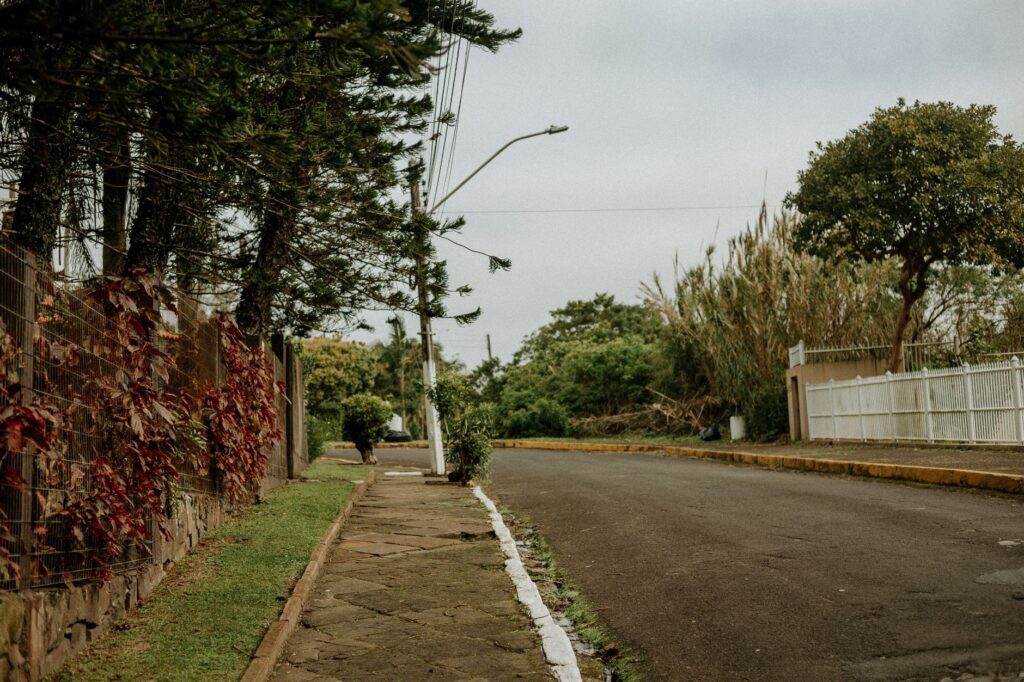
Here’s where surface roots become a practical challenge for Middletown homeowners — not because the tree is doing anything wrong, but because our landscapes weren’t designed with mature root systems in mind.
The lawn conflict. Surface roots make mowing difficult and often result in homeowners repeatedly scalping the same roots year after year. That repeated mechanical damage creates chronic wounds that can become entry points for decay fungi over time. If you notice you’re always catching the same root with the mower deck, that root has been stressed more than you probably realize — and the damage accumulates invisibly season after season.
The sidewalk and pavement conflict. Roots growing under concrete will eventually lift it. In Middletown Township, the question of responsibility for sidewalk repair can be complicated by whether the tree is on private property or in the municipal right-of-way. The right-of-way typically runs from the curb to a few feet onto private property, meaning sidewalk trees are often in a zone of shared maintenance responsibility. Middletown Township Public Works handles right-of-way trees, but private property trees adjacent to sidewalks are generally the homeowner’s responsibility. When in doubt, document the tree, the root, and the damage with dated photographs before any repair work begins.
The garden bed conflict. Many homeowners try to establish flower or vegetable beds beneath a mature shade tree, only to find the roots outcompete everything planted there. Surface roots also make it impossible to dig without cutting them, which compounds the damage. Shade-tolerant native groundcovers — planted without tilling into the root zone — are almost always a better long-term solution than fighting a mature tree’s root system for space.
What Not to Do — and What Actually Works
The most important rule around surface roots: do not cut large surface roots. Cutting a root more than two inches in diameter within the tree’s critical root zone can cause significant structural instability and opens the wound to decay fungi. Large surface roots are not just nutrient conduits — they’re structural anchors. Severing one can make the tree more likely to fail in the next summer thunderstorm that rolls off Raritan Bay.
Equally important: do not bury surface roots by adding topsoil or fill. It seems intuitive — cover the roots with a few inches of soil and reseed with grass. In practice, adding even three to four inches of soil over a mature root system changes the oxygen balance dramatically. The roots suffocate, the tree declines, and the problems compound over the following years in ways that aren’t immediately obvious from the outside.
What actually works:
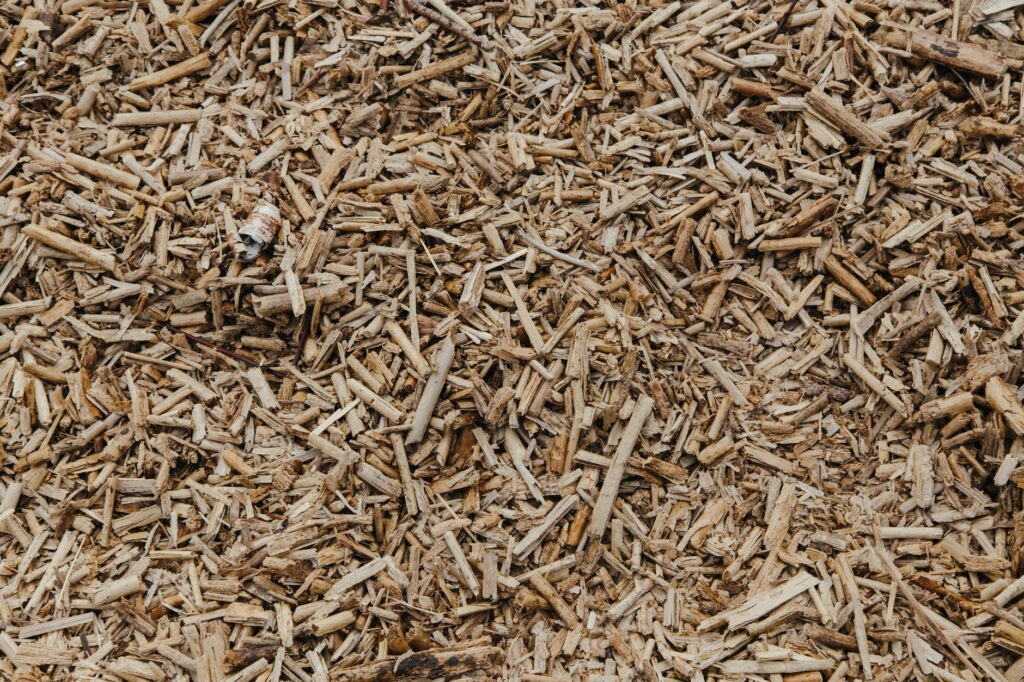
- Mulch the root zone broadly. A three-to-four inch layer of organic wood-chip mulch protects exposed roots from mechanical damage, retains soil moisture, and insulates against summer heat. Apply it wide — four to six feet from the trunk on each side — and keep it two to three inches away from the bark itself. No volcano mounds against the trunk.
- Plant groundcovers instead of struggling with grass. Native Pennsylvania sedge (Carex pensylvanica), wild ginger (Asarum canadense), or creeping phlox can thrive over a root zone where lawn grass will always lose. Plant by hand without tilling — don’t disturb the roots to install them.
- Reroute the mowing path. Simply changing your mowing pattern so the deck doesn’t pass over the same roots each week reduces cumulative mechanical damage significantly over a season.
- Don’t add soil; a thin compost top-dress is the exception. A half-inch layer of finished compost can be raked gently over the root zone without smothering roots. More than an inch is too much.
For research-based guidance on managing soil health and root zones in New Jersey home landscapes, Rutgers NJAES Cooperative Extension offers practical recommendations specific to our soils and climate — including mulching guidance that applies directly to the clay-loam conditions common across Middletown Township.
Middletown's #1 Tree Expert Company
FREE Inspection & Estimate | Certified Arborists | Trimming, Pruning, Removal, More!
Sponsored
Summary: When Surface Roots Need a Second Opinion
Surface roots are one of those things that look like a problem but usually aren’t — as long as you respond thoughtfully. A mature silver maple that’s covered a third of your Middletown backyard with surface roots isn’t failing; it’s thriving. The challenge is that our suburban landscapes weren’t designed to accommodate fully mature trees, so we’re often playing catch-up with mulch and groundcovers instead of planning for root space from the beginning.
Most of the time, the right move is: mulch broadly, plant a shade-tolerant groundcover, adjust the mowing path, and leave the roots alone. That’s not a compromise — it’s the approach that keeps the tree healthy longest and reduces maintenance work over time. The trees that fail aren’t usually the ones with visible surface roots. They’re the ones that had their roots repeatedly cut, buried, compacted, or chemically treated by well-meaning homeowners who didn’t know what they were looking at.
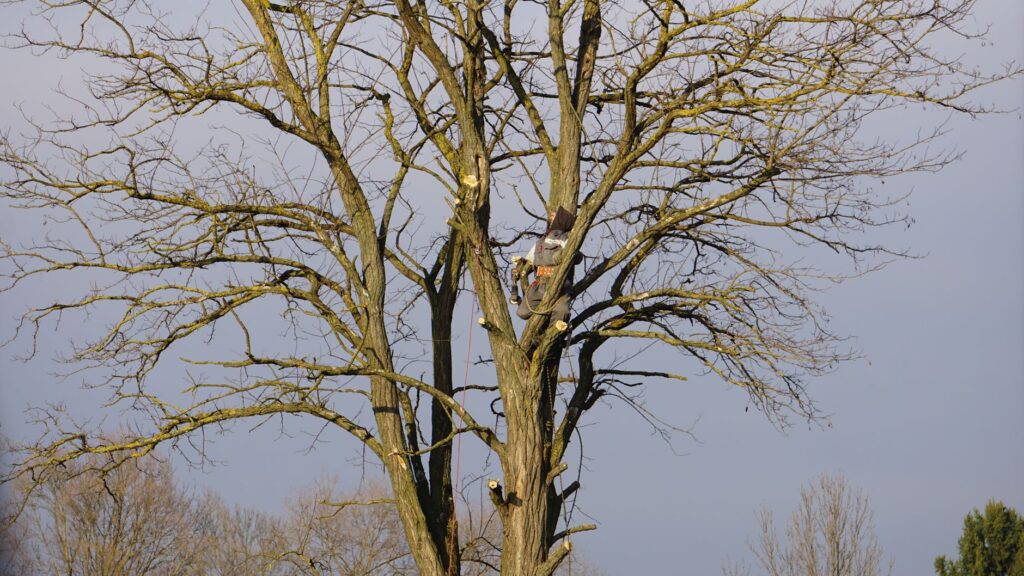
There are situations worth escalating to a professional. If surface roots are creating a tripping hazard near a walkway and you’re weighing root pruning against pavement adjustment, a certified ISA arborist can help you evaluate both options without risking the tree’s structural stability. If new roots appeared after construction or grading work, an arborist assessment can tell you whether the root zone was compromised and what, if anything, to do about it. And if any surface roots feel soft, look discolored, or are weeping at the trunk base, don’t wait on that one — structural root decay can make an otherwise healthy-looking tree genuinely dangerous in a summer storm.
A walk-around assessment with a qualified arborist takes twenty to thirty minutes and can answer questions that years of online searches won’t. If you’re not sure what you’re looking at, that’s exactly the right time to call.
Photo credits: Featured image by Castorly Stock on Pexels; Section 1 by Castorly Stock on Pexels; Section 2 by Liudmyla Shalimova on Pexels; Section 3 by Malcolm Garret on Pexels; Section 4 by cottonbro studio on Pexels; Section 5 by Maria Luiza Melo on Pexels; Section 6 by Ron Lach on Pexels; Section 7 by Dmytro Glazunov on Pexels.